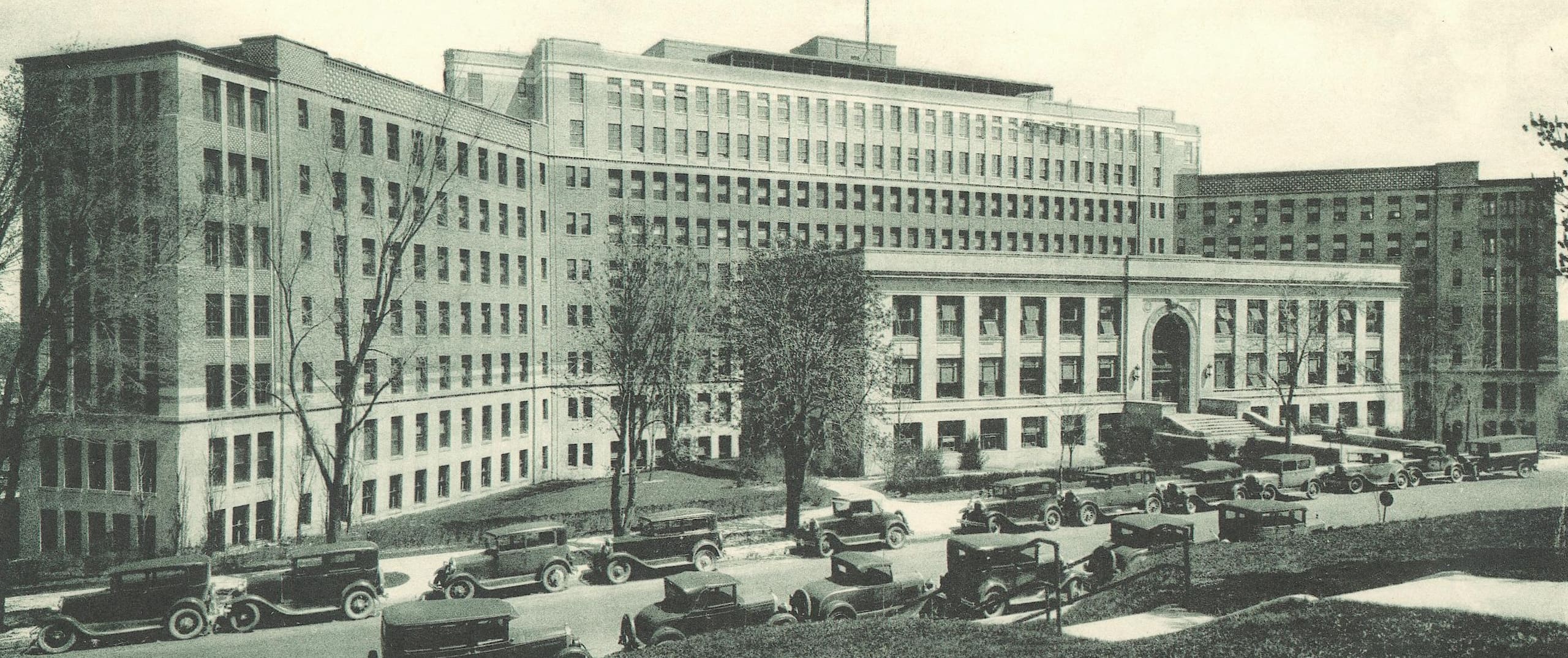
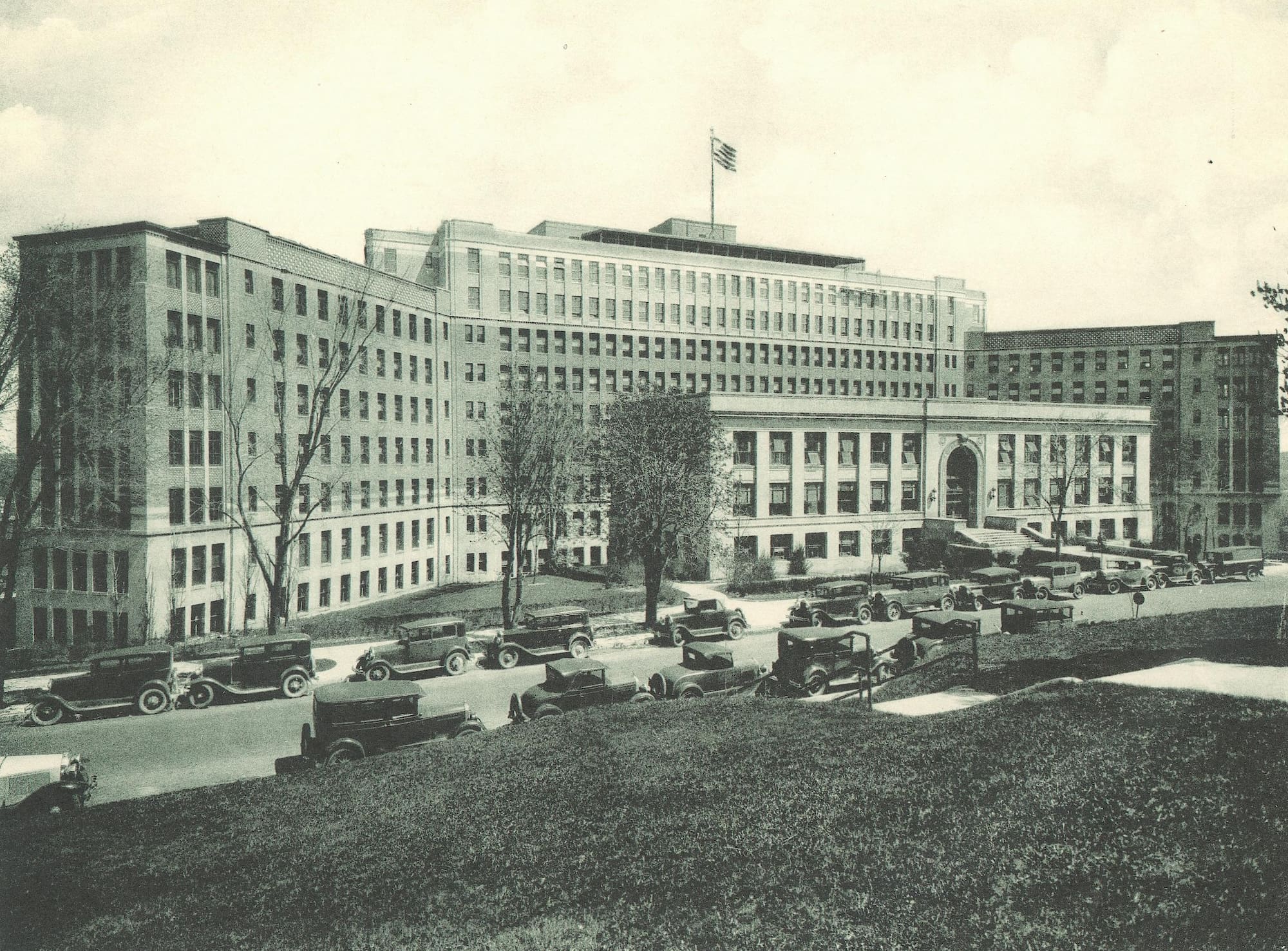
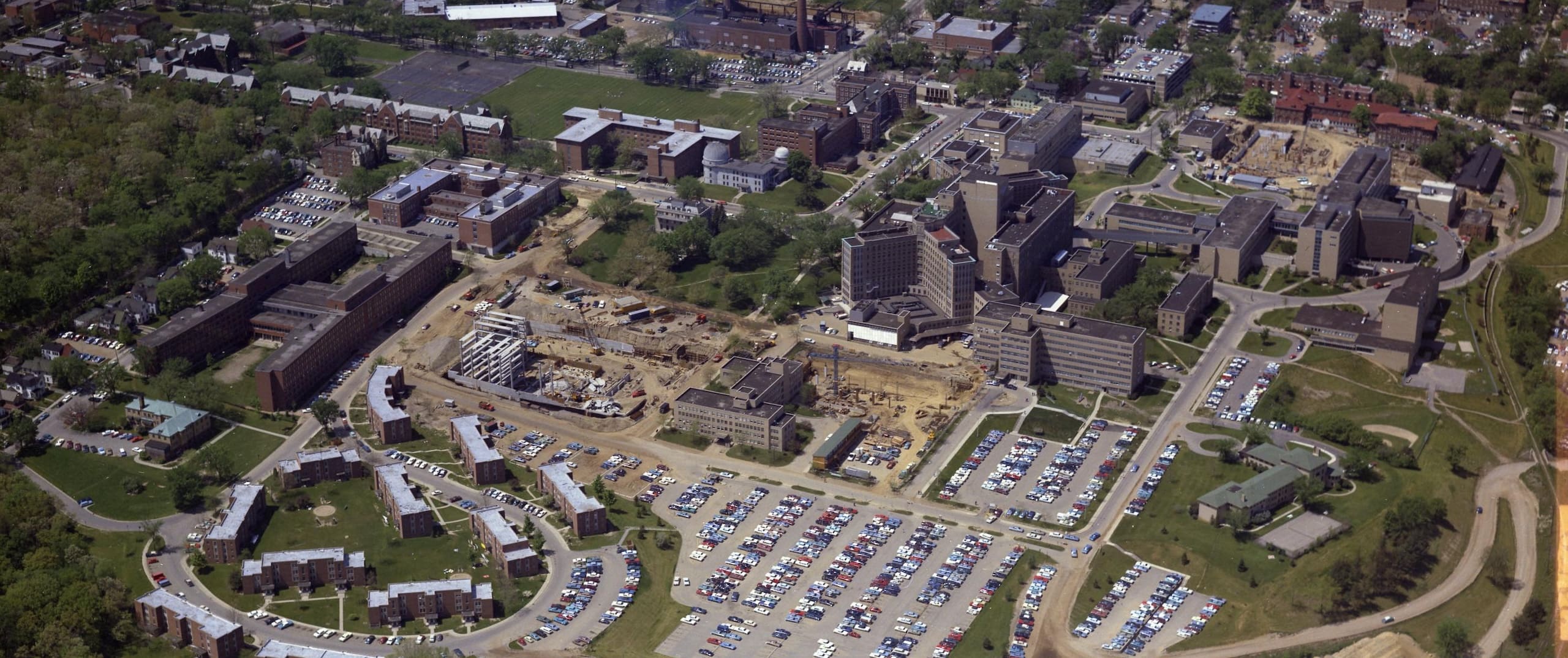
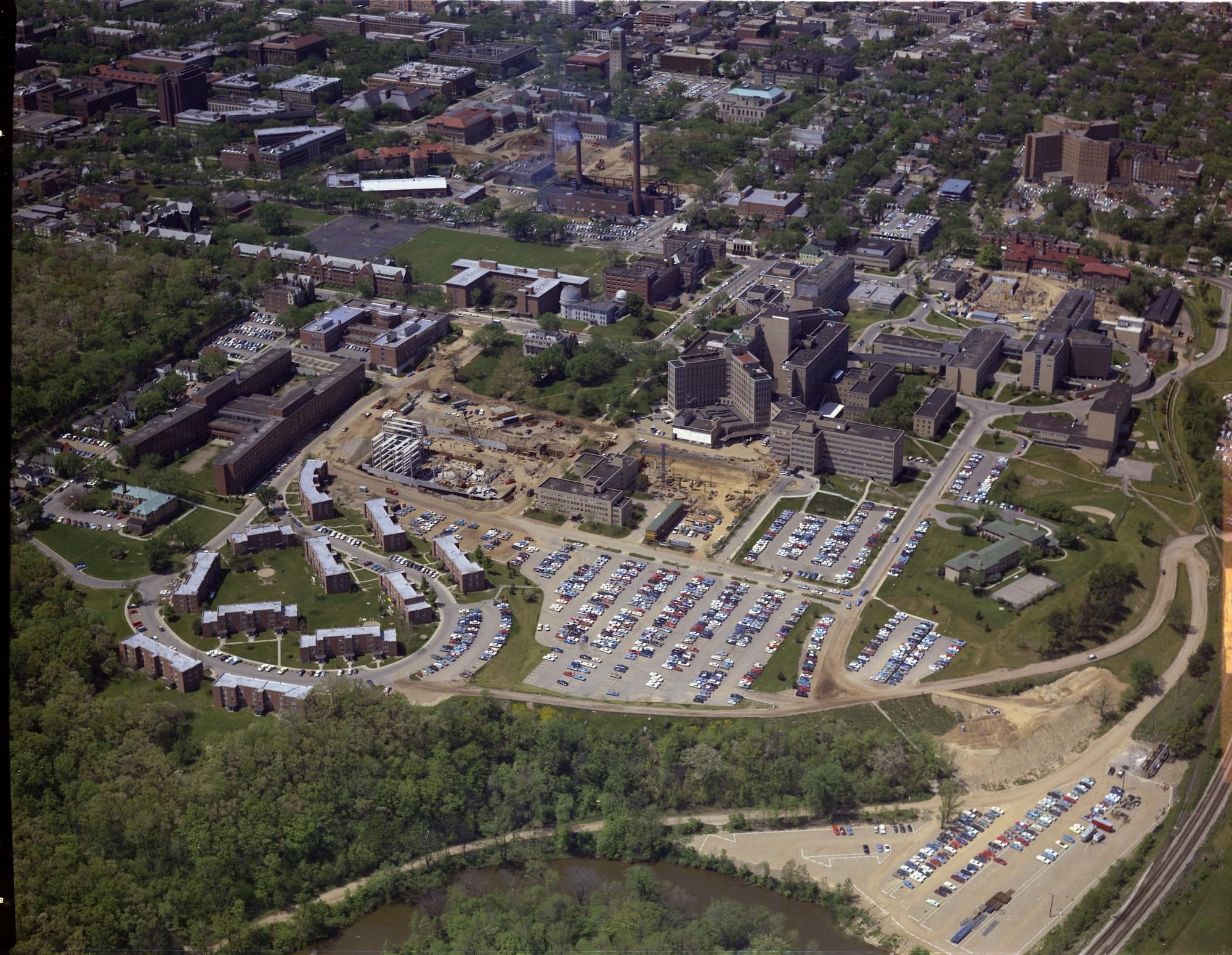
The University Hospital, also called "Old Main," was designed by architect, Albert Khan. Old Main opened in 1925 and closed in 1986 before being demolished in 1989.
This project situates familiar narratives of progress within a fuller historical record and examines how care has been organized, who has been included and excluded, whose labor has sustained the hospital, and how patients, families, students, staff, faculty, and surrounding communities have experienced Michigan Medicine.
Legacies of Care, Healing, and Belonging includes several distinct but overlapping research areas ranging from nineteenth-century medical school classes to mid-twentieth century care, education, and accessibility to gender and labor in late-twentieth century healthcare. Research into each area includes work with archival collections, oral history interviews, newspaper accounts, and other primary sources.
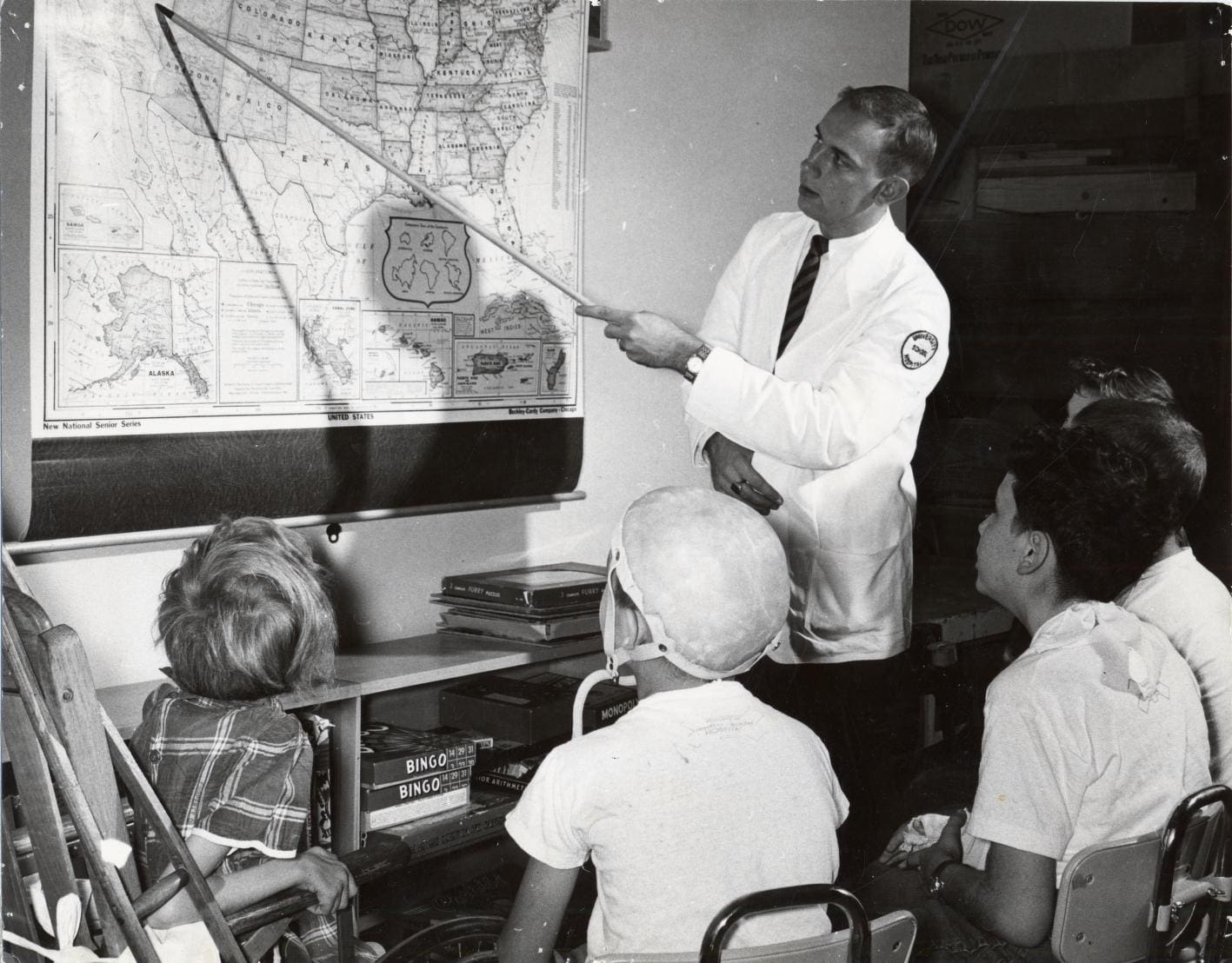
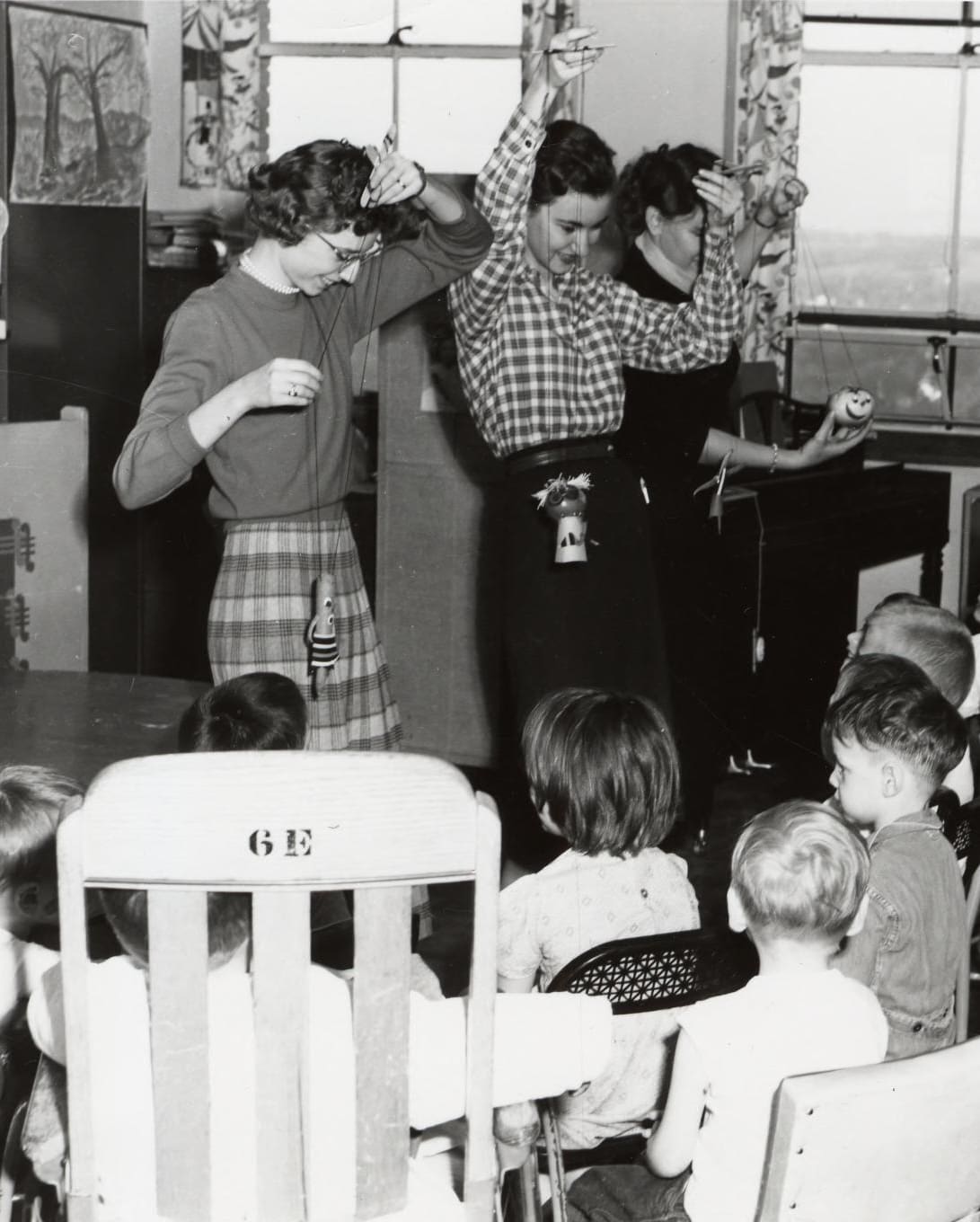
Disability, Accessibility, and Belonging: The University Hospital School, 1922-1969
Founded in 1922, the University Hospital School provided education, recreation, and therapeutic programming for children whose hospital stays could last weeks, months, or even years. This project uses the Hospital School as an anchor for exploring the intertwined histories of pediatric care, disability, special education, social work, and accessibility at Michigan Medicine.
The project asks how ideas about ability, accommodation, and belonging were shaped inside hospital and clinical spaces. It also considers how historical practices of care — including programs for children with polio, long-term illness, psychiatric needs, and physical disabilities — can help us better understand contemporary questions about access, inclusion, and institutional responsibility. This history opens directly onto questions that resonate today: how fitness for medical training has been defined and redefined through technical standards, how accommodation is negotiated on campus and in the hospital, and who is understood to belong in medicine.
Labor, Gender, and Healthcare: The 1981 Nurses’ Strike and the Politics of Care
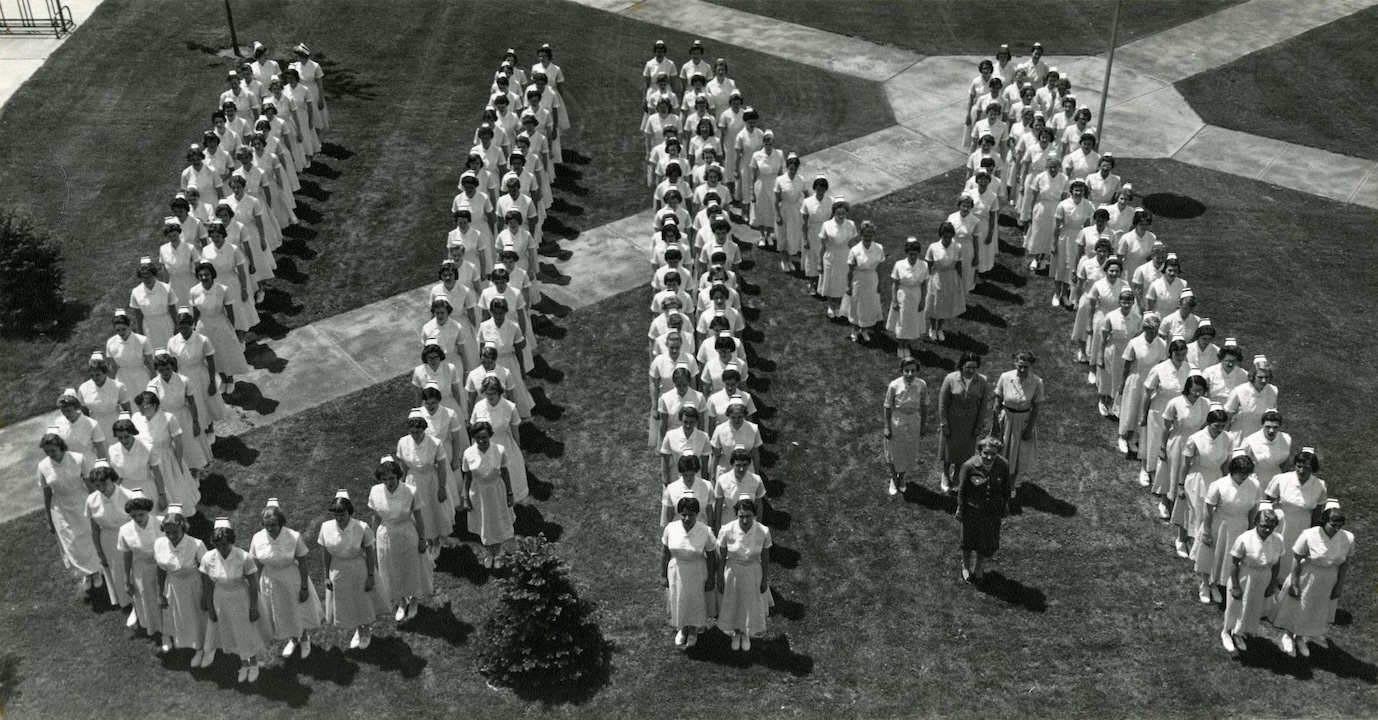
In the late 1960s and 1970s, Michigan experienced painful economic changes as manufacturing declined while the healthcare sector expanded, leading to the massive growth of hospitals as major employers. As healthcare utilization rates rapidly increased so did costs, followed by subsequent attempts to control them. An ever increasing “do more with less” approach placed particular pressure on nurses. These changes, taking place against a broader backdrop of social activism, the women’s liberation movement, and healthcare unionism, coincided with major shifts in nursing education and professional identity, with nurses increasingly viewing themselves as trained professionals rather than the “mothers of the hospital” they had once been.
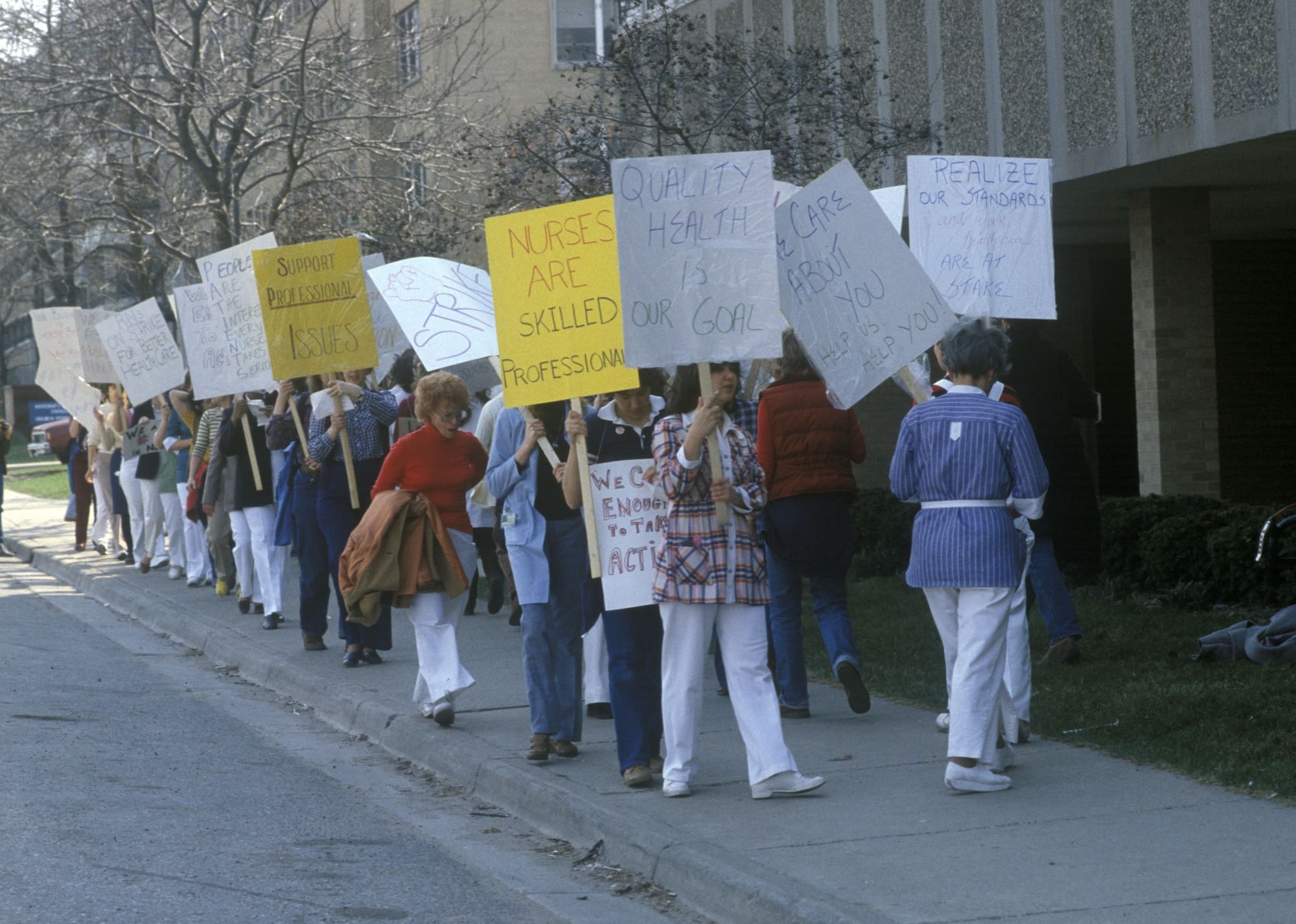
At U-M, these issues came to a head in the spring of 1981, when over half of University Hospital (UH) nurses went on a three-week strike over pay inequities, mandatory overtime, unpredictable schedules, a lack of respect by male-dominated administrators and physicians, and, most notably, the idea that their authority to practice stemmed from their employment at U-M rather than from their education and licensure. The strike reflected a growing struggle over whether nurses — 98% of whom were women — would be treated as subordinate staff or as healthcare professionals with autonomy, authority, and a meaningful role in hospital decision-making.
This project examines the history of labor, gender, and professional identity at the University of Michigan medical center by highlighting the nurses whose labor sustained UH and whose organizing challenged assumptions about gendered models of work and authority, professional expertise, and the conditions under which care is delivered.
Research into Classes of Medical Students
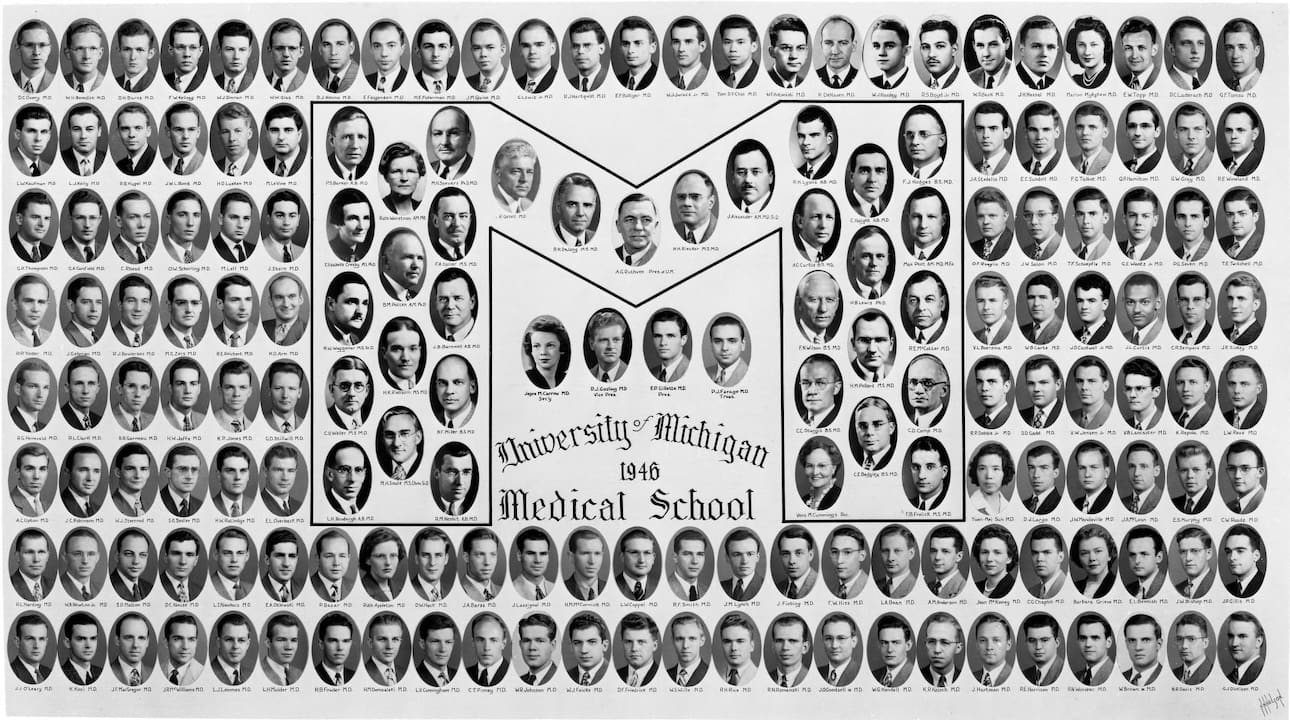
We are also pursuing research into women and students of color at the University of Michigan Medical School. U-M played an early role in expanding access to medical education. In 1870, after the Board of Regents voted to admit female students, it became the first medical school to admit women on the same basis as men. And while not the first medical school to do so, it was early in admitting Black, Asian, and Latino medical students. Yet, despite this history, relatively little is known about many of the women and medical students of color who attended or graduated from the U-M Medical school beyond “the firsts.”
To address these gaps, we are using the composite medical student photographs created for each graduating class as a starting point for identifying students whose histories warrant further research. Building on work from the African American Student Project, we are using archives, newspapers, census materials, medical directories, and other historical sources to trace the paths of these students after their education at the University of Michigan Medical School. This research will help reconstruct the students’ experiences at Michigan, trace their subsequent training and practice, and follow their careers and contributions to medicine and their communities.
Co-Principal Investigator, George E. Wantz M.D. Distinguished Professor of History of Medicine, Professor of Psychiatry, Medical School and Professor of History, College of Literature, Science, and the Arts
University of Michigan-Ann Arbor
Tonya Kneff-Chang
Co-Principal Investigator, Senior Researcher in the CREATE Center, and Lecturer, Marsal Family School of Education
University of Michigan-Ann Arbor
J. Alex Navarro
Co-Principal Investigator, Managing Director, Human Health & Well-being Impact Year, and Senior Research Associate, Center for History, Humanities, Arts, Social Sciences & Ethics in Medicine