The 1956 Project is recovering the stories of the students and faculty who arrived at Flint College in its first years, using biography to better understand our founding generation.
The University of Michigan-Flint opened in the fall of 1956 as a senior college, simply called Flint College. It shared a campus with Flint Junior College and offered only junior- and senior-year coursework: these two upper-level years were the whole of the college. Its first class graduated in 1958 with 76 seniors, a third of them women.
These were not stereotypical mid-century college students. They were commuters, veterans, parents, transfers, and people working full time. They took a risk on an institution that did not yet exist in settled form, and the faculty who taught them built a college as they went.
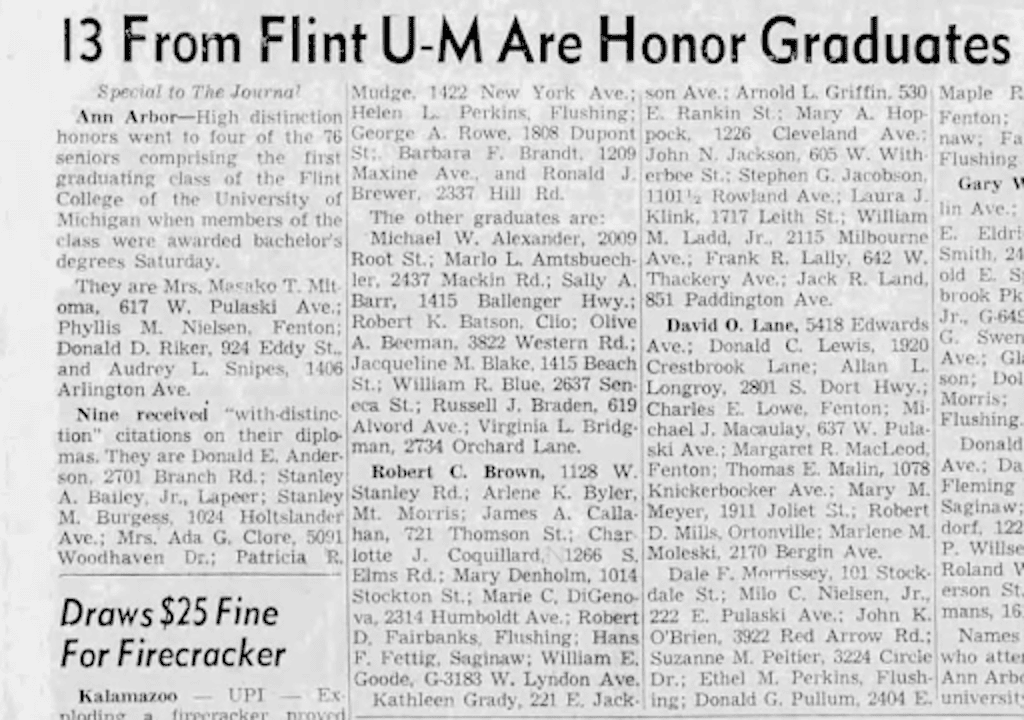
Seventy years later, the institutional record of those early years remains thin, and the people who lived them have rarely been asked to tell the story. We know the names of that first graduating class because a newspaper printed them. Nearly everything else has to be recovered.
The 1956 Project began in Spring 2025 to close that gap. It started with a single line in Robert Heywood’s 1996 history of campus, A Work in Progress: Portrait of the University of Michigan- Flint, that noted that the first valedictorian of the University of Michigan-Flint was a Japanese American woman. Almost nothing else about her, or about the 75 classmates who graduated alongside her, was publicly known. This project aims to correct that.
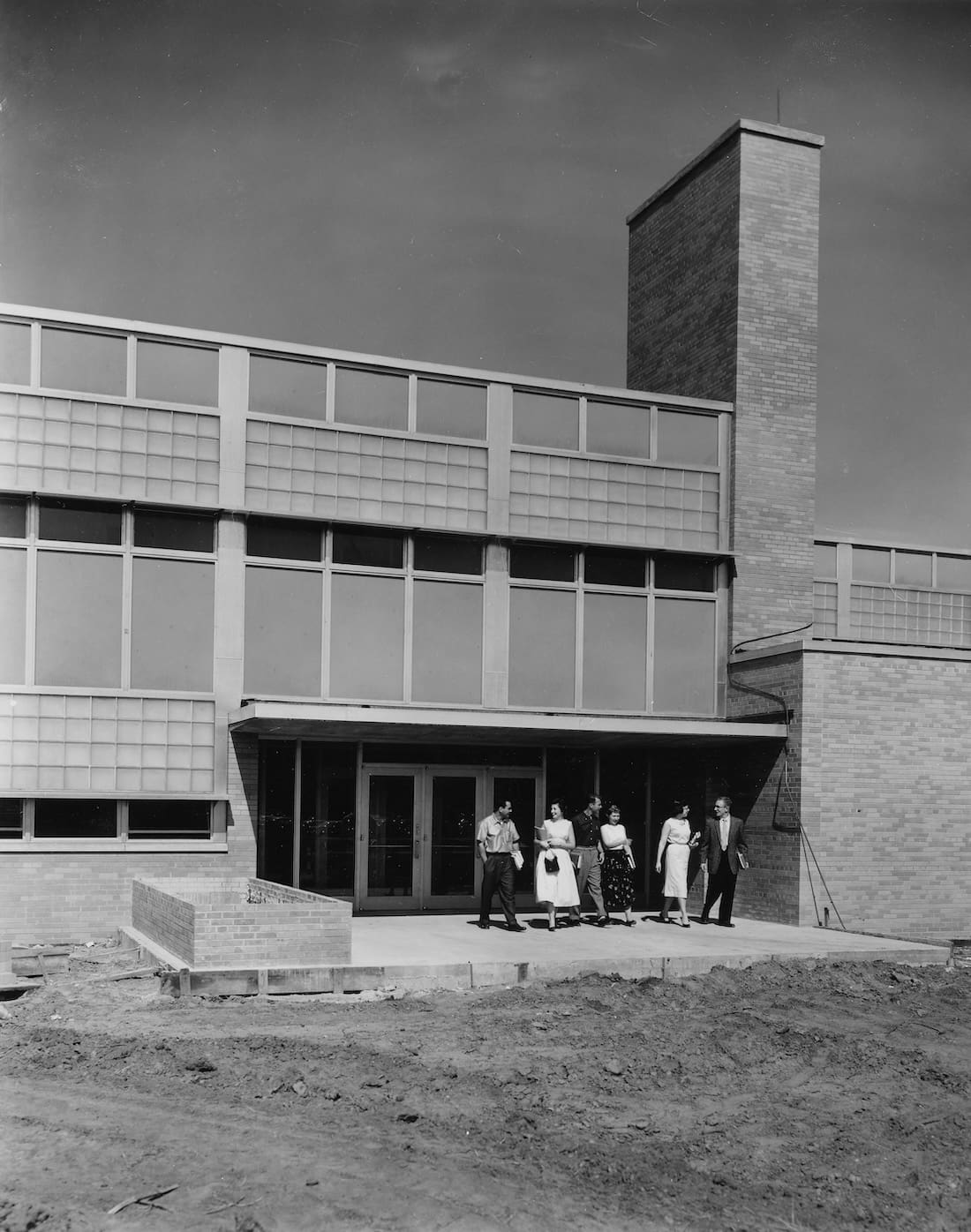
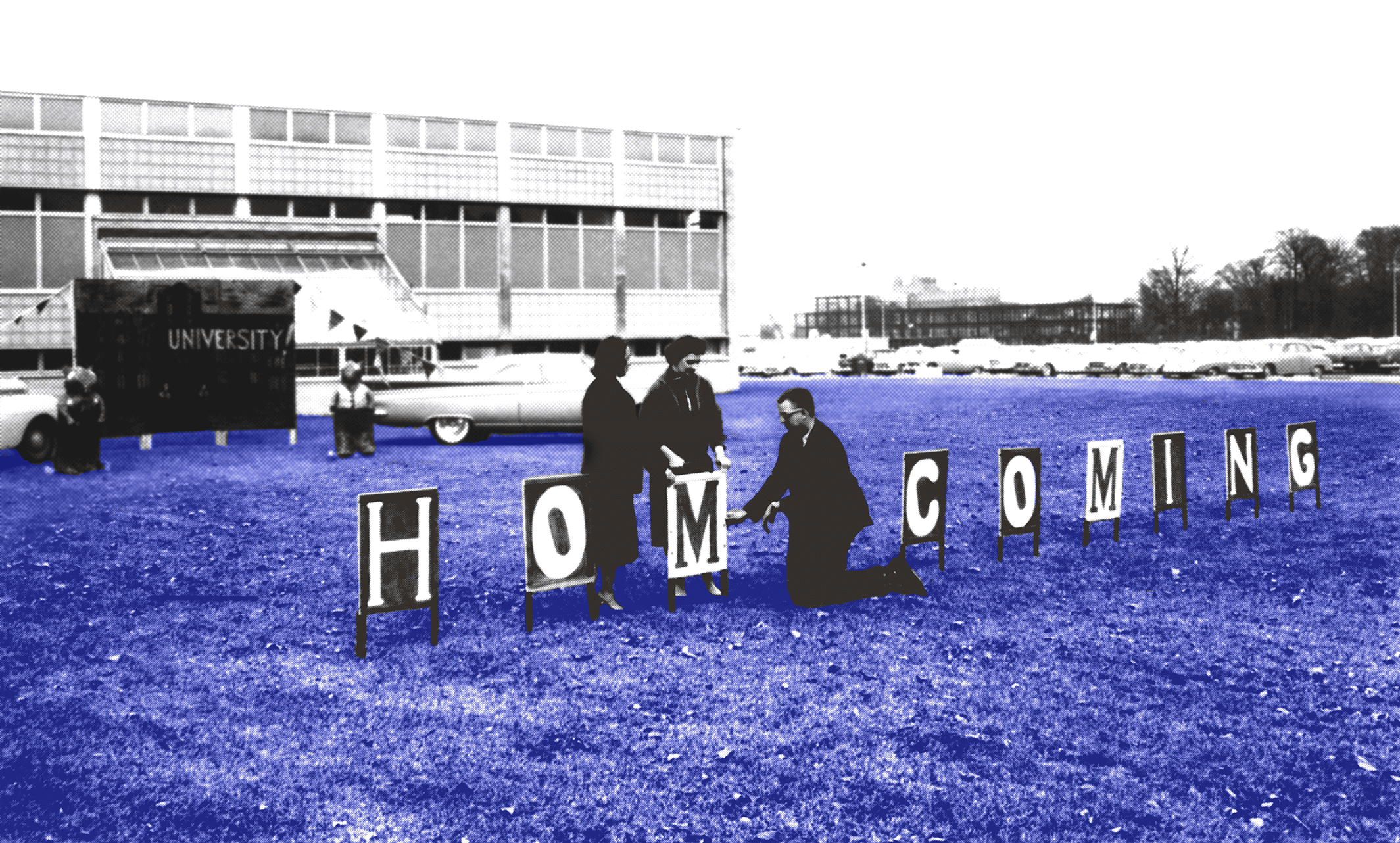
Students tour a newly built academic building at Flint College, now known as University of Michigan – Flint. Courtesy of Genesee Historical Collections Center, Frances Willson Thompson Library
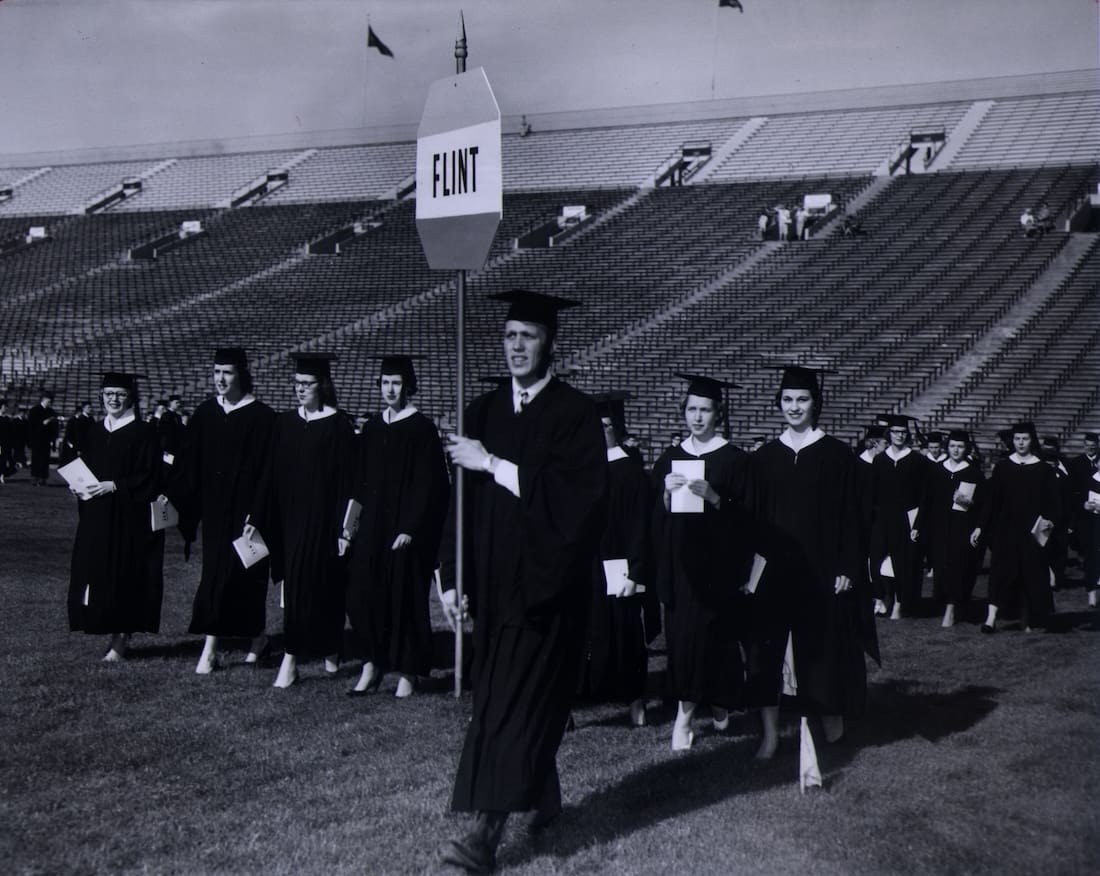
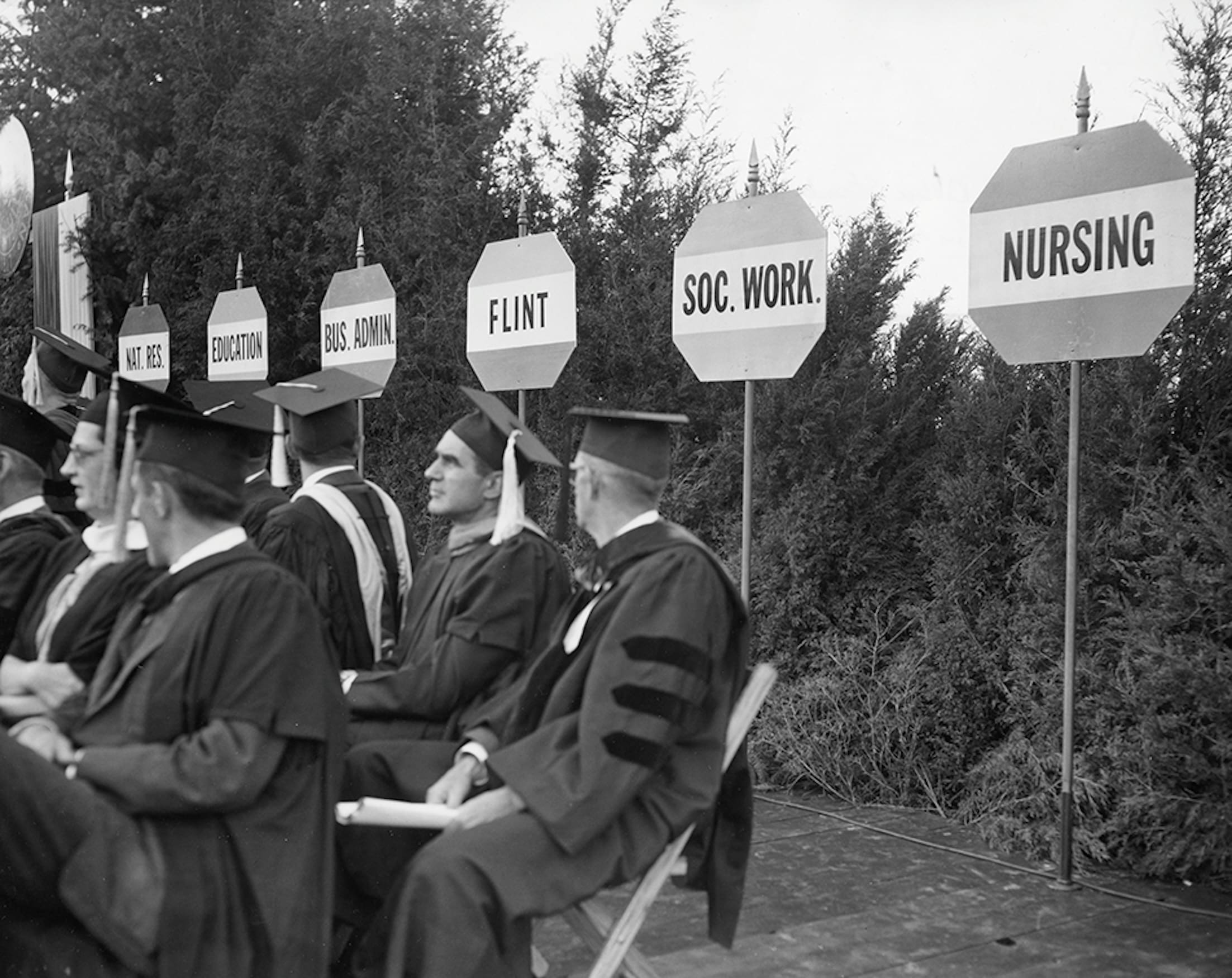
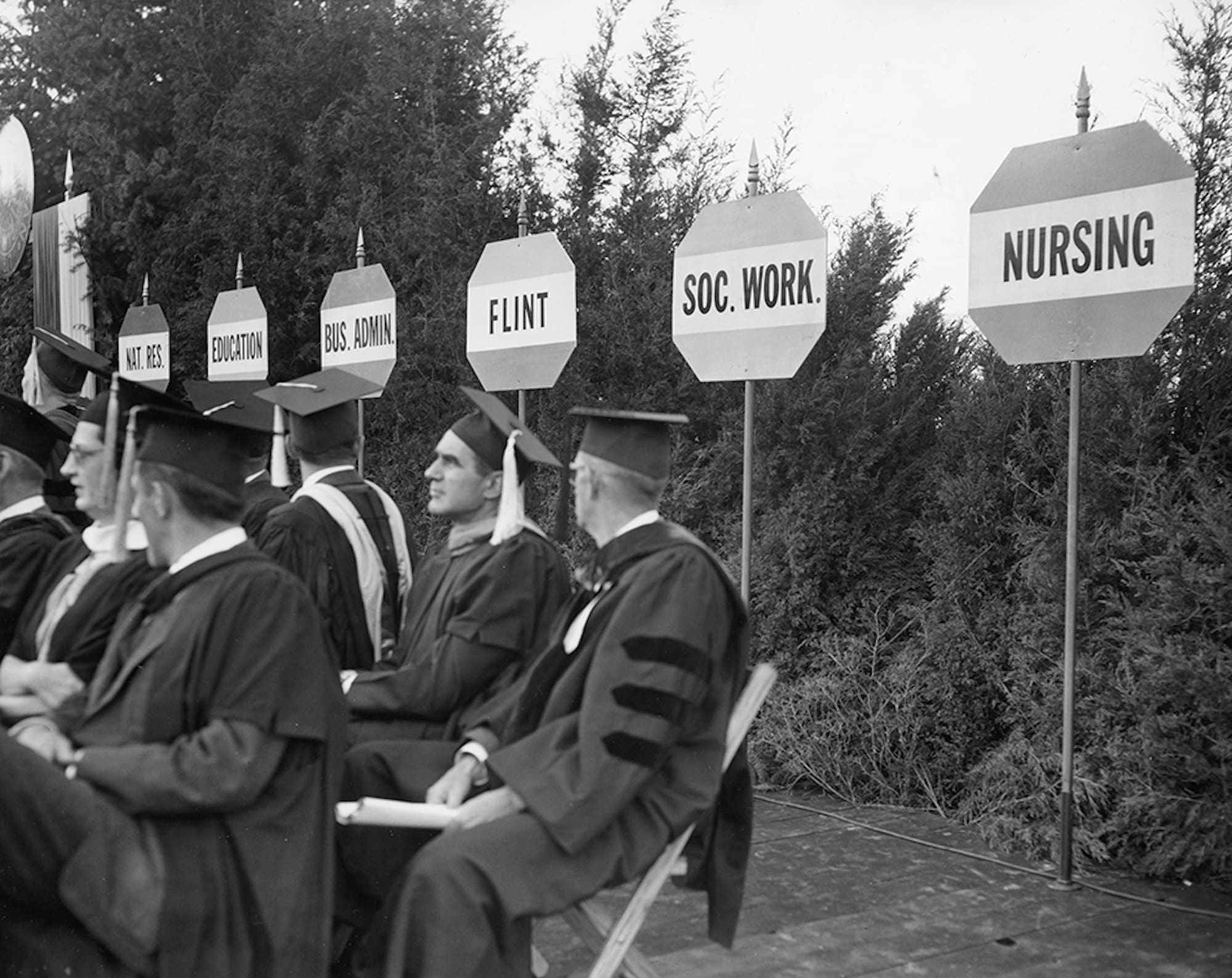
Flint College graduates proudly march through Michigan Stadium during the 1958 commencement ceremony. Courtesy of Genesee Historical Collections Center, Frances Willson Thompson Library
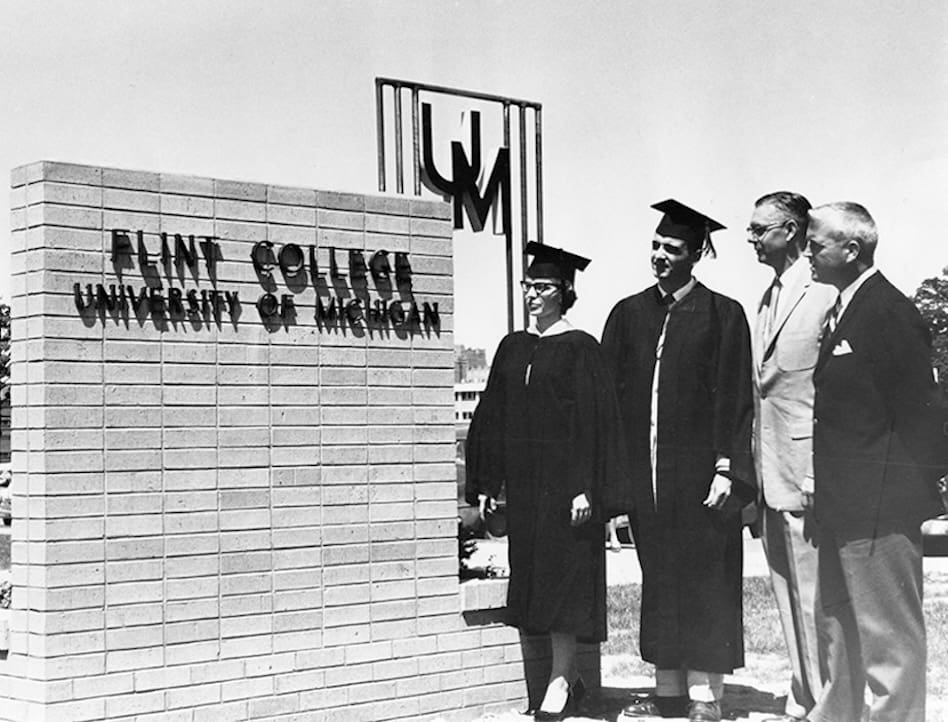
Graduates and faculty admire the new Flint College – University of Michigan sign in 1958. Courtesy of Genesee Historical Collections Center, Frances Willson Thompson Library
A newspaper article highlighting UM-Flint’s first honor graduates. Courtesy of Genesee Historical Collections Center, Frances Willson Thompson Library
The 1956 Project
Spring 2025 - Present
Biography, Memory, and the Archive
Students tour a newly built academic building at Flint College, now known as University of Michigan – Flint. Courtesy of Genesee Historical Collections Center, Frances Willson Thompson Library
The 1956 Project’s goal is to build a new public record of the founding of UM-Flint.The memories we collect and the biographies we build will be contributed to the Genesee Historical Collections Center at the Frances Willson Thompson Library, ensuring the research outlasts the project itself.
The First Graduates
The project’s first biographical profiles focus on three honor graduates of Flint College’s first class: Phyllis Cmejrek, Audrey Lattie, and Masako Mitoma.
Their names survive because The Flint Journal printed them in a graduation notice. The notice gives a name, an honor, and a street address, and almost nothing else. Everything the project now knows about these three women has had to be recovered from elsewhere: yearbooks, club rosters, commencement photographs, a hospital job transfer, a family’s shoebox.
Phyllis Cmejrek came out of a high school class of fewer than 70 and transferred from Central Michigan University. She worked in the Registrar’s Office while enrolled and took on the Arrow Society, student government, yearbook staff, and the senior class secretary-treasurer position. She later said she never felt like an outsider or like a small fish in a large sea.
Audrey Lattie was a Flint native and the first in her family to attend college, even though her father considered higher education to be wasted on women. She began at Flint Junior College and could not afford to finish a degree anywhere else. She enrolled at the new senior college as soon as enrollment opened. As she put it, she couldn’t afford to go away to Ann Arbor, so she was pleased when Michigan came to Flint.
Masako Mitoma was a student at the University of California, Berkeley when the United States entered World War II. She and her family were incarcerated at the Topaz camp near Delta, Utah. She came to Flint years later when her husband took a position at St. Joseph Hospital and enrolled at Flint College as the mother of four children. She graduated as its first valedictorian. The newspaper listed her as “Mrs. Masako T. Mitoma,” with an address on West Pulaski Avenue.
Three paths, one common thread: all three women needed access rather than ability, and the new college in Flint offered an affordable local route to a University of Michigan degree. Their profiles will anchor a digital collection now in development, presenting the biographies alongside archival images and interactive maps of the campus’s first years.
Inaugural Class Oral Histories
The research team is collecting oral histories from surviving members of the inaugural class and their families. Recordings and transcripts are being deposited at the Genesee Historical Collections Center (GHCC), part of UM-Flint’s Frances Willson Thompson Library, and will become available to researchers and to the public.
Alumni Archives
Much of the surviving material from UM-Flint’s early years is not in any archive: it is in the homes of the people who attended the university. At project events, alumni are invited to bring photographs, programs, letters, and other materials from their years on campus to a digitization station where items can be scanned on site. With the owner’s permission, digital copies will then enter the archive at GHCC. Materials can also be submitted digitally at any time.
What’s Ahead
The next phase of the 1956 Project extends biographical research across more of that group of early graduates, drawing on the same mix of institutional records, student publications, and family-held material that made the first profiles possible.
Oral history collection continues. The project is actively seeking members of the inaugural class, their families, and anyone who was on the Flint campus in its earliest years.
The digital collection now in development aims to bring the project’s research into public view, presenting the biographies alongside archival images and interactive maps of the campus’s first years. It will also include the material gathered through alumni digitization events, so that what alumni contribute becomes more broadly accessible.
As UM-Flint marks its seventieth year, the project’s aim is to make the founding generation legible to the students who followed them, and to make clear that the current generation is producing the archive of 2096.
Flint College graduates proudly march through Michigan Stadium during the 1958 commencement ceremony. Courtesy of Genesee Historical Collections Center, Frances Willson Thompson Library
Are you a member of UM-Flint’s inaugural class, or a family member of someone who was? Do you hold photographs, documents, or memories from the campus’s earliest years? Our research team would like to hear from you. Contact us at [email protected].
Principal Investigator; Campaign Initiatives & Alumni Engagement Director, University Advancement
University of Michigan-Flint
Jacob Jones
IHP Program Coordinator
University of Michigan-Flint
Project Events & Updates
Event
Oct. 16, 2026
In-Person
A Blue Carpet Affair: The Stories that Shaped Us
UM-Flint alums joined us for an Alumni Homecoming Gala at the Flint Institute of Arts to celebrate UM-Flint’s original graduating class of 1958. Attendees enjoyed food, drinks, music, and dancing while learning about the IHP’s 1956 Project.