The University of Michigan in the Middle East is a tri-campus project that explores the history of U-M’s institutional and informal connections to the Middle East through two events—the Iranian Revolution of 1977-79 and the Gulf War of 1990-91—that resonated trans-nationally and affected multiple communities of Middle Eastern and North African (MENA) heritage on all three U-M campuses.
This new project grew organically from work begun on the Dearborn campus. Themes that emerged from oral histories and survey and focus group research about travel to the Middle East and how connected people of all backgrounds feel to the Dearborn campus community led us to revisit campus archives, student publications, and the historical press for more context about the transnational experiences of people of Middle Eastern and North African heritage. Those initial studies inform the main lines of inquiry for this tri-campus project.
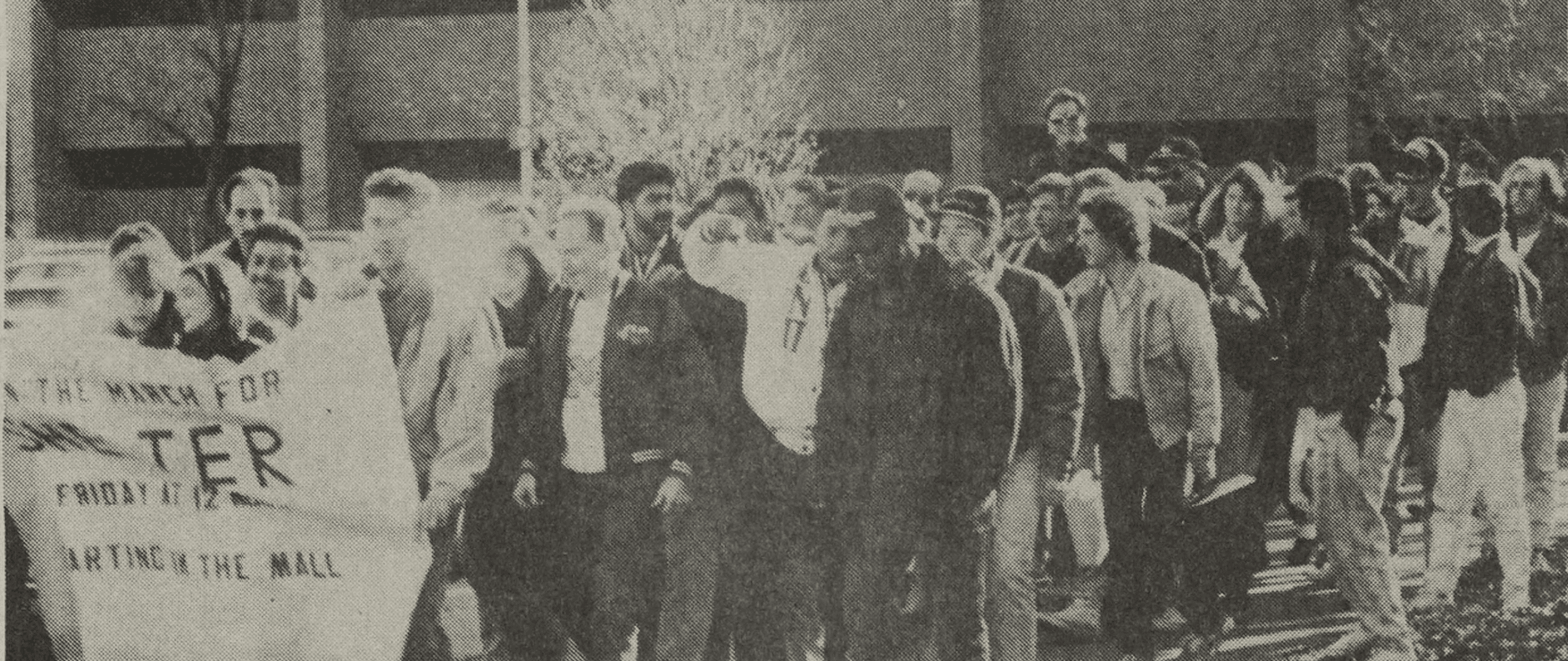
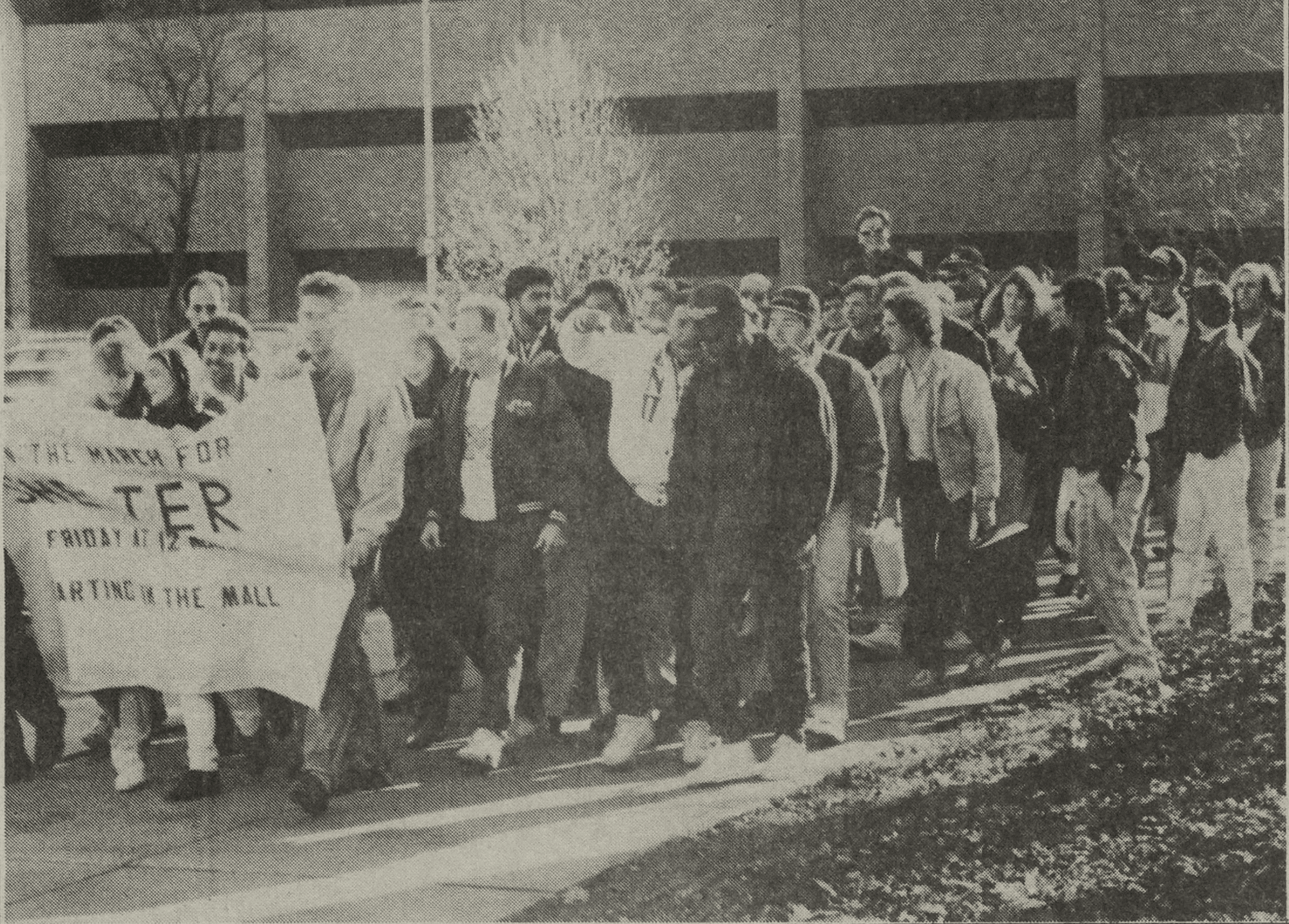
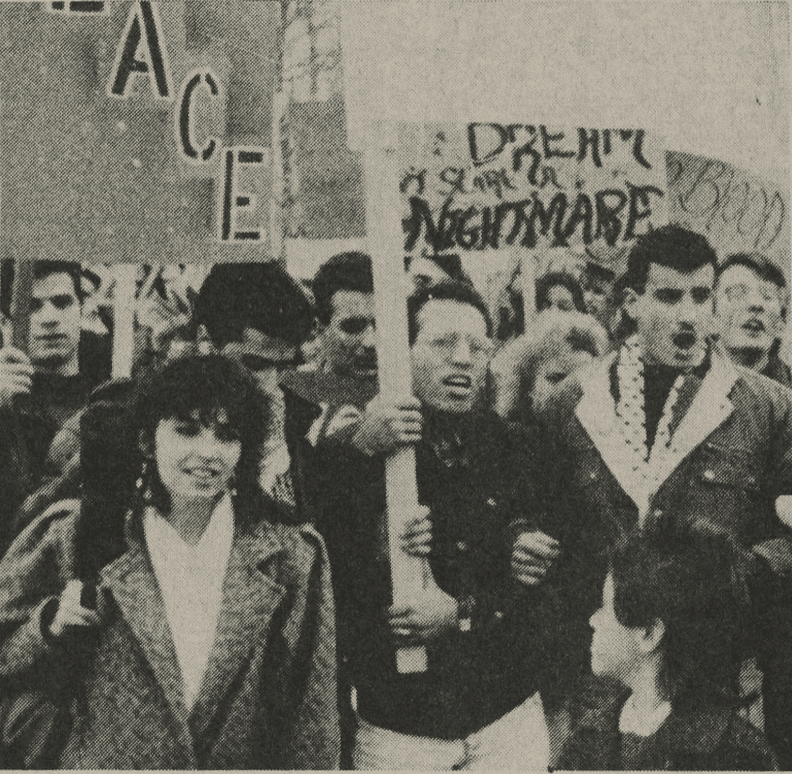
UM-Dearborn students marching in a peace rally on the day before Operation Desert Storm began, January 22, 1991. Photograph by Timothy Kosinski for The Michigan Journal, vol.20, iss. 17. UM-Dearborn Student Publications, U-M Library Digital Collections
The University of Michigan in the Middle East
Fall 2026 - Present
Exploring U-M’s Transnational Connections with the Middle East on All U-M Campuses
Building on interviews and survey data, U-M in the ME asks how the university was connected to American missionary activity, diplomacy and trade in the Middle East in the 19th century, and, later, to American “soft power” in the region during the Cold War. How did those connections shape research, teaching and institutional culture at all of U-M’s campuses? How, in turn, have those institutional and cultural legacies shaped the experiences of people of MENA heritage as they have joined U-M’s campus communities to contribute their talents as students, staff, and faculty?
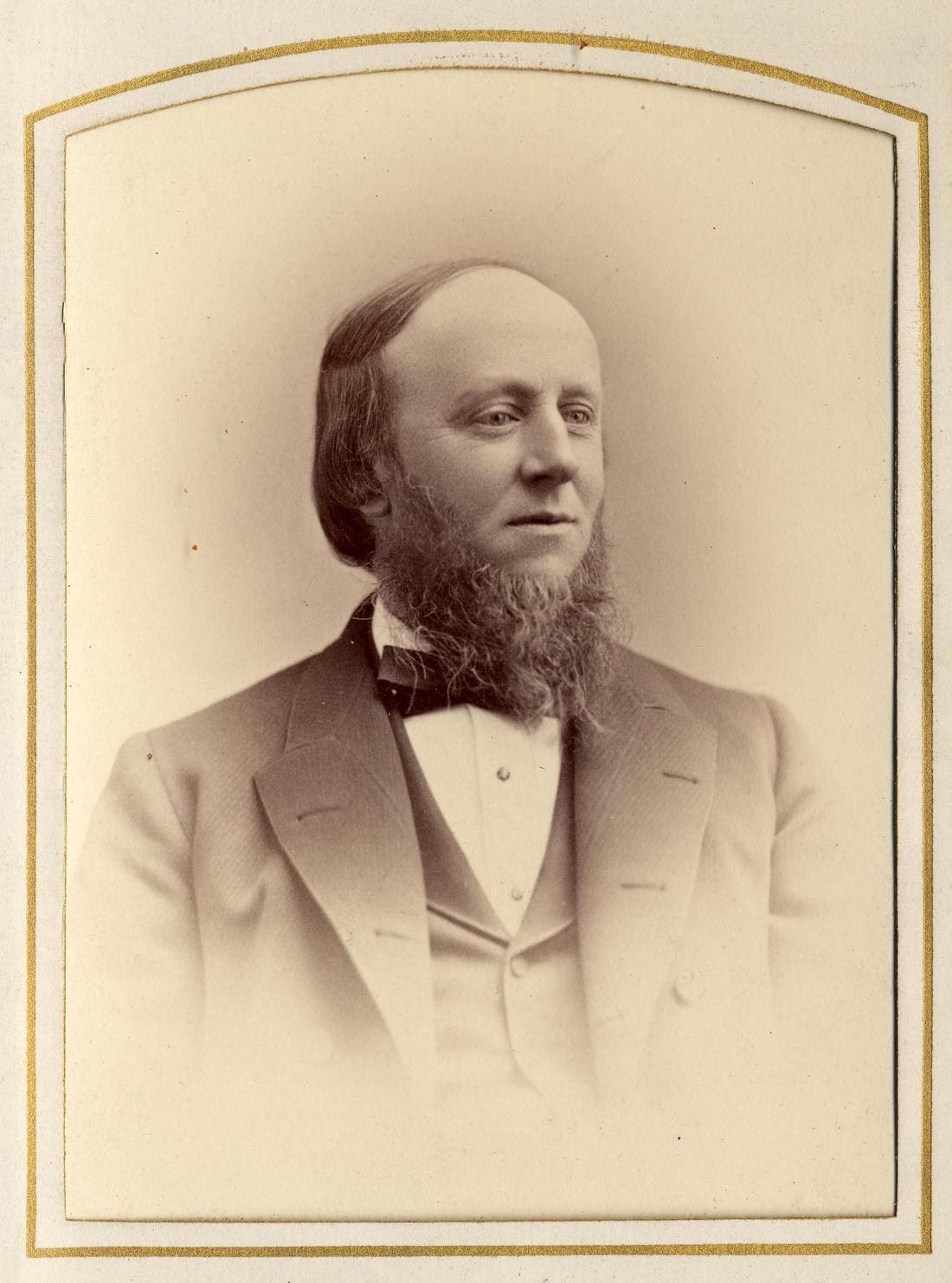
The team’s research is revealing a story of U-M’s connections to the Middle East and North Africa as a microcosm of what Douglas Little describes as “American Orientalism,” with UM-Ann Arbor’s academic life entwined with American missionary activity, trade, and diplomacy in the 19th century. Those early institutional patterns, which uncritically accepted framing of societies throughout the Middle East (and Asia generally) as backward, despotic, and devoid of any culture worth emulating (yet with artifacts and specimens very much worth acquiring), shaped the development of Middle East Studies at UM-Ann Arbor during the Cold War, which had implications not only for U-M but for the field as a whole. However, academic programming in this emerging field did not extend to U-M’s newer campuses at Flint and Dearborn; indeed, a modest program at UM-Dearborn did not begin to emerge until the late 1990s.
As all three campuses gained MENA heritage stakeholders as international or US-born students, staff, and faculty in the 20th century, a growing transnational dynamic emerged, which our research team is exploring through research in campus archives and historical press coverage as well as through oral history research.
U-M in the ME plans to feature this tri-campus transnational history in three storytelling projects that will focus on:
Wolverine Orientalism: The Legacies of President Angell’s Diplomacy in China and the Ottoman Empire
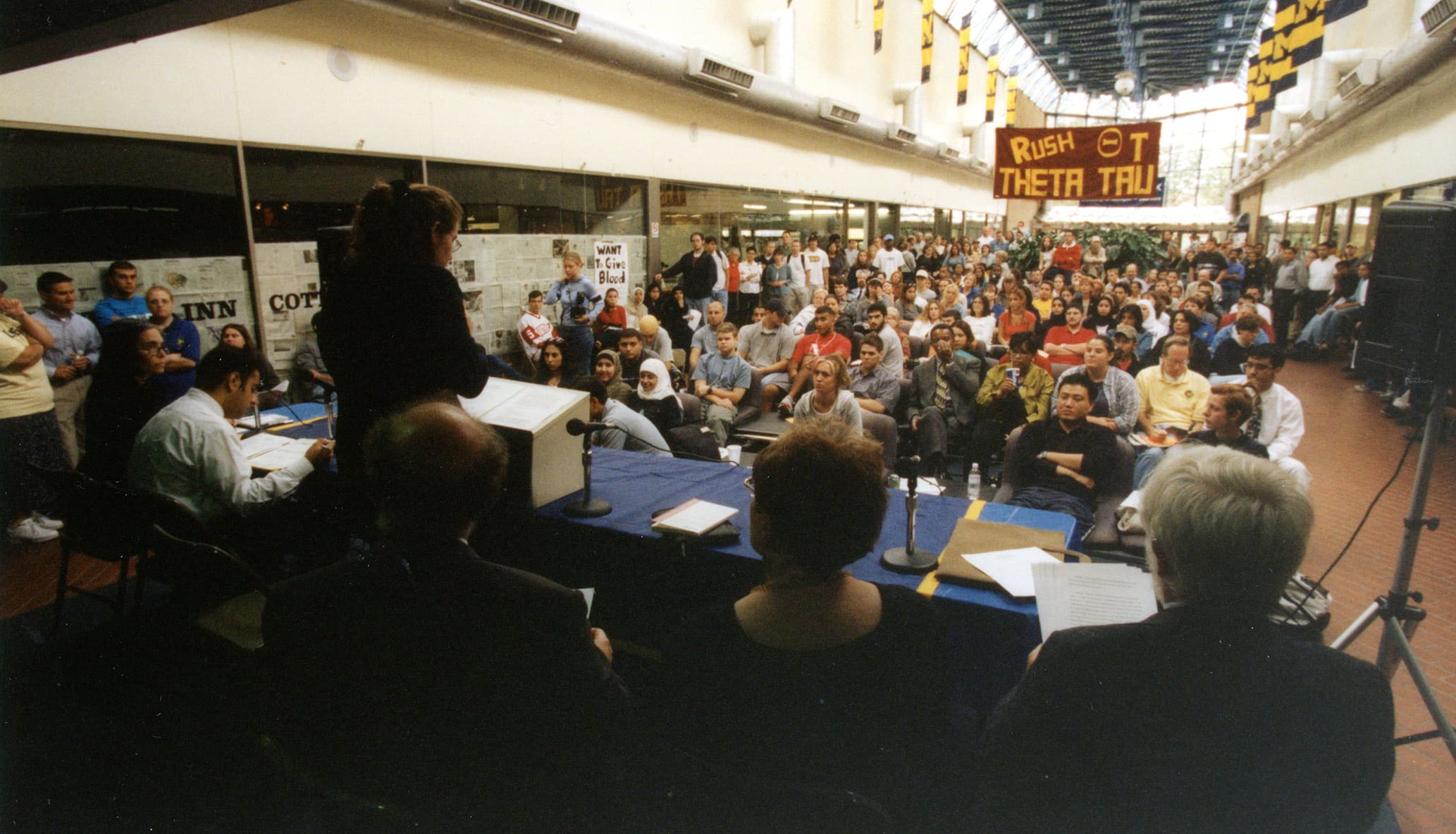
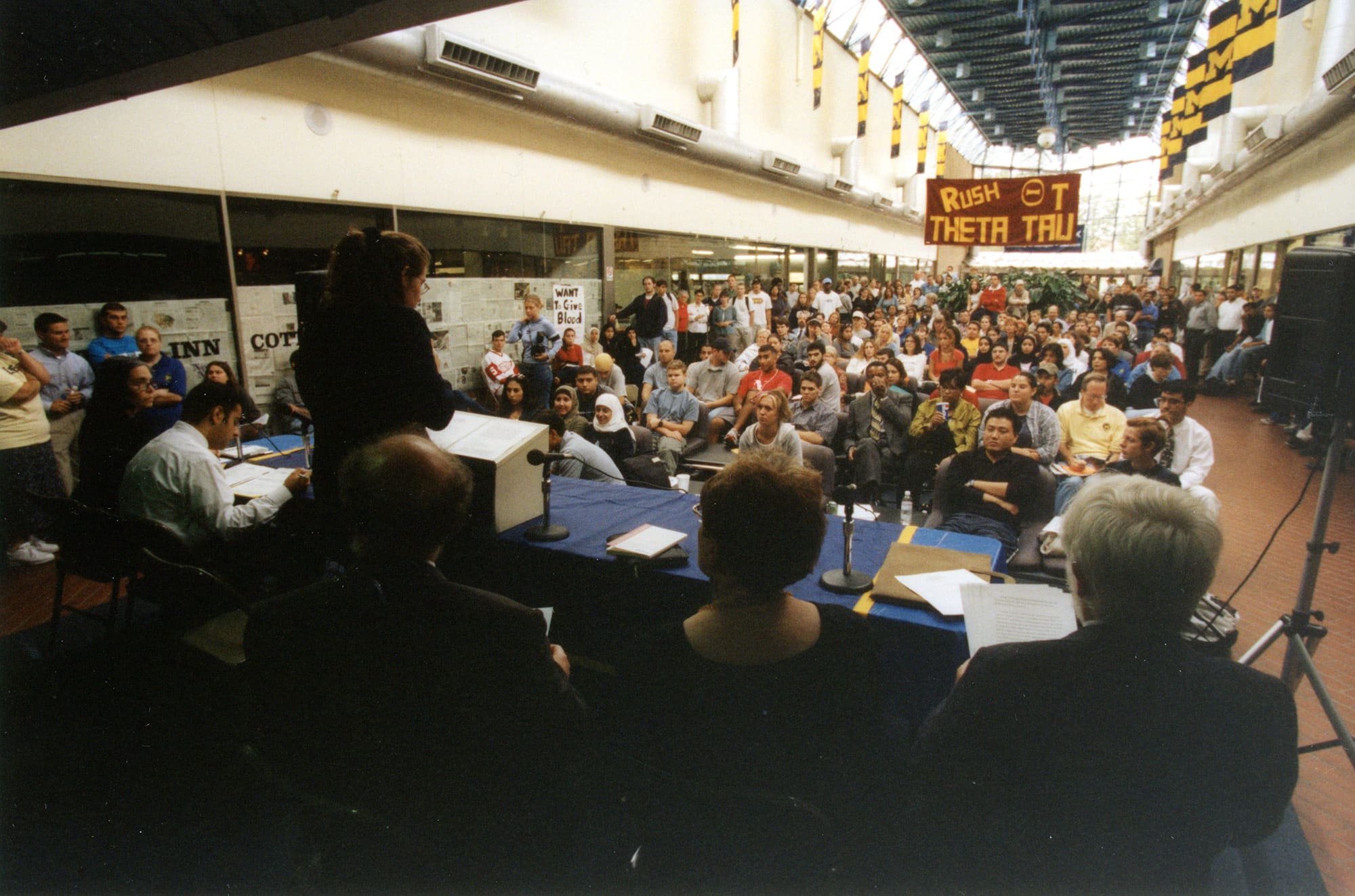
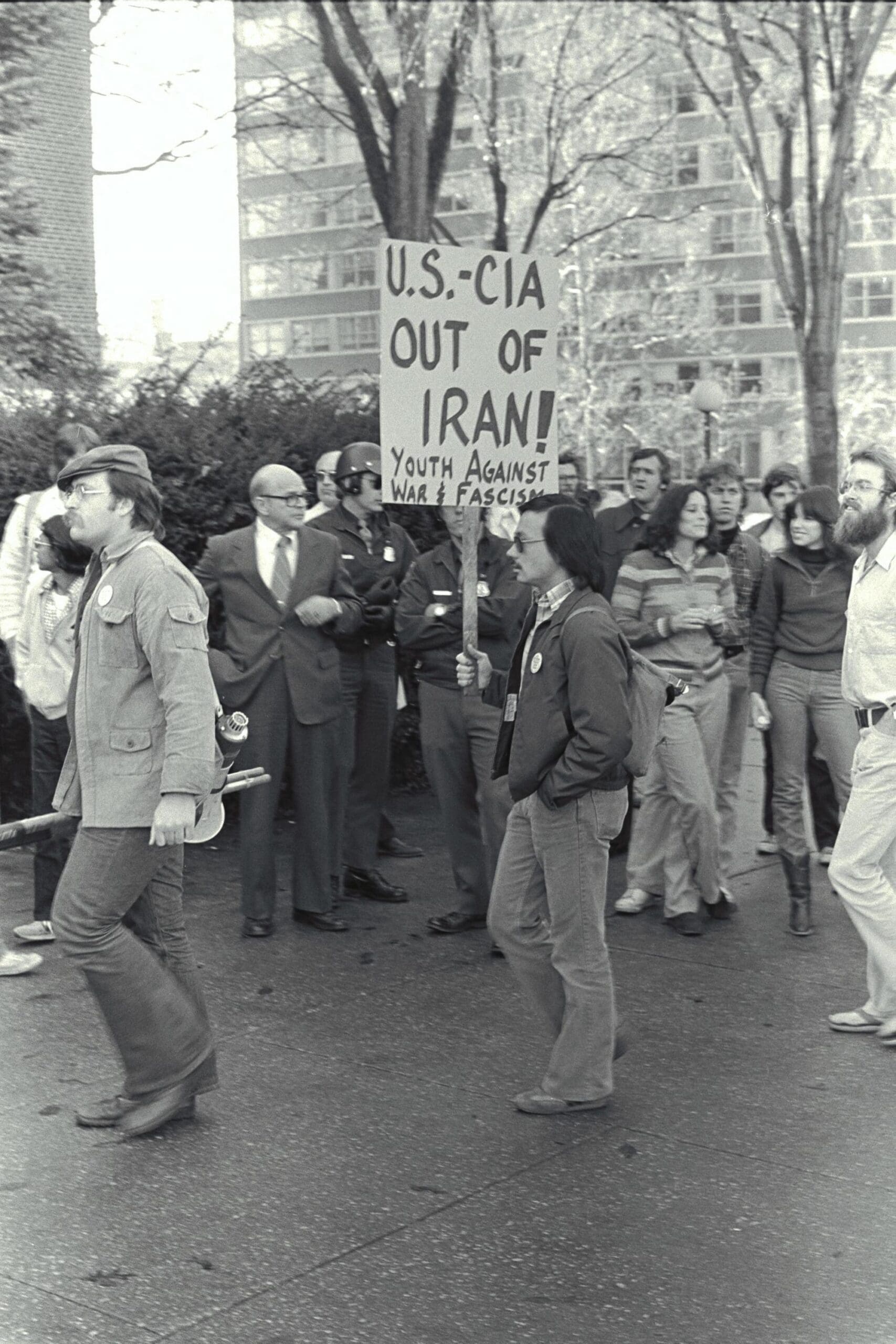
U-M’s Campus Communities and the Rise of Iran’s Islamic Republic, 1977-1981
U-M’s Campus Communities and the “Pax Americana” in the Middle East: From Gulf War I to 9/11
Evidence Driven Storytelling: Inviting Further Inquiry
U-M in the ME plans to deploy the Survey of Travel, Mobility, and the Campus Community to the Flint and Ann Arbor campus communities to better understand the dimensions of belonging and mobility among university community members with connections to the MENA region. The research team will continue to gather information based on the survey findings through focus groups and a series of oral history interviews.
The interviews collected by U-M in the ME will be added to the Michigan Middle East Travelers Oral History Project (MMETOHP), and that project will expand to include new oral histories narrated by current and former students, staff, faculty, and community members regarding their experiences and connections with the MENA region, U-M, or the field of Middle East Studies.
In addition to collecting interviews, U-M in the ME will partner with the University of Michigan-Dearborn’s Inclusive Storytelling Hub (ISH) to create a limited podcast series on key inflection points that reveal the institution’s relationship to the Middle East and MENA communities.
These deliverables will eventually be showcased together on a digital platform that will trace the university’s impact on the MENA region and the field of Middle East Studies across two centuries and three campuses.
Co-Principal Investigator, IHP Co-Director of Research, Professor of Middle East and Iranian Diaspora Studies, College of Arts, Sciences, and Letters
University of Michigan-Dearborn
Lisa M. Lapeyrouse
Co-Principal Investigator, IHP Co-Director of Research, Associate Professor of Public Health and Health Sciences, College of Health Sciences
University of Michigan-Flint
Charlotte Karem Albrecht
Project Consultant, Associate Professor of American Culture and Women's and Gender Studies, Director of Arab & Muslim American Studies, College of Literature, Science, and the Arts
University of Michigan-Ann Arbor
Cameron Cross
Project Consultant, Associate Professor of Middle East Studies, Director of Undergraduate Studies in Middle East Studies, College of Literature, Science, and the Arts
University of Michigan-Ann Arbor
Mohamed Daassa
Project Consultant, Lecturer IV in Foreign Language and History, College of Arts, Sciences and Education
University of Michigan-Flint
Reena Hamad
Undergraduate Research Assistant
University of Michigan-Dearborn
Lucine Jarrah
Project Consultant, Executive Director of the Arab American Heritage Council (AAHC), Community Engaged Research Program Manager, Office of Research
University of Michigan-Flint
Jacob Jones
IHP Program Coordinator
University of Michigan-Flint
Marlaine Magewick
IHP Project Manager for Digital Humanities
University of Michigan-Dearborn
Katayoun Matloubi
Research Associate
University of Michigan-Dearborn
Kandra Polatis
IHP Research Fellow
University of Michigan-Dearborn
Rose Wellman
Project Consultant, Associate Professor of Anthropology, College of Arts, Sciences, and Letters