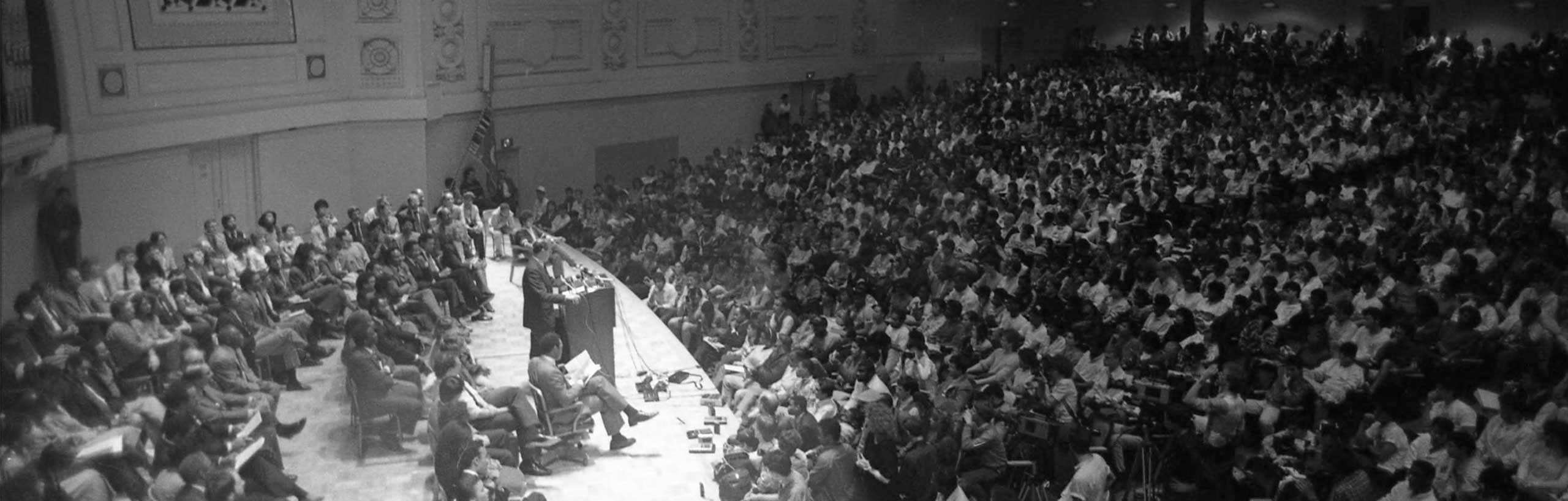
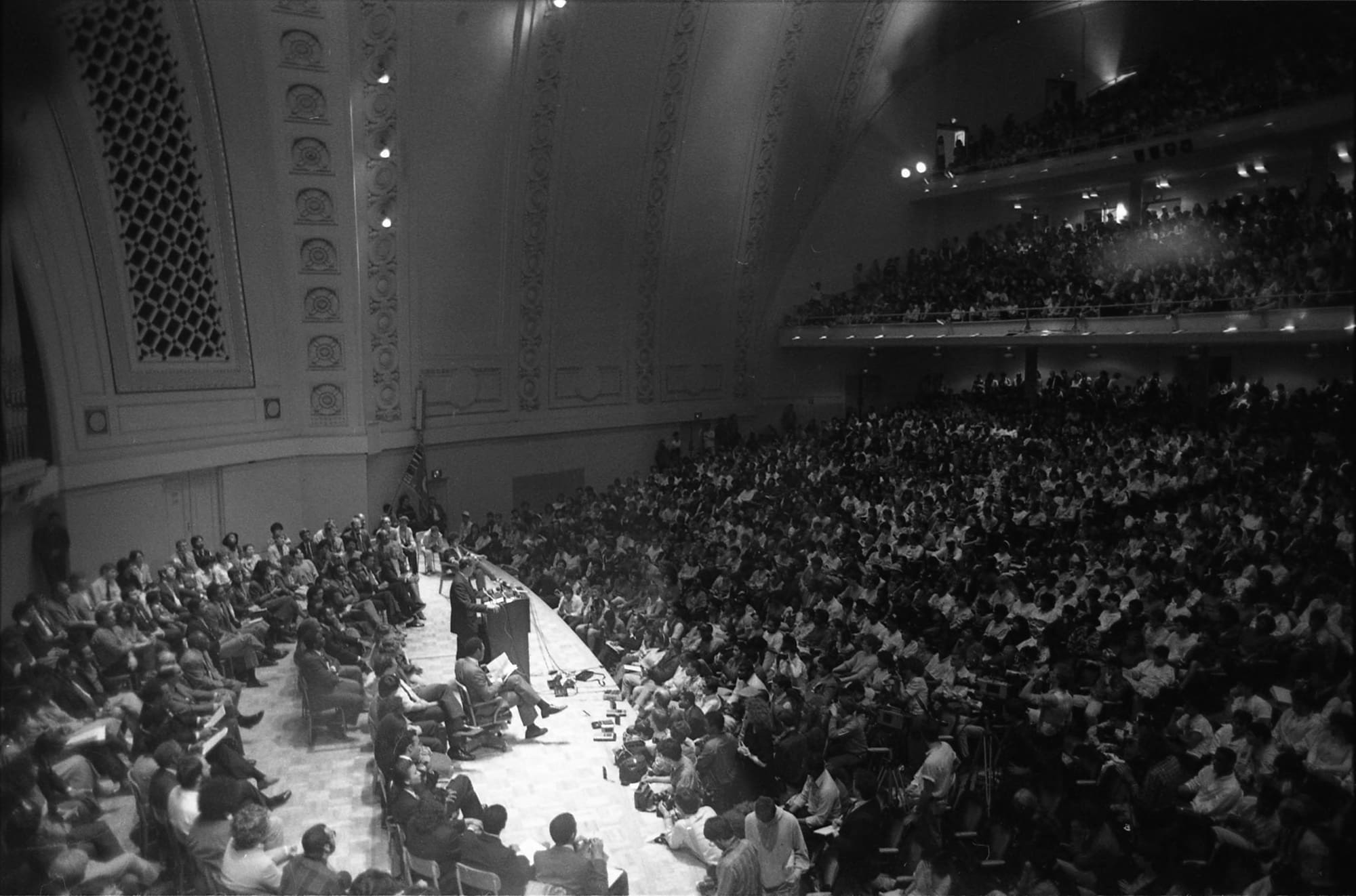
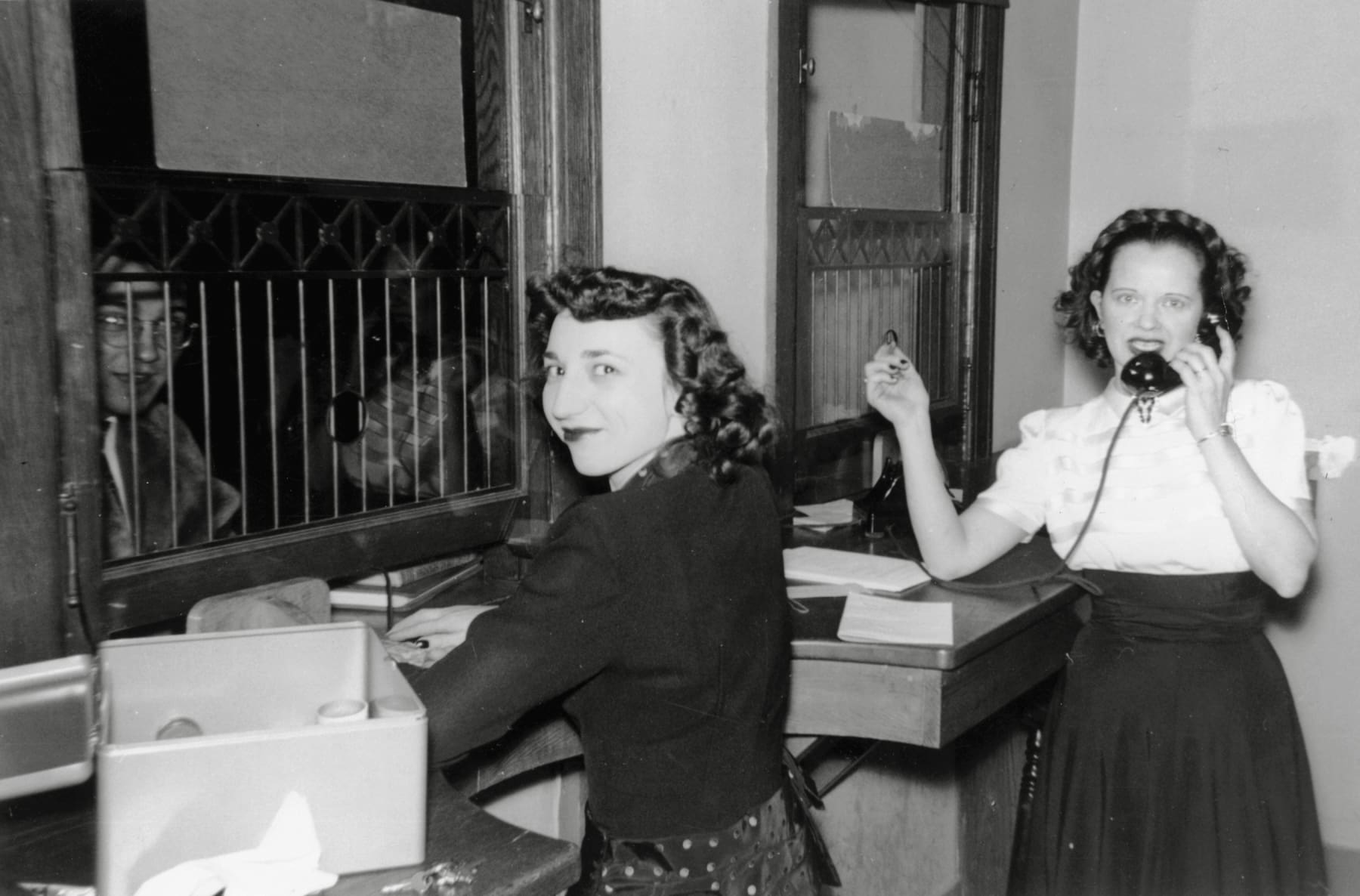
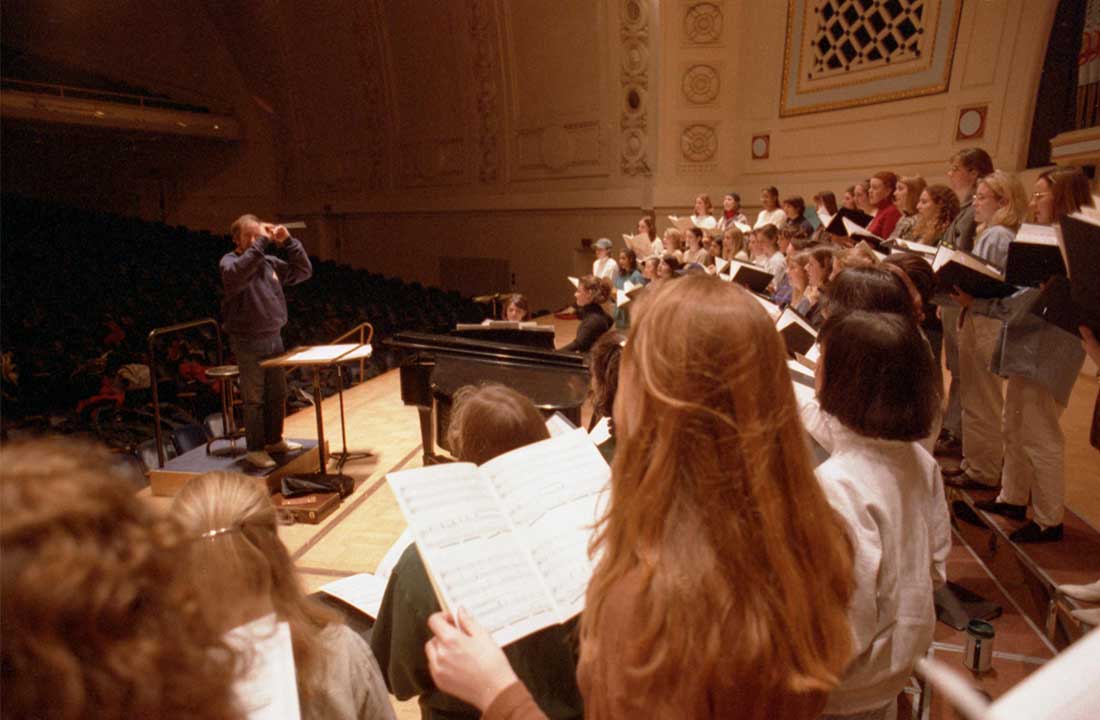
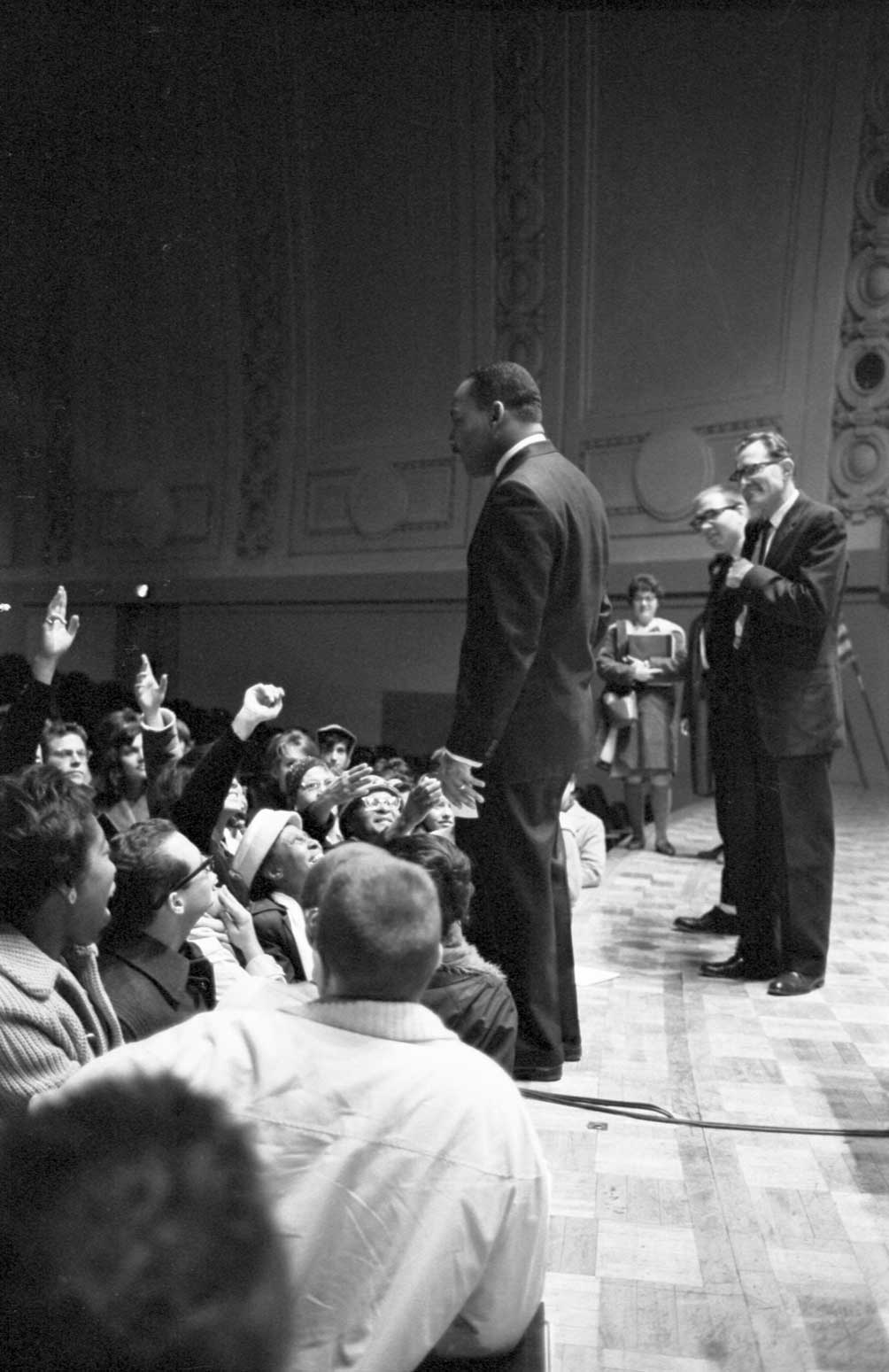
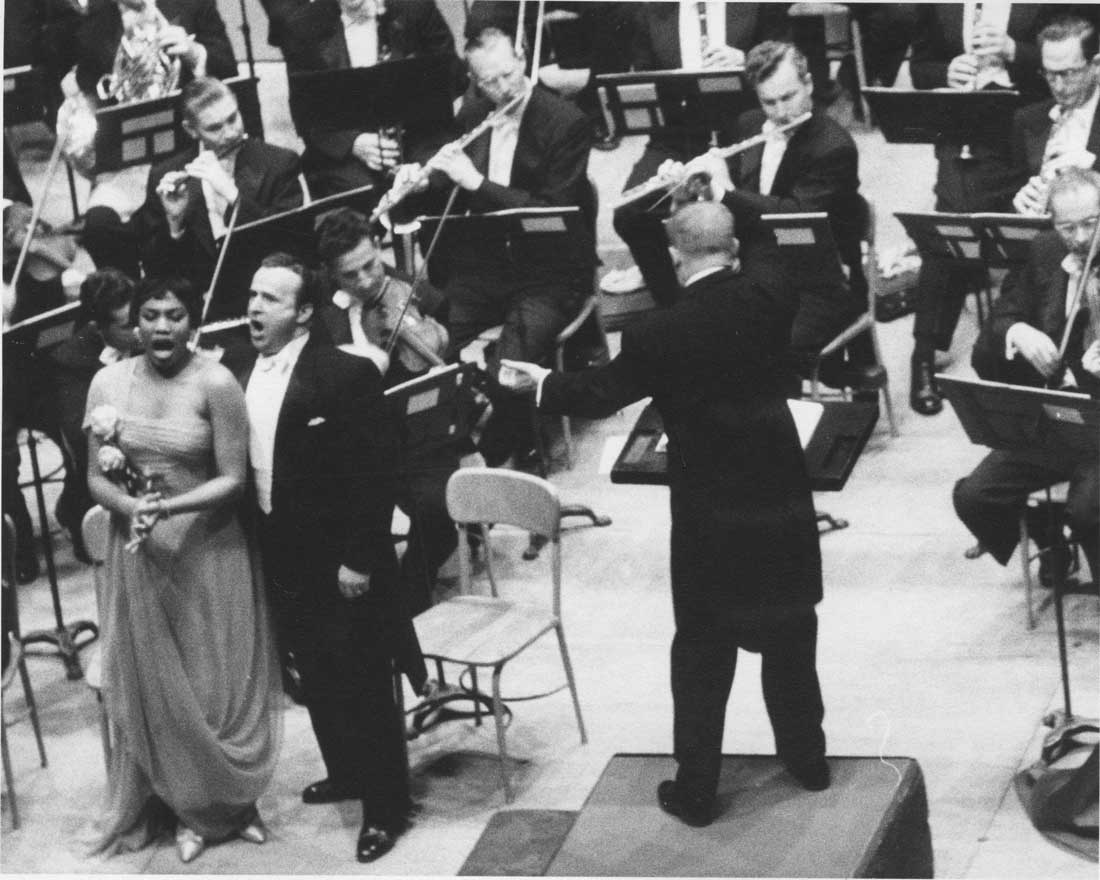
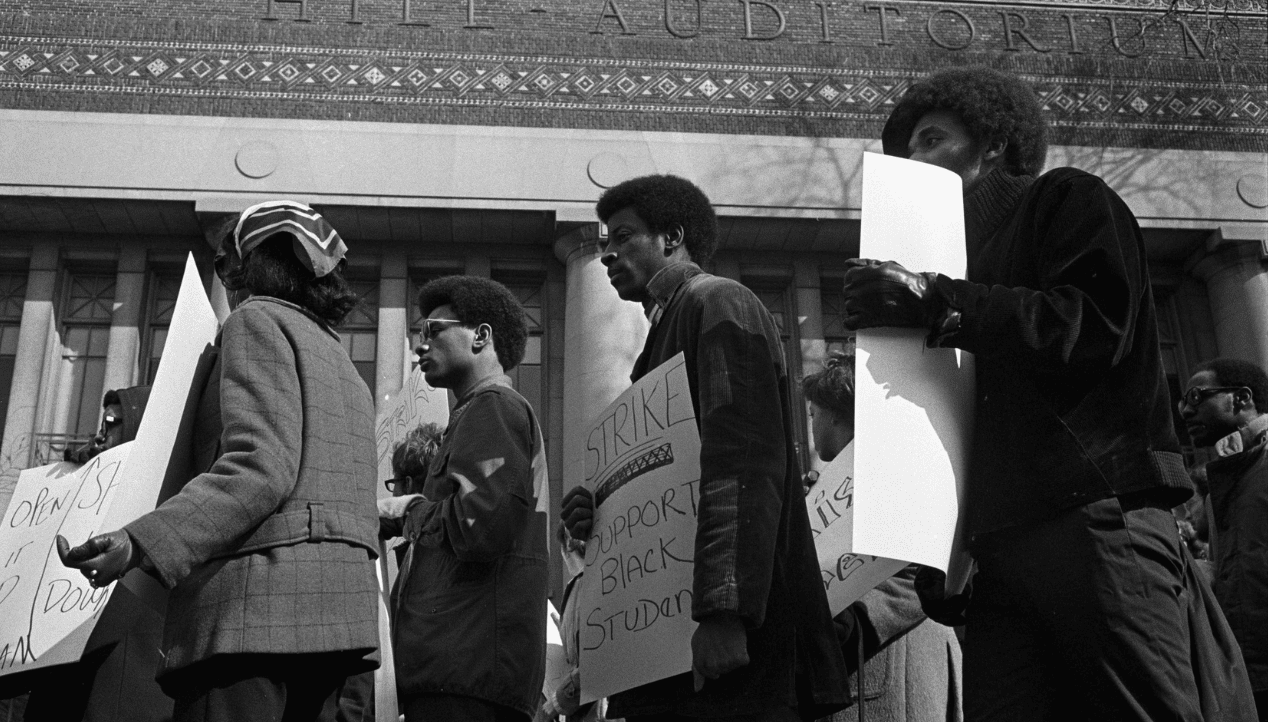
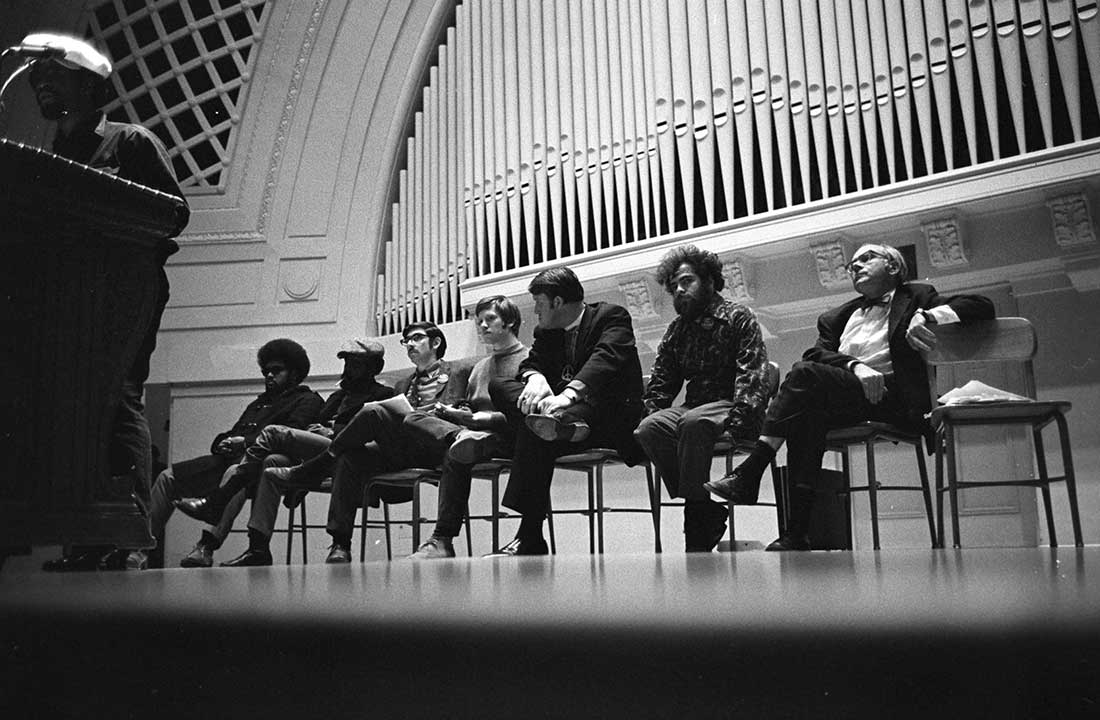
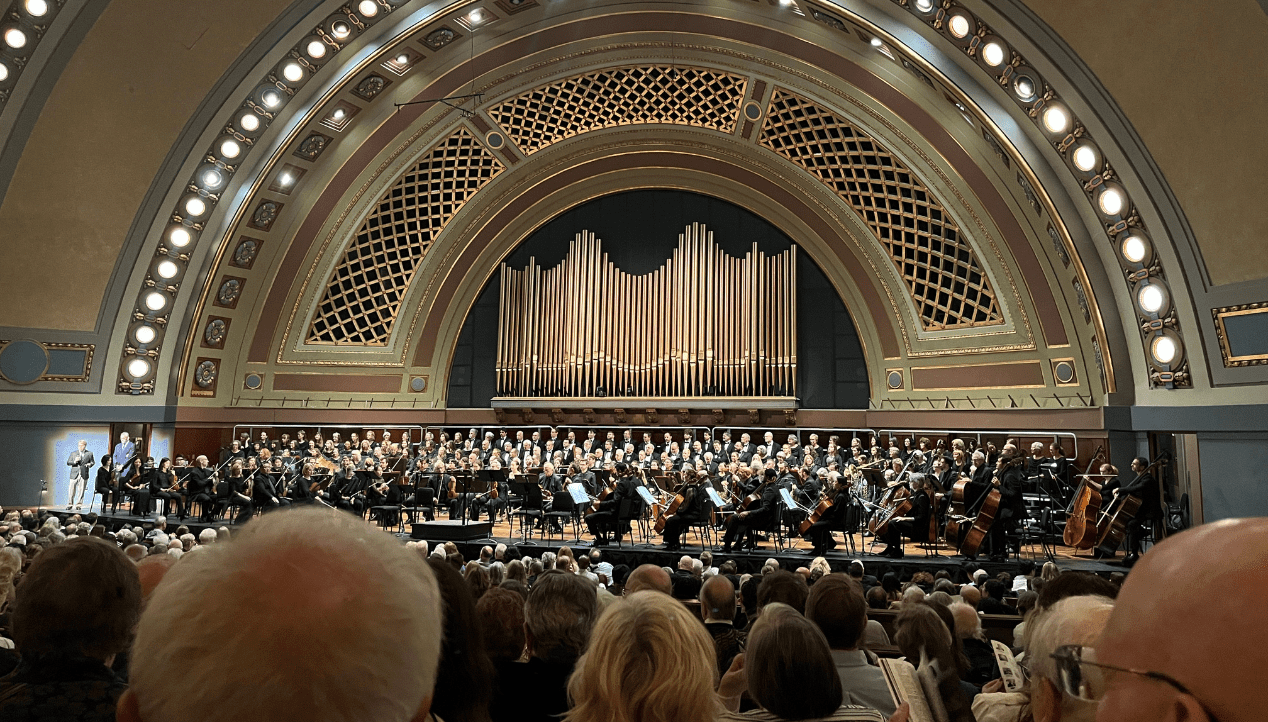
The University of Michigan’s Hill Auditorium is known for its striking architecture, outstanding acoustics, and the renown of the performers who have appeared on its stage over more than 100 years. But the current building does not reflect the stories of the artists, speakers, activists, workers, students, student organizations, and community groups that made Hill Auditorium what it is today.
Originating from the desire to tell these stories and make them visible to the public in the building itself, the Hill Auditorium project recovers these histories through research in traditional archives, recording previously untold stories, and engagement with the communities who continue to find a home at Hill. By uplifting overlooked histories, this project reaffirms Hill’s purpose as a gathering space for people of all origins and backgrounds.
On college and university campuses, the people and events memorialized through plaques, statues, and building names reveal what histories these institutions consider to be important. The Hill Auditorium project uses this iconic and symbolic public space to document an expansive history of performance, student organizations and movements, political events and protests, and workers on the Ann Arbor campus. This project uncovers the demands for justice and inclusion different groups made in and of the space and asks who Hill Auditorium has been for, who has had the power to define the auditorium’s role, and how the communities that have gathered at Hill shifted over time. This more expansive story of Hill challenges us to consider how other overlooked histories can be commemorated and celebrated in our public spaces on campus today.
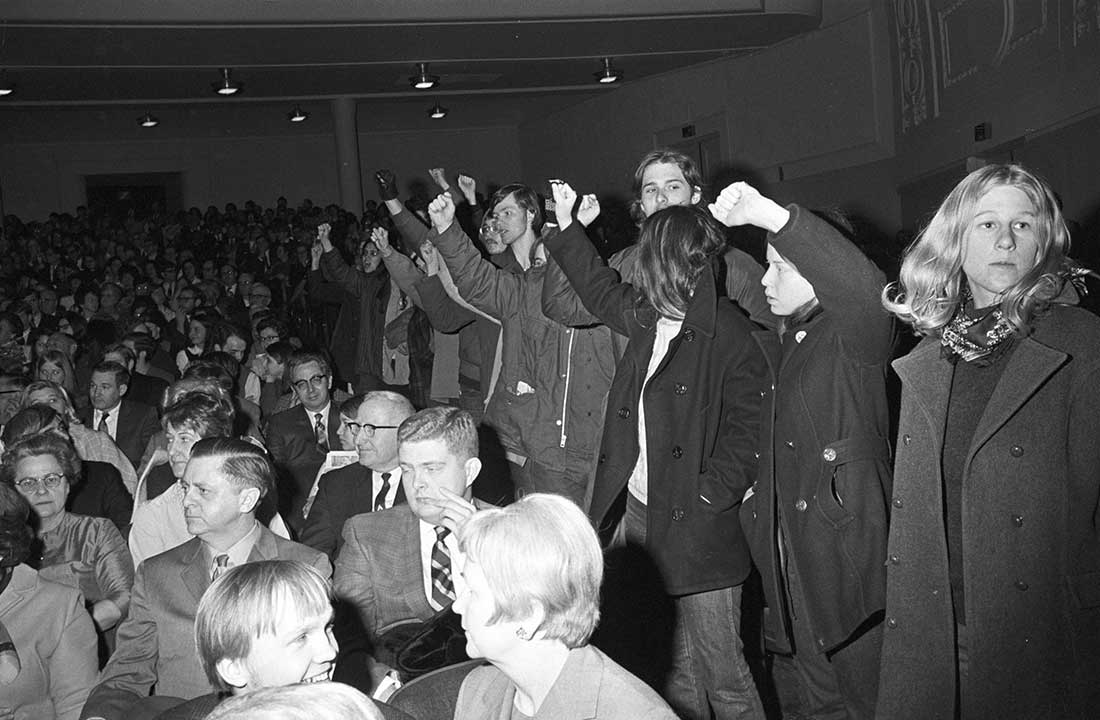
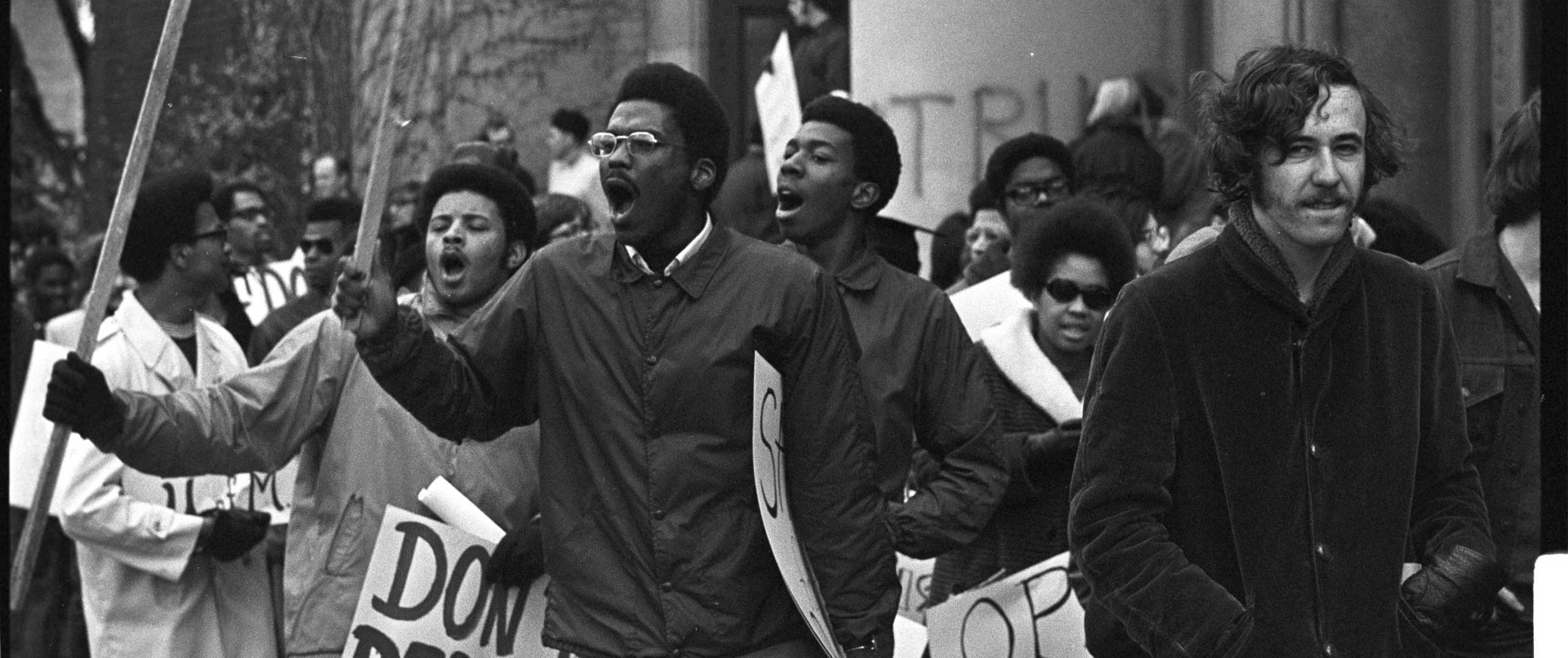
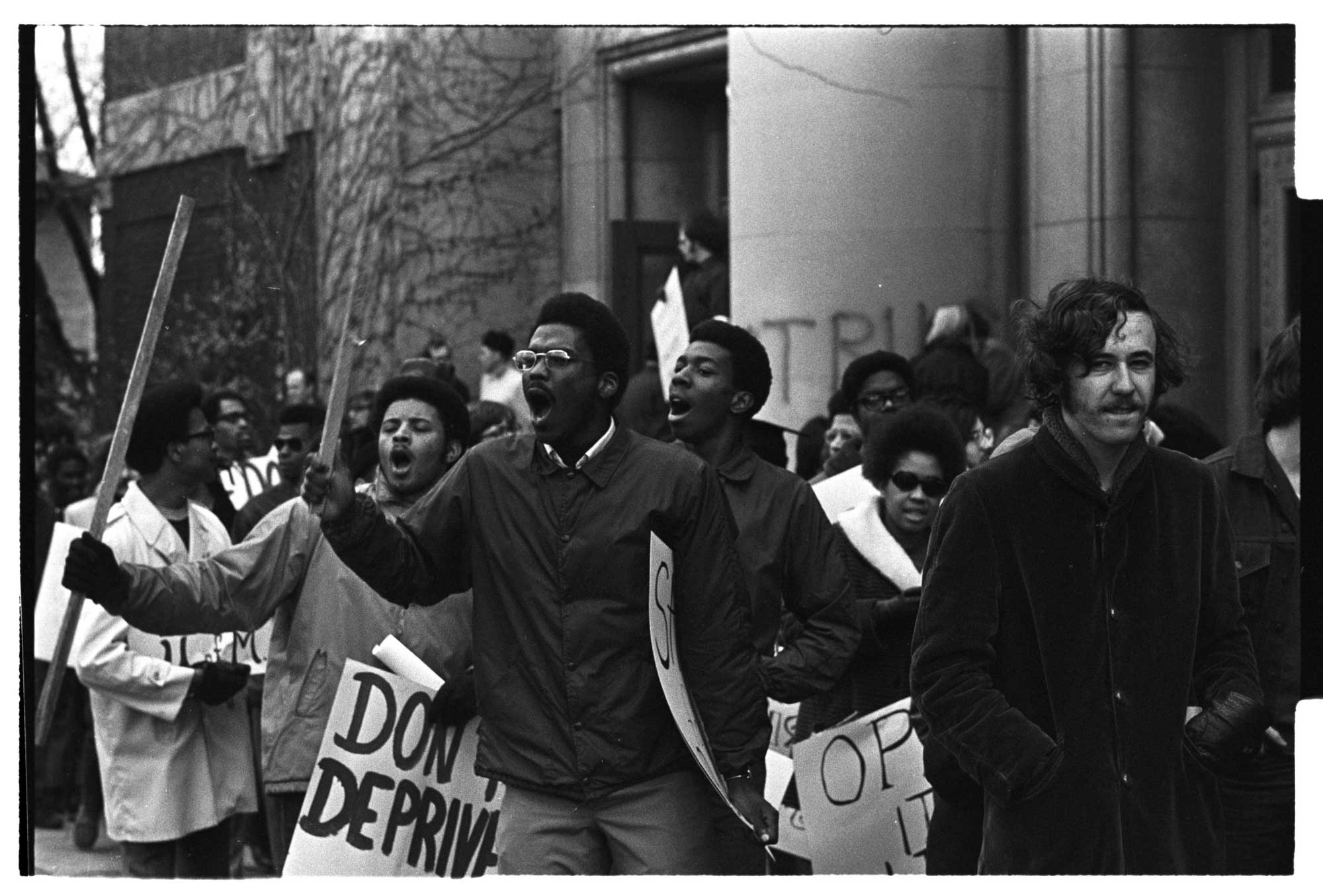
Although the remarkable history of classical music performers and groups at Hill is well-known, the university originally opened Hill Auditorium in 1913 with the intention to welcome the entire student body. In the century since then, Hill Auditorium has been a place for people to debate, agitate, and organize in times of national and international crisis. It has been a site of struggle between student groups and administrators, where students have made demands of the university. Alongside European classical music, Hill has hosted subversive and popular music forms like rock, blues, metal, jazz, and folk alongside regular community events like holiday celebrations and graduations. At Hill, politics, community, culture, and performance intertwine and influence each other.
Behind the Scenes: Our Research Process
Beginning in 2025, a collaborative team of experts, undergraduate and graduate students, postdoctoral researchers, musicians, and university staff has conducted comprehensive archival research into each era of the building’s history. The project team has also been working to conduct oral histories with groups who are not fully represented in the existing archive. The research team has shared their findings at public events.
The team is continuing to build an archive through community engagement and public events. To showcase the research, the team is creating a website, planning commissioned artwork that will be installed in the building long term, and building an exhibition that explores how public spaces like Hill can connect people across time, backgrounds, and international borders. By highlighting a more inclusive history throughout the actual building itself, this project will offer a model of what an auditorium can be for its community.
AMCULT 103: Performance, Protest, & Power: The Making of Public Space at the University of Michigan
Emily Lyon, Ann Arbor campus (Winter 2026)
As part of the Inclusive History Project, this course used Hill Auditorium as a case study to examine how and why particular histories have been remembered at U-M and which histories have been forgotten about this iconic public space. Although not well-known or highlighted at Hill today, students have used the auditorium to stage protests, organize teach-ins, and challenge university policies. Important speakers, including W.E.B. DuBois, Martin Luther King Jr., Angela Davis, Gloria Steinem, and Nelson Mandela, and famous performers, including Bob Dylan, Prince, Tina Turner, Bruce Springsteen, Ray Charles, Carole King, and Joni Mitchell, have called Hill home–and workers backstage made these events possible. Through hands-on research and iterative writing assignments that built to a final collaborative project, students uncovered Hill’s forgotten histories, added to a digital archive, and learned the fundamentals of humanities research and writing.
Researchers
Mark Clague
Co-Principal Investigator, Executive Director, Arts Initiative and Professor of Music, School of Music, Theatre & Dance
University of Michigan-Ann Arbor
Jay Cook
Co-Principal Investigator, Director of Research, Inclusive History Project, UM-Ann Arbor Professor of History and American Culture
University of Michigan-Ann Arbor
Cayenne Harris
Co-Principal Investigator, Vice President of Learning & Engagement, University Musical Society
Inclusive History Project discusses forgotten voices and contested spaces in Hill Auditorium project
Hosted by the Bentley Historical Library’s Making Michigan series, the Inclusive History Project Team shared their discoveries, future plans and ongoing struggle to make Hill a more inclusive space in “A Place for Politics, Protest, & Performance: Exploring the Hidden Histories of Hill Auditorium.”
Making Michigan Lecture: A Place for Politics, Protest, & Performance: Exploring the Hidden Histories of Hill Auditorium
At this Making Michigan lecture, the IHP's Hill Auditorium research team discussed their discoveries, future plans, and the ongoing struggle to make Hill truly an auditorium “For Everyone.”
Researchers seek “untold stories” of Ann Arbor’s Hill Auditorium for inclusive history project
University of Michigan researchers are seeking “untold stories” of Hill Auditorium as part of the university’s Inclusive History Project, a multi-year, multi-campus initiative seeking to document a fuller and more diverse history of the university.
IHP Dispatches open up our research processes by narrating the behind-the-scenes work involved in digging into the university’s history. In our second story in the series, Emily Lyon recounts attending a performance at Hill Auditorium this September with members of the IHP’s Hill Auditorium research team and hearing the connections between the past and present experiences of the building.
Seeking Untold Stories of Hill Auditorium: Share your history with us!
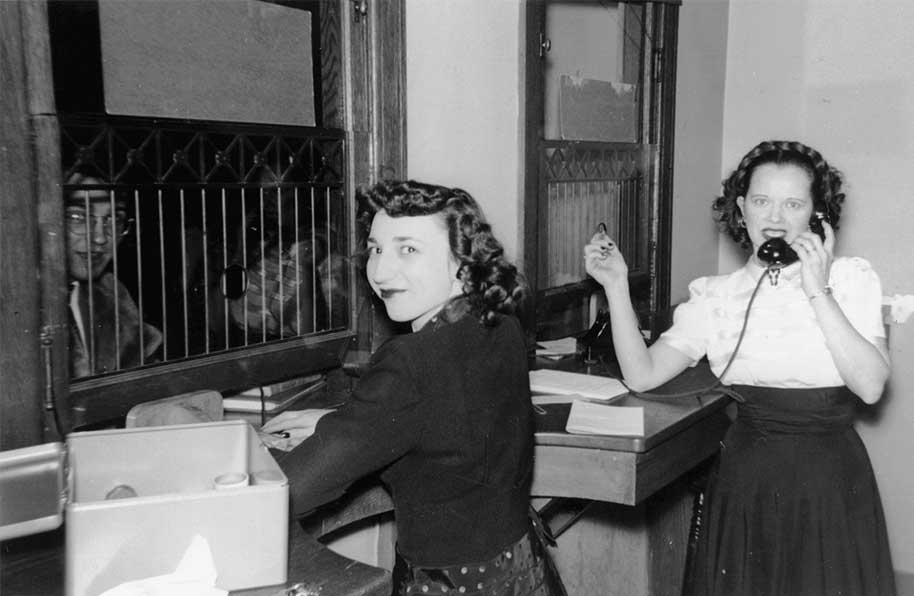
The IHP is currently conducting research into the hidden and untold histories that made Hill Auditorium what it is today, and we would love to hear from you! We are seeking stories from a wide range of people, including lesser-known stories from workers and union members, members of student organizations, student and community activists, and speakers. The IHP research team hopes to learn about histories that provide a window into a more comprehensive history of the role the building has played on campus and beyond.