alt=""

Beyond the Big House: Athletics Advocacy and Sports Culture at U-M

Project Origins

Beyond the Big House grew from a recognition that athletics have shaped student and community experiences at U-M in complex ways.

Our objective is to consider how athletics are connected to U-M’s institutional history and how they shed light on larger social phenomena, with the goal that we will contribute to a more nuanced understanding of the role that sports play at U-M and beyond. We look outside record books and rosters to uncover the ways that athletics have affected U-M students, alumni, faculty, staff, and fans—and how those individuals have understood their relationship with the university.

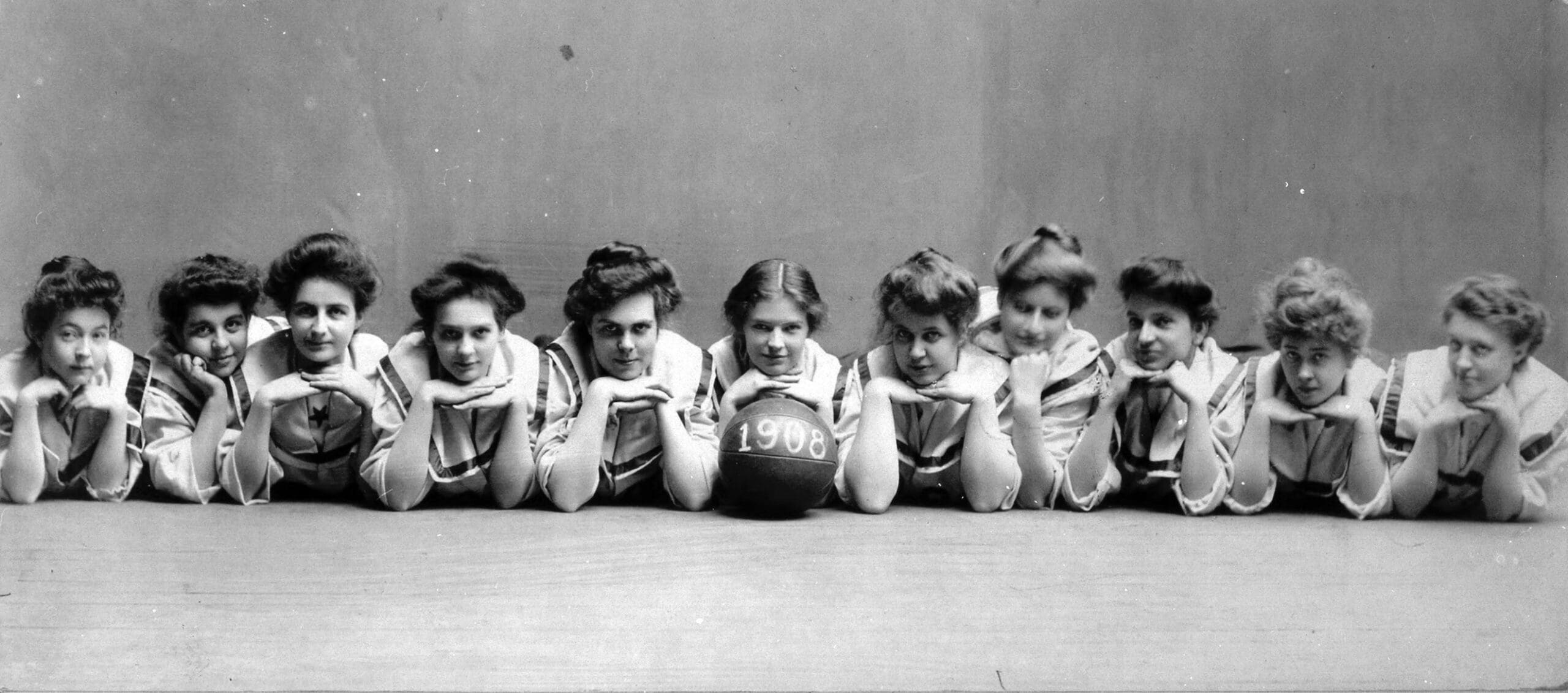
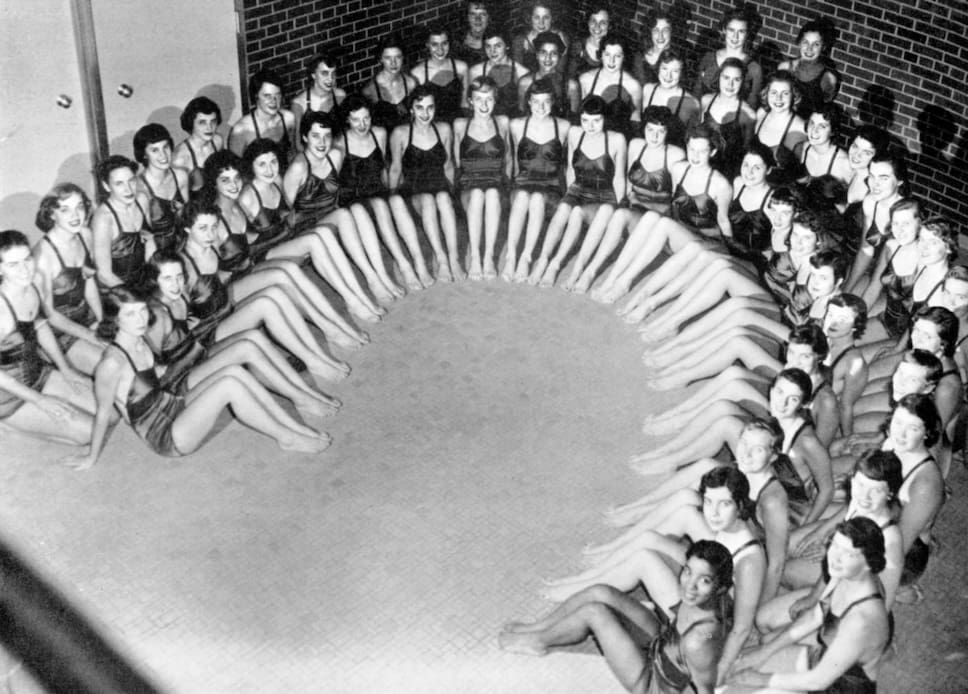
Group of women laying on their stomachs, propping their chins up on their hands.
Beyond the Big House: Athletics Advocacy and Sports Culture at U-M Fall 2024 - Present

Research Trajectory

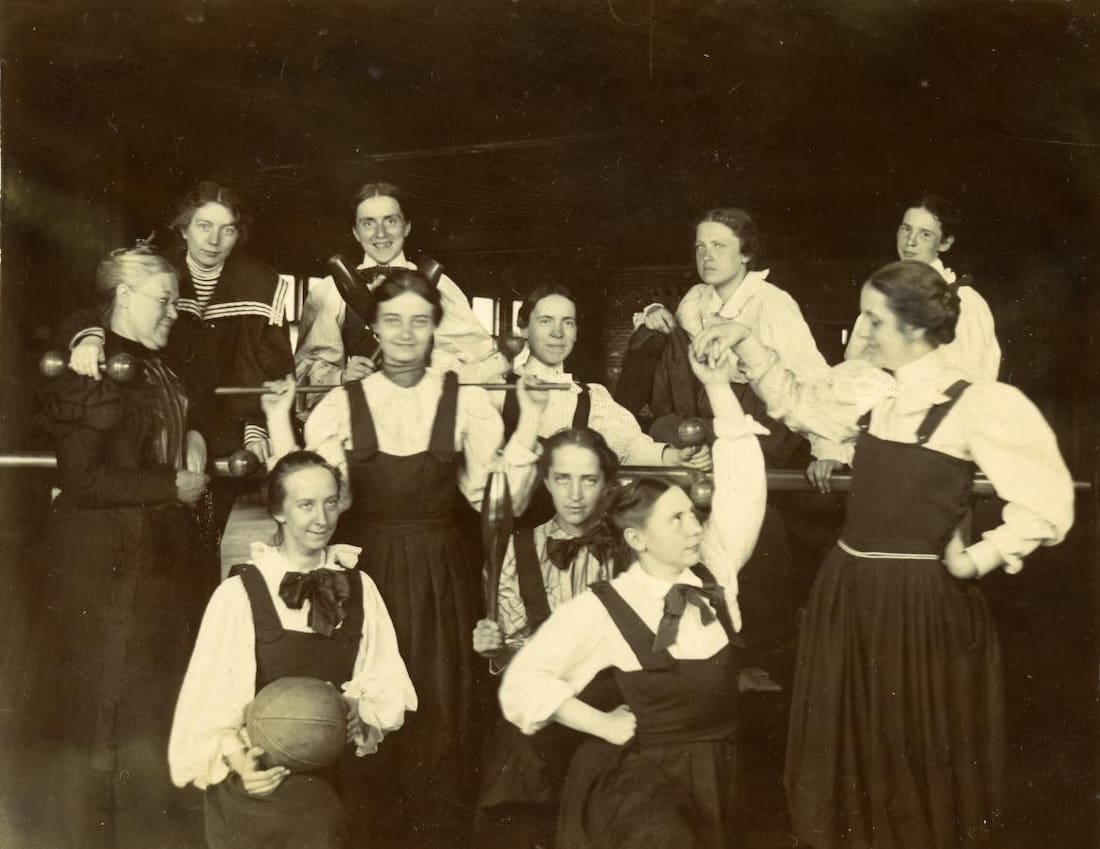
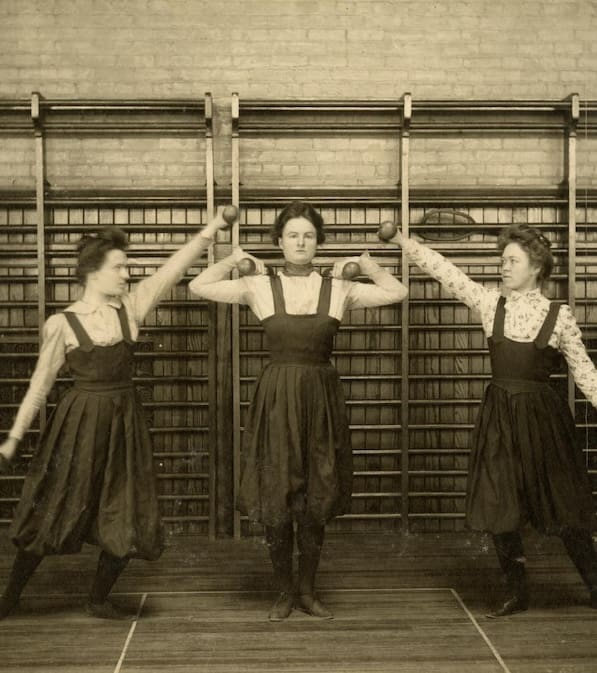
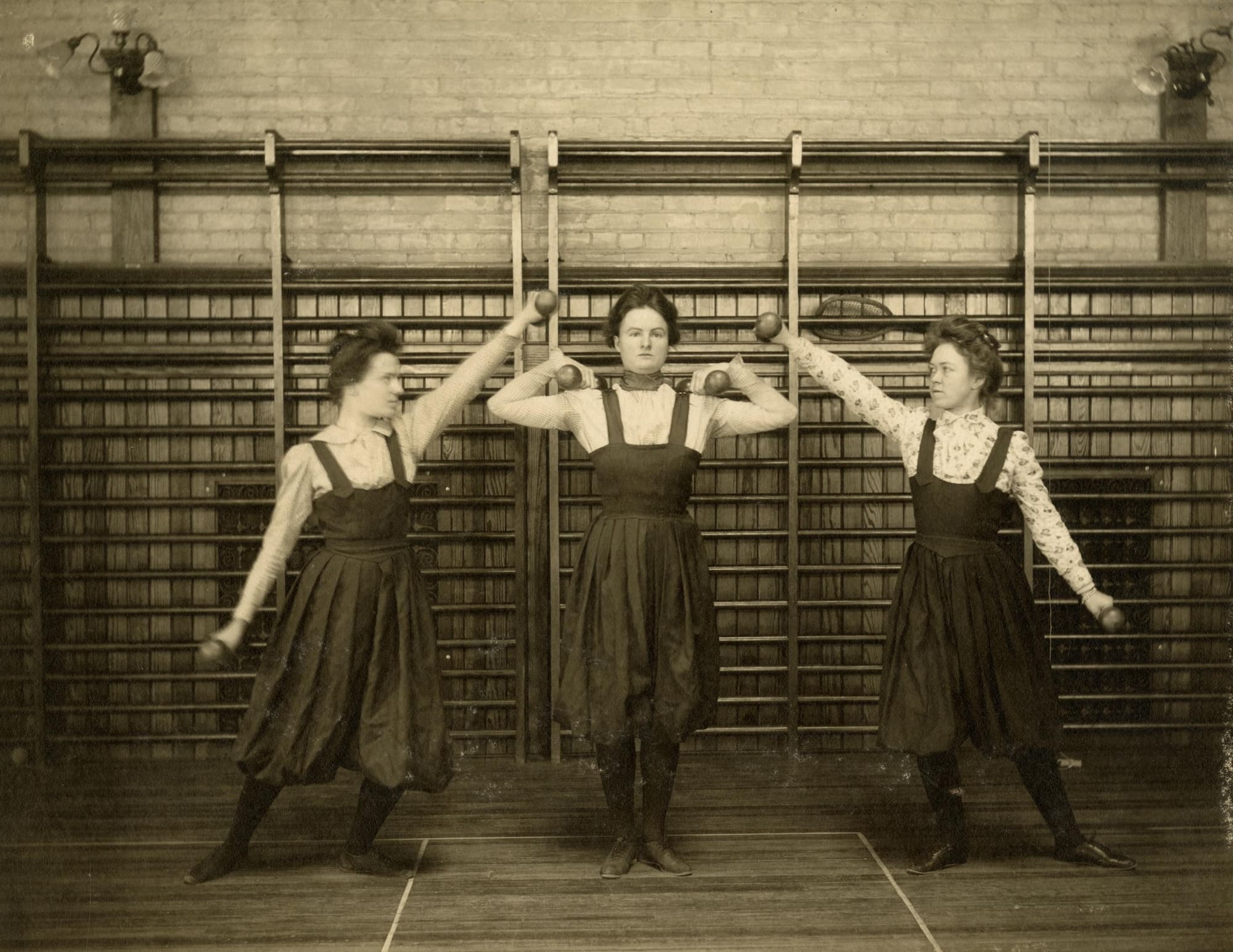
Group of women holding exercise equipment.

Women in gymnasium with Eliza Mosher, ca. 1900-1910 | Eliza Maria Mosher papers, Bentley Historical Library, University of Michigan Library Digital Collections

From its inception, Beyond the Big House has sought to explore, understand, and complicate U-M’s connections to sports and the significance of college athletics on campus. We began our work in 2024, with an undergraduate seminar on the origins of women’s sports at U-M in the late nineteenth century. That class revealed the centrality of gender norms in the creation of university structures and practices involving women’s athletics. Beginning in 1896 with U-M’s appointment of its first Dean of Women Students, Dr. Eliza Mosher, and continuing with Dr. Margaret Bell, who chaired the Department of Physical Education for Women, ideas of what women should look like and how they should behave drove U-M’s athletic offerings. Ideals of feminine behavior and aesthetics guided opportunities for women to participate in sports. At the same time, university faculty and administrators tied athletics to the purported promotion of women’s reproduction, specifically the need to support the health of future mothers in the service of social advancement. Those ideas undergirded the perception of women’s physical capability, creating a structure that promoted fitness but not athletic competition.

Six undergraduate students from that class joined two graduate students to form our first research team, and we spent our first year exploring the gendered nature of U-M athletics. As we dug further into the archives, we expanded our inquiry to include tracing the links between academics and athletics, considering, for instance, how administrators saw athletics as integral to eugenics. Such concern for racial betterment contributed to the surveilling of women students in the form of mandatory health examinations, physical fitness requirements, and mental health screenings. We are currently developing a podcast that investigates these issues and how they have been incorporated into built space and popular mythmaking on campus.

In Fall 2025 we have expanded our project site to include research into two new areas: the history of women athletes during the implementation of Title IX and the recruitment practices of U-M football in the 1950s. With regard to Title IX, we are teaching a second undergraduate seminar in which students are investigating the first generation of women athletes who participated in athletics under Title IX. In addition to documenting their stories in the form of an oral history database, the project seeks to understand how U-M administrators in the 1970s and 1980s approached their obligations under civil rights legislation. This seminar is working toward a continuation of the current podcast in development that will explore the impact of Title IX through the experiences of the U-M synchronized swimming (artistic swimming) team.

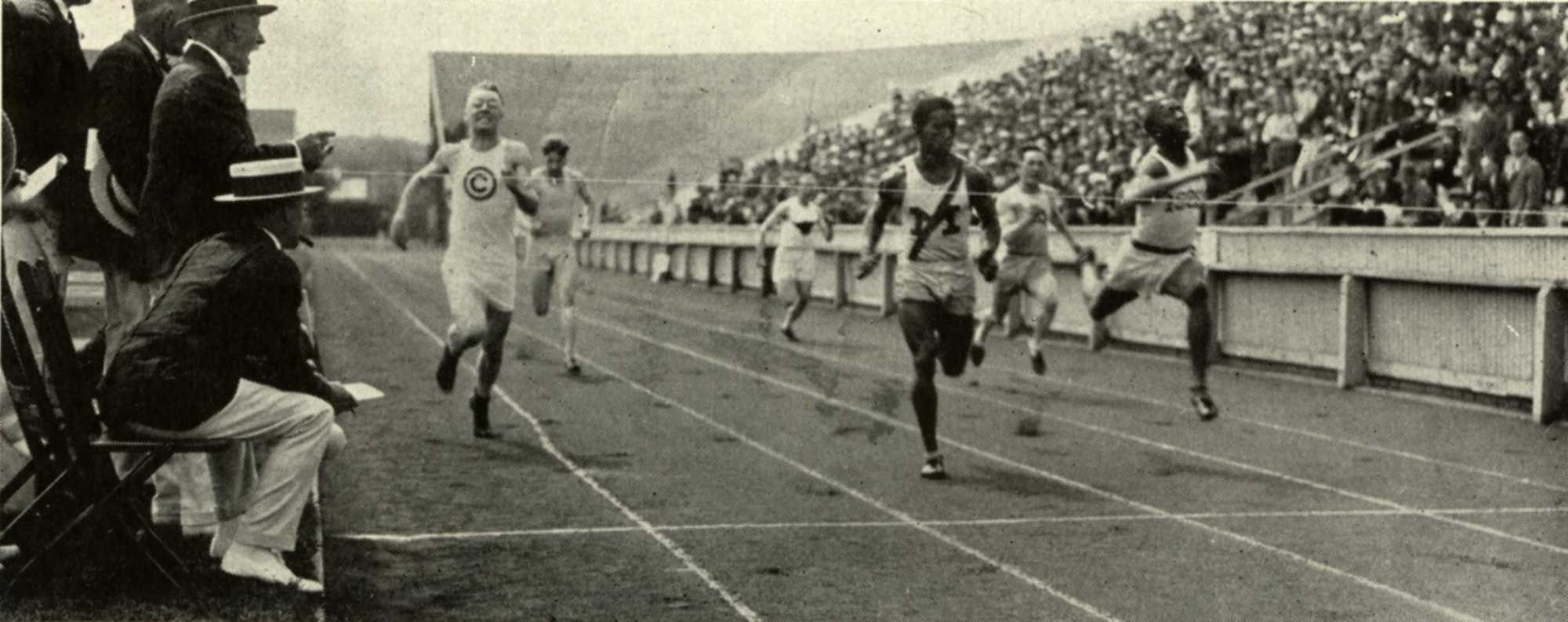
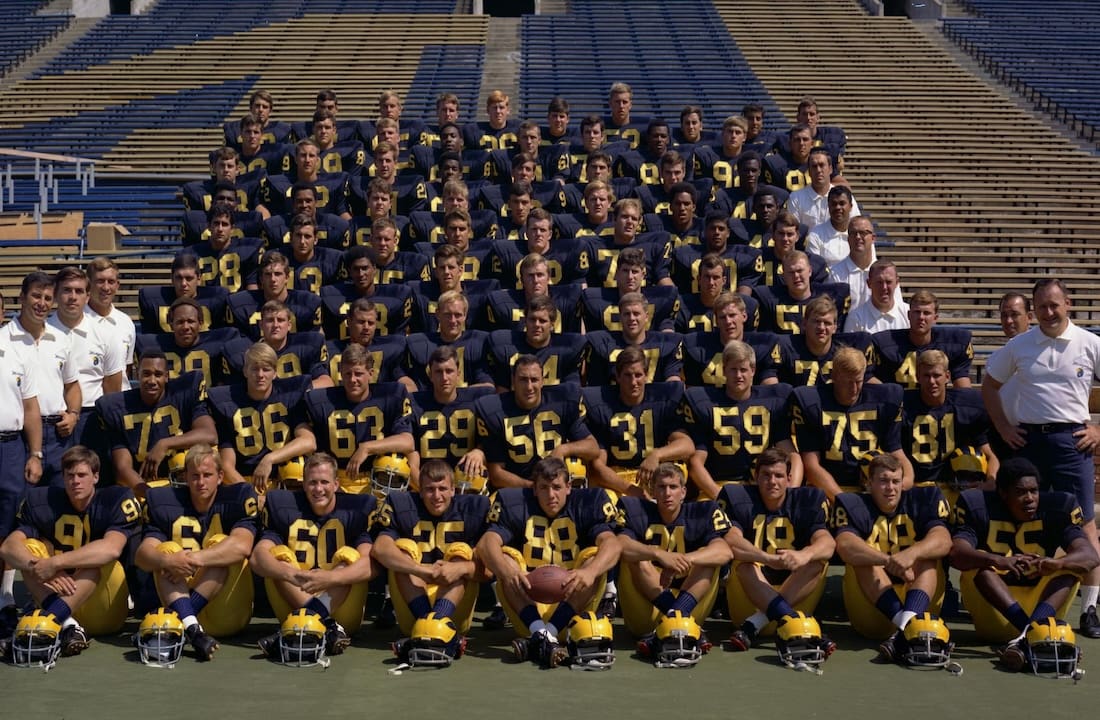
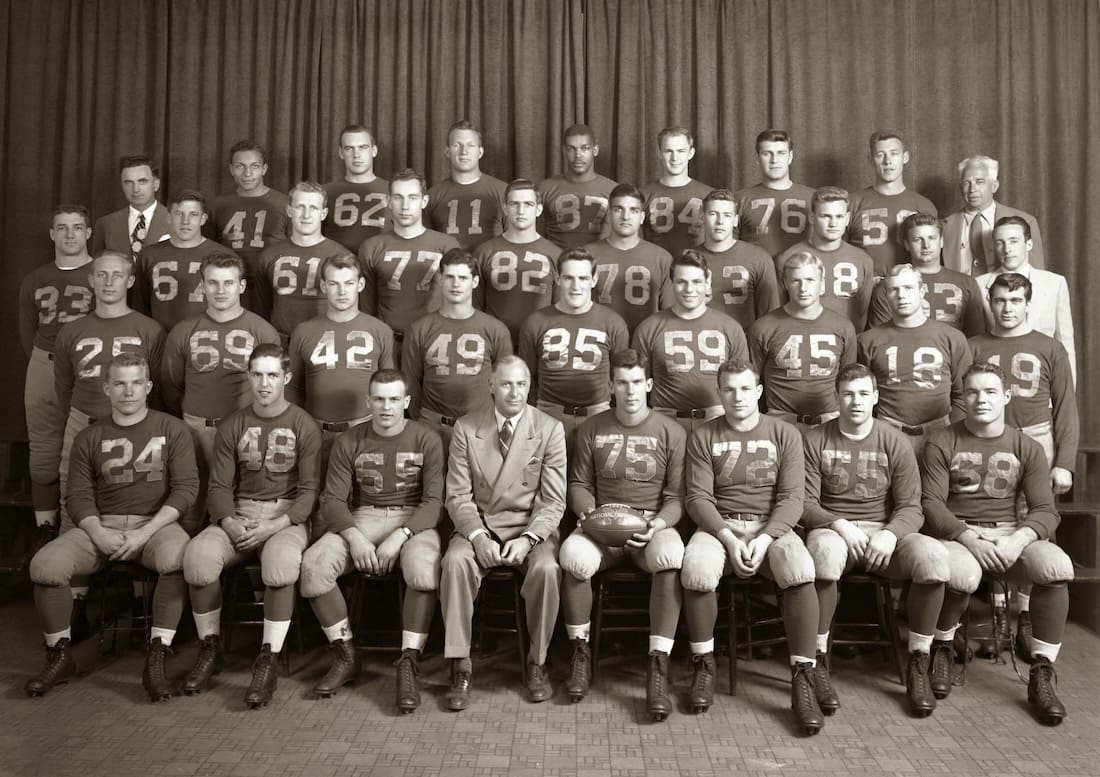
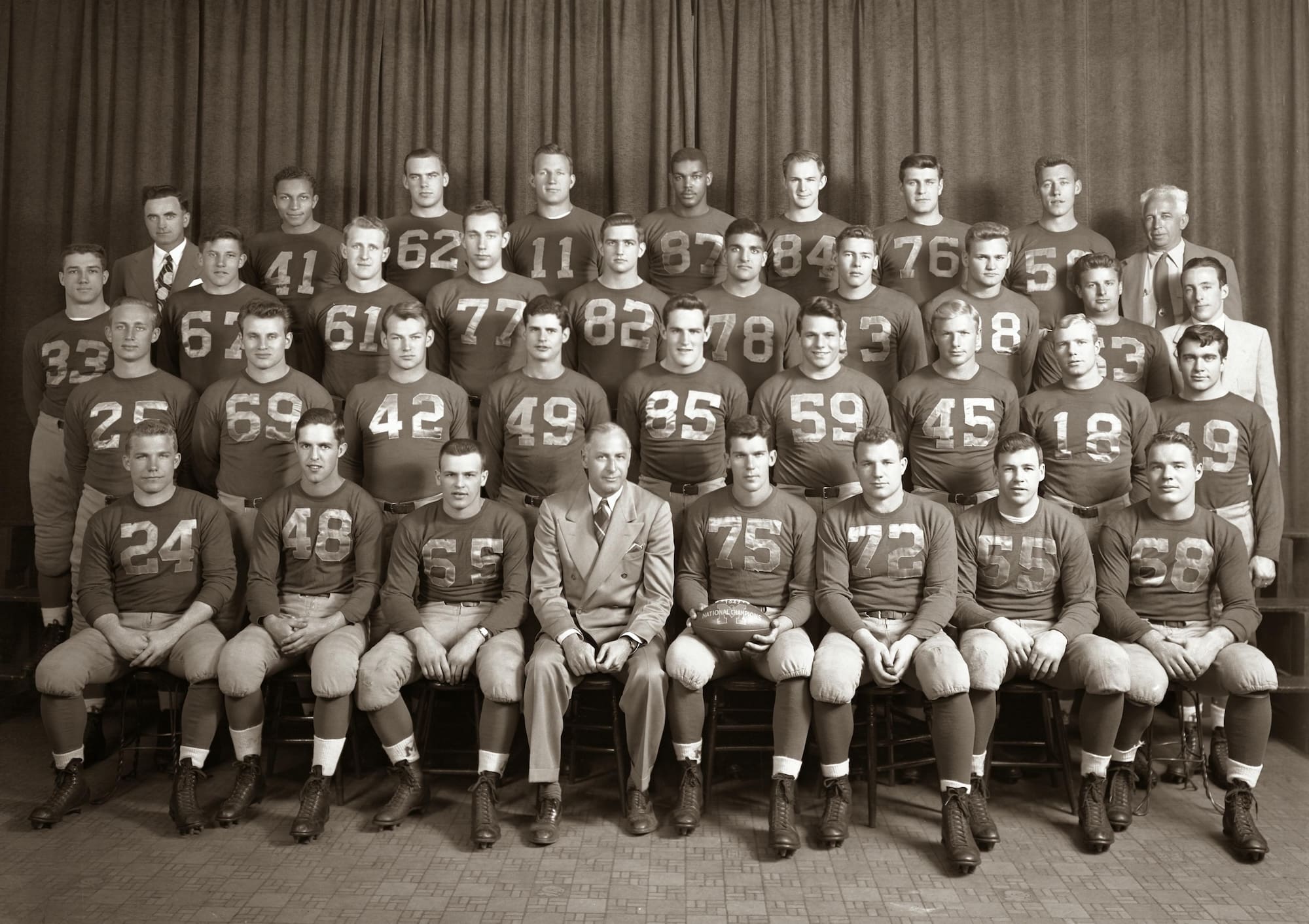
We are also in the beginning stages of research on race and recruiting practices connected to U-M football in the mid twentieth century. The American civil rights movement coincided with an era when college football teams went from campus athletic groups to the proverbial front porch of universities. Programs became even more reflective of the communities they represented. In the segregated South, teams remained exclusively white. In the Midwest, programs adapted more quickly, though the pace varied by school. We are studying recruitment pipelines from historically black colleges and universities (HBCUs) to U-M, from the end of the Fritz Crisler era (1947) to the start of Bo Schembechler’s tenure in 1969. Using quantitative data, as well as the lived experience of individuals at Michigan and beyond the Big House at other Big Ten schools, we will place the program in the context of its rivals, its community, and its country.

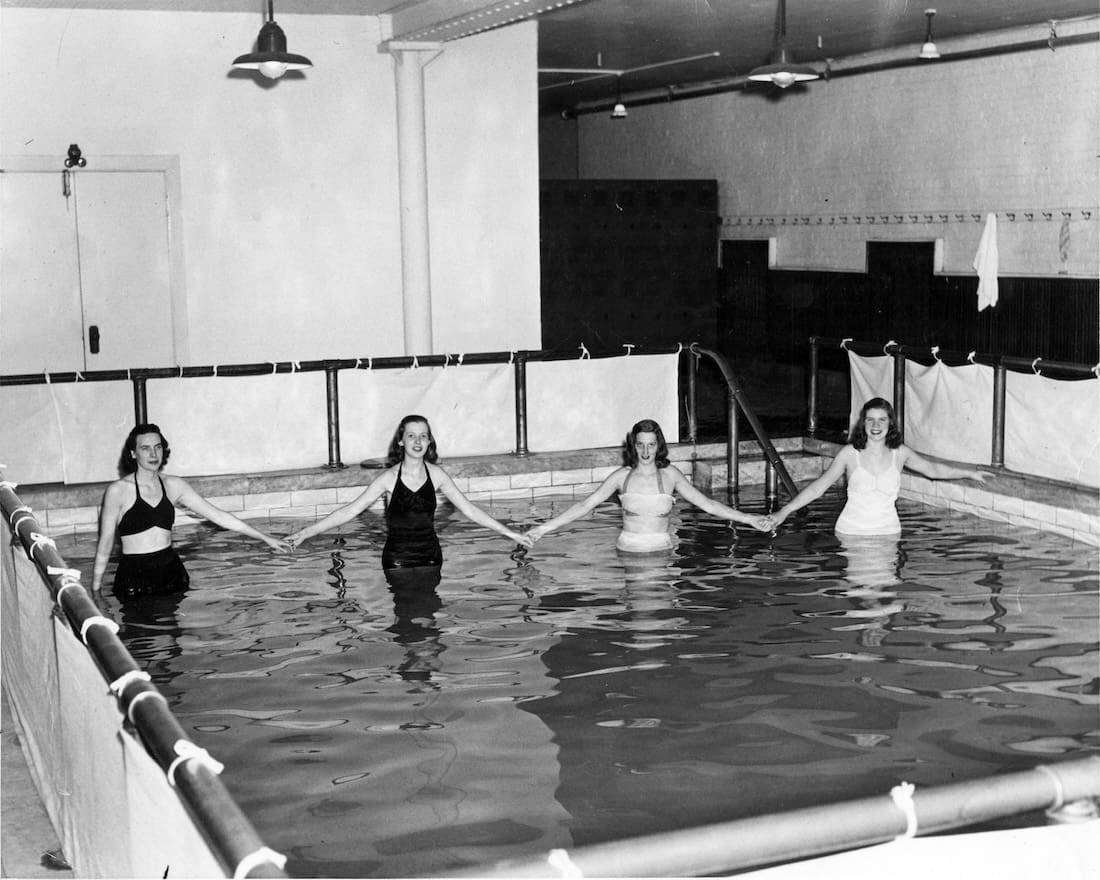
Four women stand in small indoor swimming pool, touching hands to show width of the small pool.

Swimming pool in the Barbour Gymnasium, also known as the “Barbour Bathtub,” ca. 1940 | Dept. of Physical Education for Women (University of Michigan) records, Bentley Historical Library, University of Michigan Library Digital Collections

Project Site Courses

Making the Michigan (Wo)man: Podcasting the Gendered Origins of Athletics at U-M

History 441: HistoryLab U-M Athletics, Kate Wroblewski, Ann Arbor campus (Fall 2024)

The University of Michigan has a long history of women’s athletics, reaching before the era of Title IX into the late nineteenth century. But what did early proponents of women’s sports want to accomplish? Who played sports and on what terms? Beyond the Big House is developing a podcast series that investigates the origin story of women’s athletics at U-M and sheds light on the ideological foundations of modern sports, including how ideas of masculinity and femininity and links to racialized medicine shaped opportunities for student participation in athletics. Far from simple stories or chronologies about what happened and when, Making the Michigan (Wo)man instead problematizes the ways we narrate sports history and how our modes of storytelling shape perceptions about who gets athletic opportunities. Making the Michigan (Wo)man explores faculty ideas about women’s health and athleticism, how students felt about their experiences as athletes, how ideas about women’s sports developed at U-M and in connection to other institutions, and how those ideas spread across the country and the world.

History 491: HistoryLab U-M Athletics, Kate Wroblewski, Ann Arbor campus (Fall 2025)

On June 23, 1972, President Richard Nixon signed into law what was then known as the Education Amendments of 1972 and from 2002 on as the Patsy Mink Equal Opportunity in Education Act. Commonly referred to today as Title IX, this legislation sought to prohibit gender discrimination in federally funded educational programs, including most colleges and universities. While the law had wide implications in a variety of contexts—many of which are being explored in this class—it has received considerable attention for its impact on women and sports. For its proponents, Title IX stands for opportunity and access in education and athletics. Its detractors, however, criticize Title IX on several grounds, ranging from its supposed weakening of men’s sports programs and its financial implications on revenue-producing teams, to its failure to challenge norms of masculinity, to its privileging of white women. As such, this class is examining Title IX and women’s athletics in general as providing a window into the larger topics of gender, cultural change, and education in American society, from the 1960s until the present.

In this seminar, students are researching, writing, and recording podcast segments and oral histories about athletics at the University of Michigan. Far from simple stories or chronologies about what happened and when, we are thinking collaboratively about the ways in which we narrate sports history and how those modes of analysis and storytelling shape perceptions about who gets to play and on what terms. We are exploring ideas about gender and athleticism, how students felt about their experiences as athletes, and how views of women’s sports shaped U-M as an institution and spread across the country and perhaps the world. Using collections at the Bentley Historical Library, students are contributing to the project’s ongoing public history initiatives.

History 491: HistoryLab U-M Athletics, Kate Wroblewski, Ann Arbor campus (Fall 2026)

Sports at the University of Michigan are intertwined with U-M’s broader institutional history in interesting and often unexpected ways. This course sees U-M athletics as providing a window into larger phenomena and asks students to explore its deeper origins, including an assessment of the entanglements between athletics and medical science, the impact of race and gender on opportunity, and the authority of governance structures like the NCAA and the Big Ten. What can we understand when we consider athletics as an object of intellectual inquiry? What do sports tell us about U-M’s past and how might sports help us develop better futures?

To answer those questions, students will be developing a podcast series and an oral history database connected to the Inclusive History Project. This semester focuses on the experiences of the first generation of athletes to experience Title IX.


Researchers

Michael Rosenberg

Co-Principal Investigator, Senior Writer

Sports Illustrated

Kate Wroblewski

Co-Principal Investigator, Lecturer, Assistant Director of Undergraduate Studies, College of Literature, Science, and the Arts

University of Michigan-Ann Arbor

Taylor Tyrell

Graduate Research Associate

University of Michigan-Ann Arbor

Lucy Del Deo

Research Assistant

University of Michigan-Ann Arbor

Liv Frey

Undergraduate Research Assistant

University of Michigan-Ann Arbor

Isabel Hopson

Research Assistant

University of Michigan-Ann Arbor

Jeanette Lawrence

Research Assistant

University of Michigan-Ann Arbor

Emma LeFevre

Research Assistant

University of Michigan-Ann Arbor