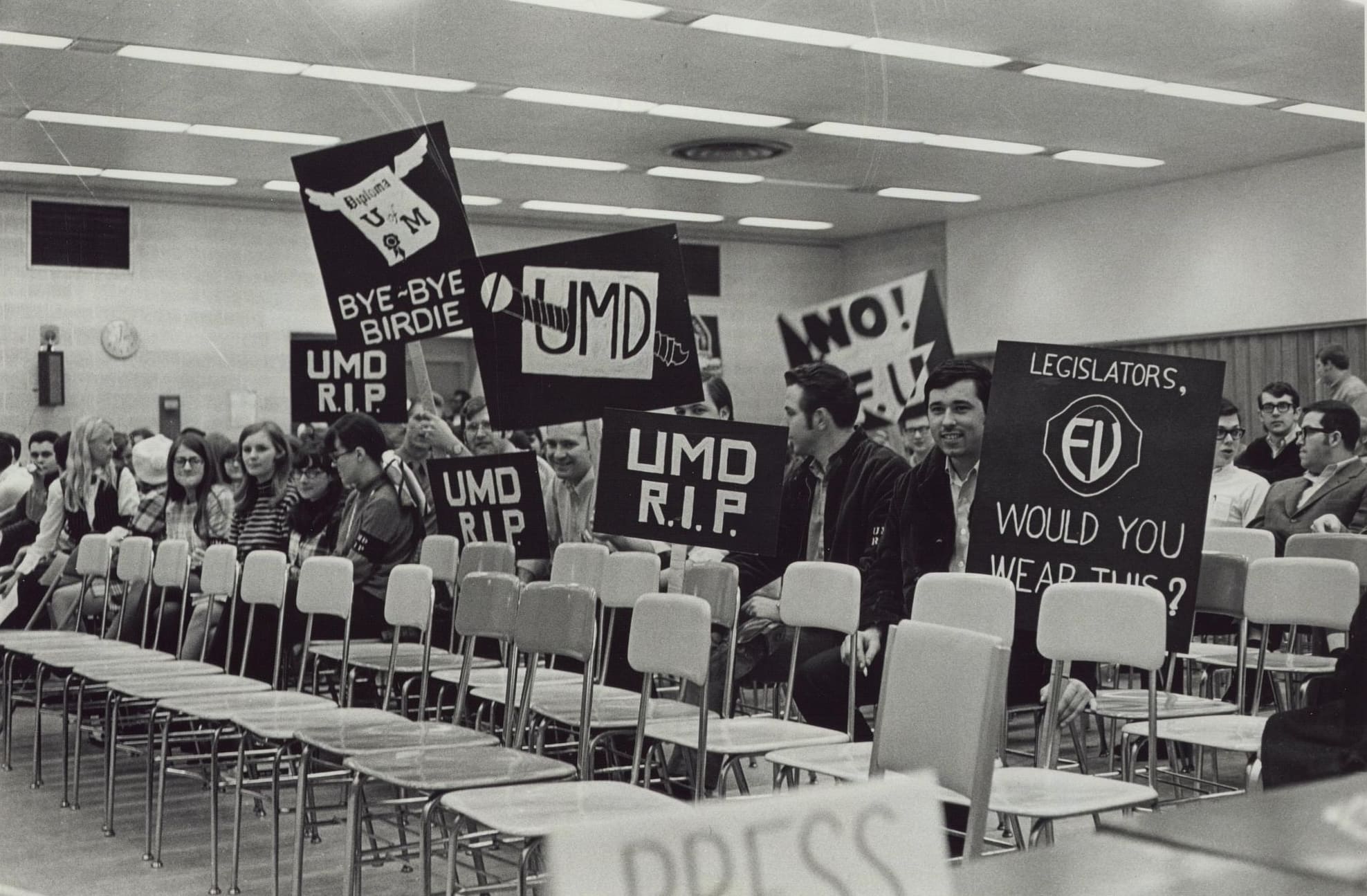
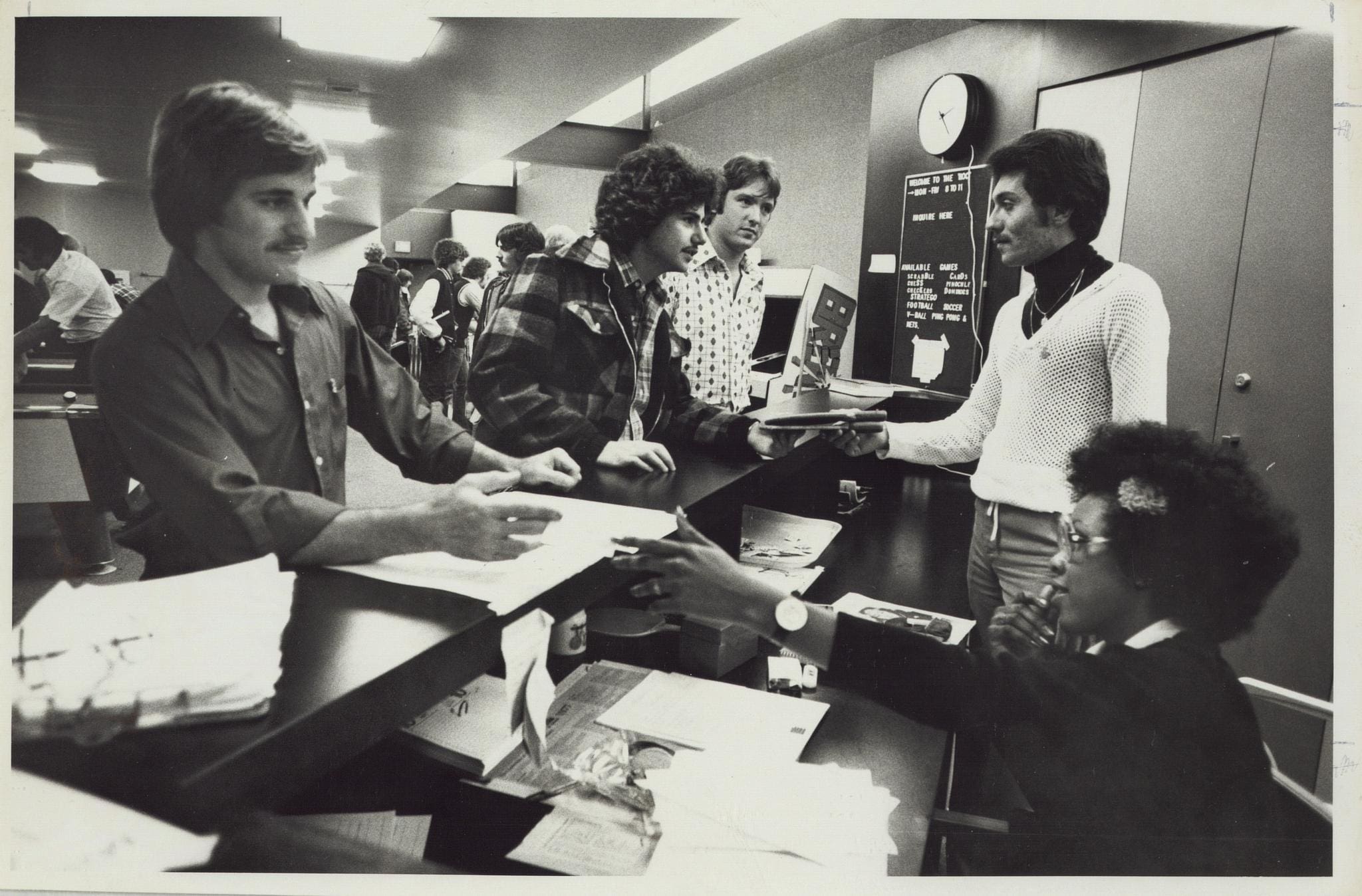
The 1959 Project originated as a mixed-methodology initiative aimed at recalling, sharing, and rethinking the evolution of the University of Michigan-Dearborn from a specialized co-op education program to an autonomous regional campus.
Utilizing oral histories, surveys, focus groups, and research in the campus archives, the 1959 Project aims to explore, synthesize, and shed new light on previously overlooked passages and key actors in campus history. Topics under exploration include the key contributions of women and people of color in the evolution of the campus, the ways in which the campus community has fostered its own sense of belonging, and how UM-Dearborn’s relationship with the Ann Arbor campus as well as local MENA communities has shaped its evolution.
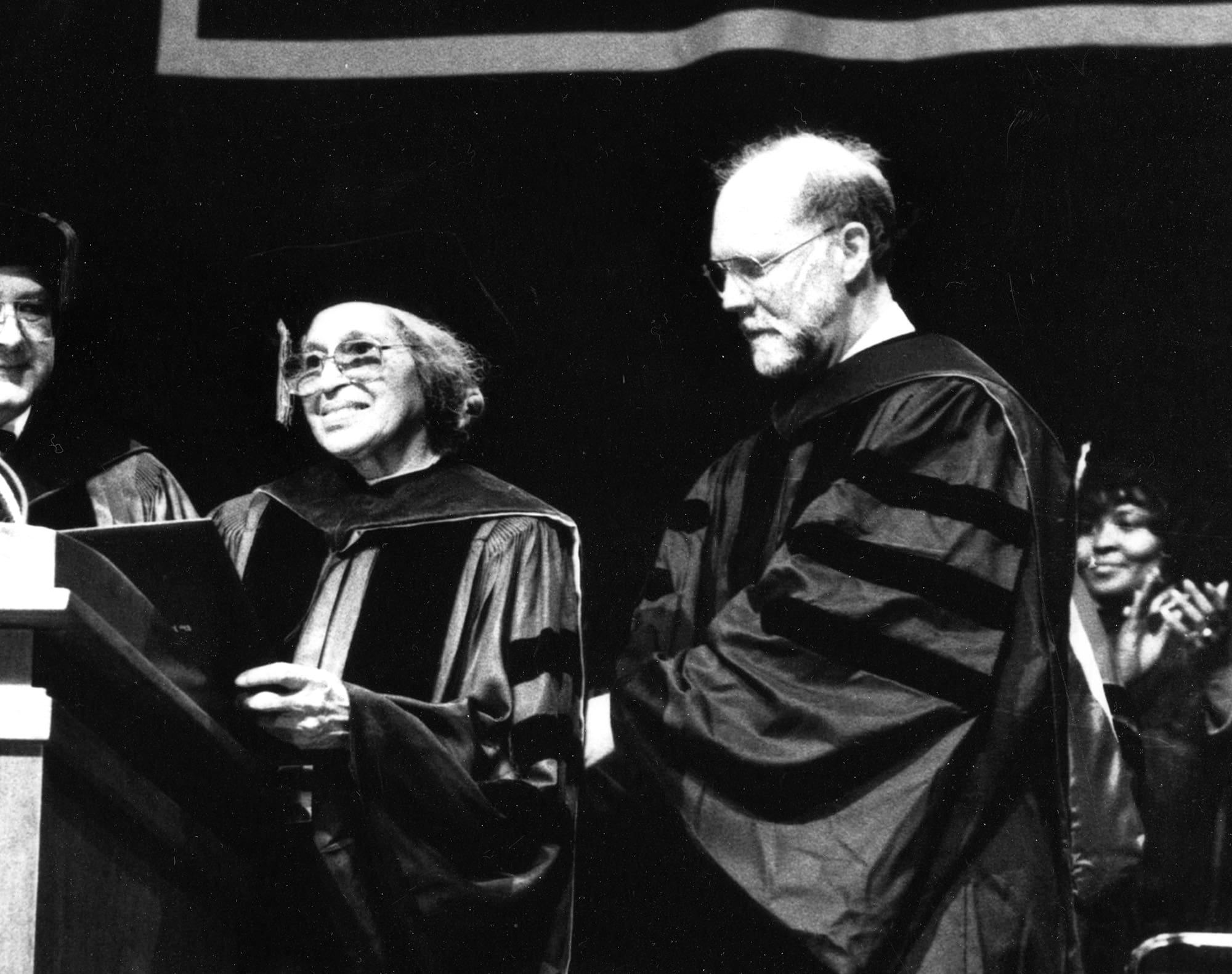
Rosa Parks receives honorary doctorate at UM-Dearborn Commencement, April 28, 1991| Image courtesy of the University of Michigan-Dearborn Campus Archive
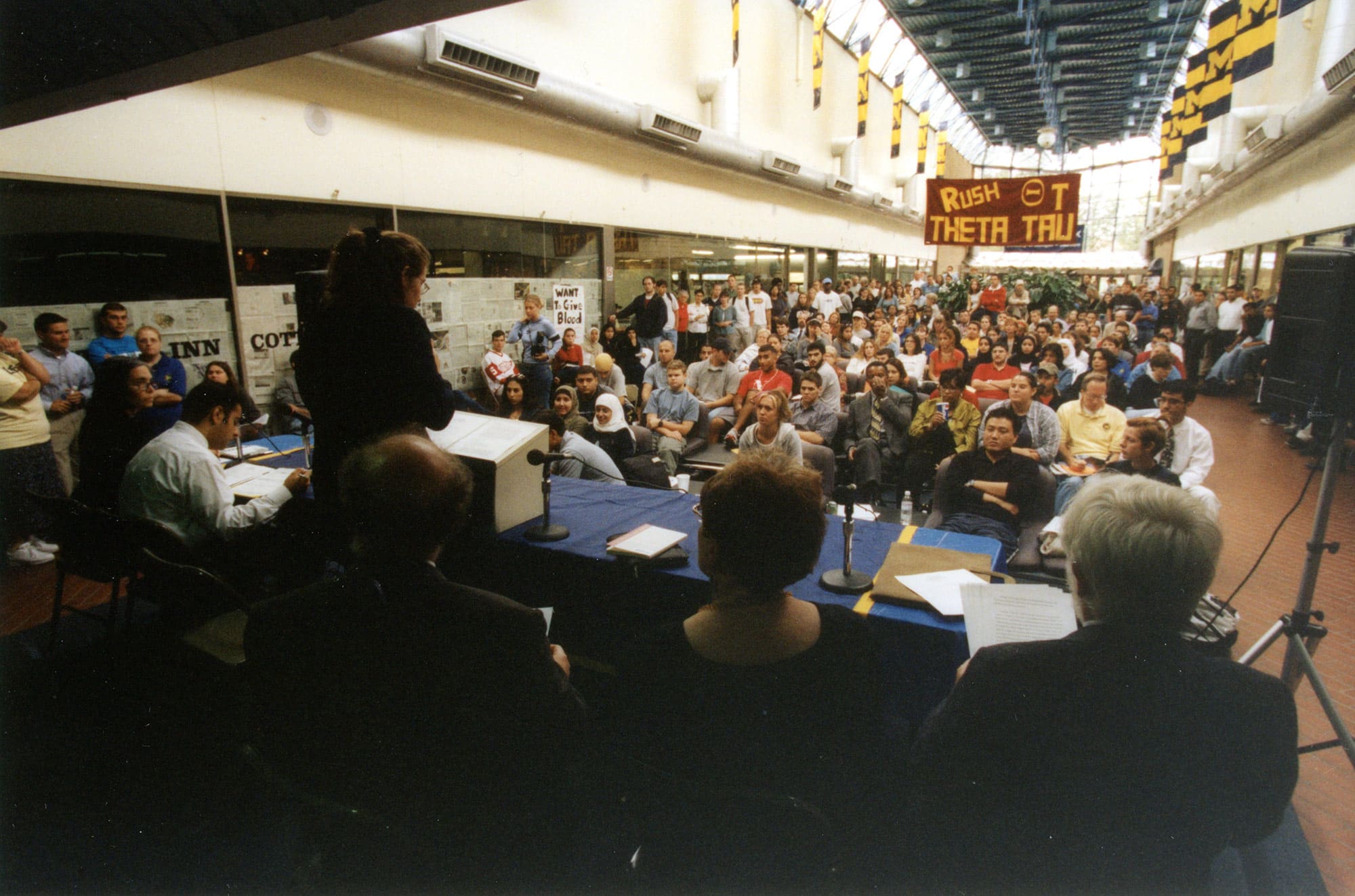
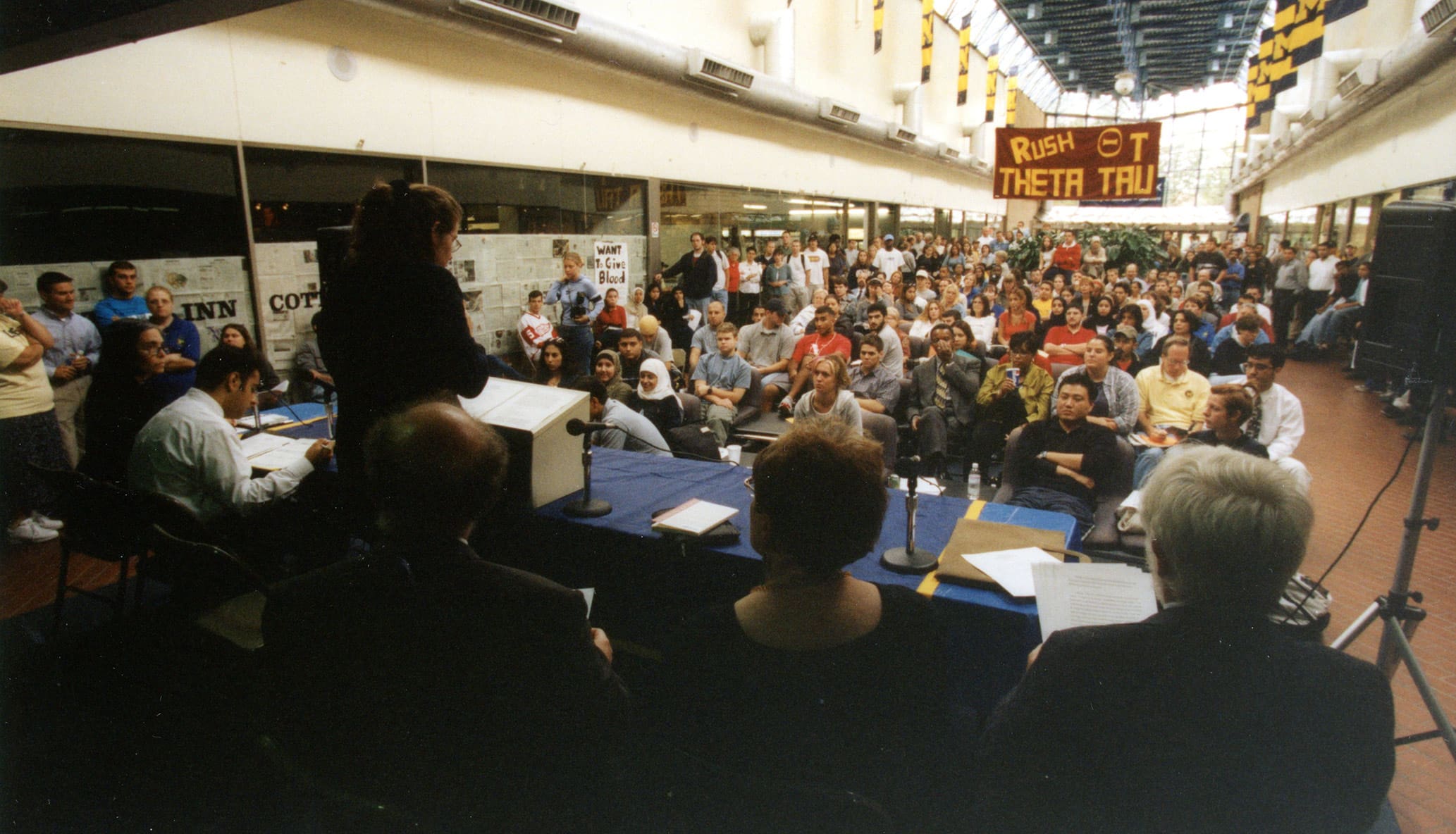
Dearborn Campus 9/11 Town Hall, 2001| University of Michigan-Dearborn Campus Archive
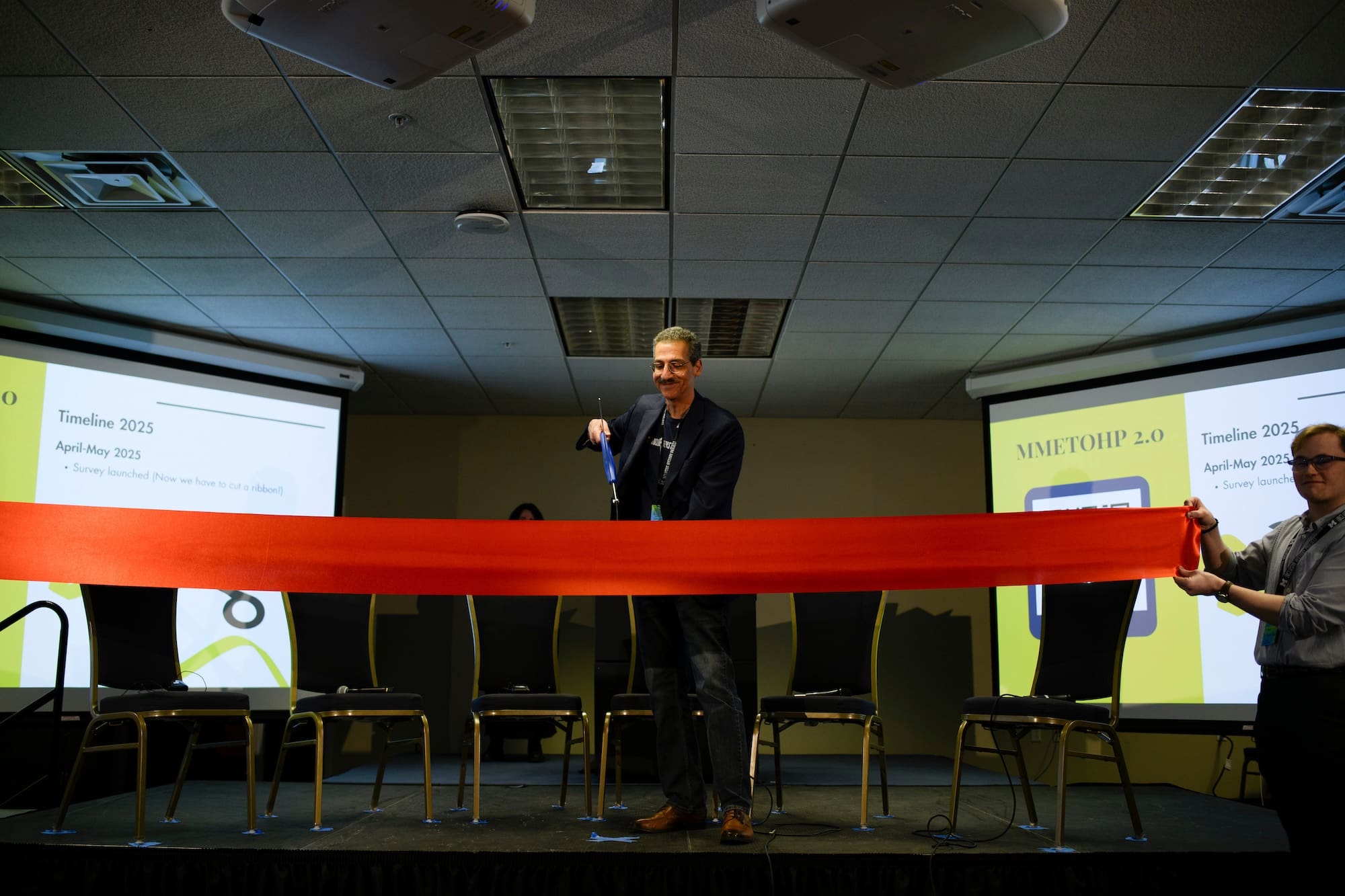
Camron Amin cuts ribbon at the IHP Summit, 2025| Photo provided by Michigan Photography, University of Michigan
The 1959 Project: University of Michigan-Dearborn’s Origins and Timelines
Winter 2024 - Present
The project includes three digital humanities initiatives, which serve as both an expanding archive for inquiry and as avenues for restorative and expanded storytelling. Together, these initiatives allow the 1959 Project team to create dynamic multimedia deliverables and contribute to the UM-Dearborn Campus Archive’s and Mardigian Library’s resources for future inquiry on campus history. These efforts are also designed with the aim of informing the development of future reparative policies on the campus.
Currently, the 1959 Project includes the following initiatives:
Restored Voices Oral History Collection
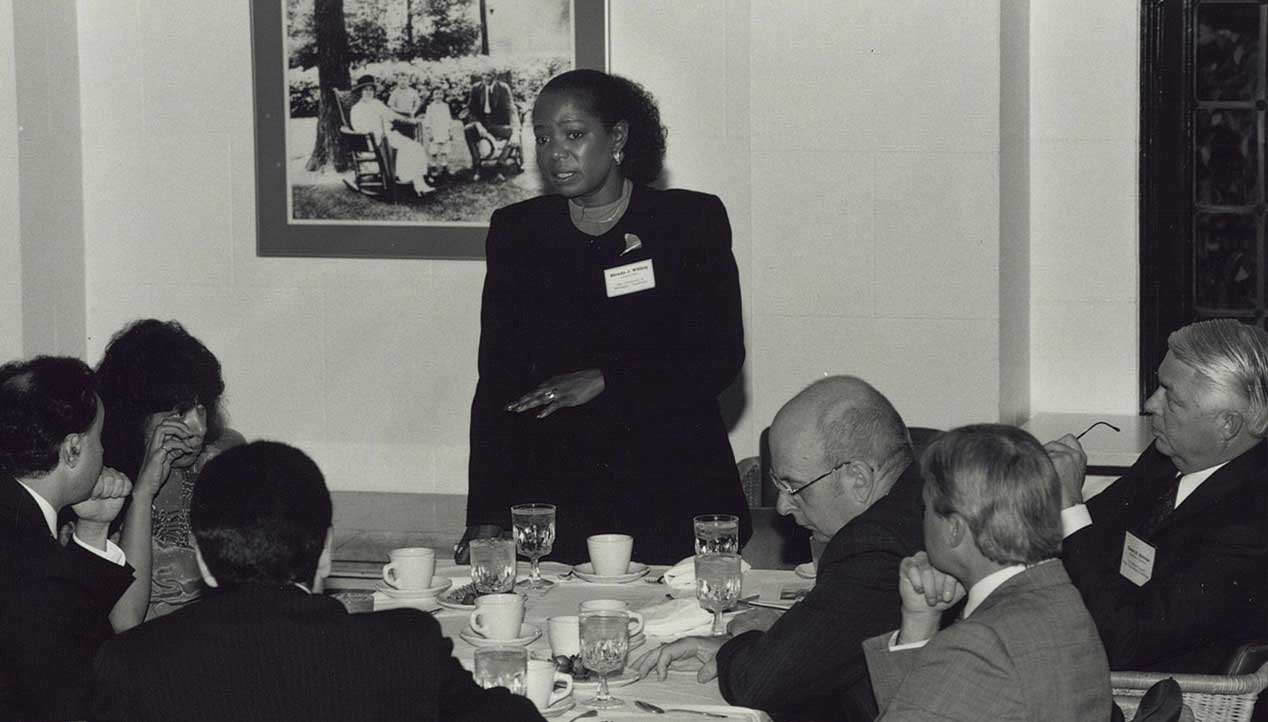
This collection makes digitally curated interviews from the archives of the Mardigian Library at the University of Michigan-Dearborn available on a public database powered by the Oral History Metadata Synchronizer (OHMS) and OMEKA S. Researchers have curated the archived interviews with former faculty and administrators, including former Chancellor William A. Jenkins, who held that position from 1980 to 1988 and was the first African American person to do so; Helen M. Graves, a professor of political science who helped found UM-Dearborn’s Commission for Women in 1974; and former Chancellor Blenda J. Wilson, who served in that role from 1988 to 1992 and was both the first African American woman and first woman to lead any University of Michigan campus–indeed, the first woman to lead any public university in Michigan.
The Dearborn Campus Memory Collective serves as the central repository for many of the 1959 Project’s research deliverables and endeavors, allowing the team to continue exploring previously overlooked areas of campus history through multiple storytelling methodologies. The DCM Collective website will include newly recorded oral history interviews, short written memoirs, dynamic digital exhibits, and a multimedia timeline of campus history. The website will be launched in Spring 2026.
One of the primary components of the DCM Collective will be a collection of new oral history video interviews and short written memoirs collected by the 1959 Project research team. Interviewees include current and former staff, faculty, and alums. Researchers have begun conducting oral history interviews and collecting written memories with the goal of releasing the first interviews in late fall 2025.
Using digital humanities tools, including ArcGIS StoryMaps, the team is working to craft well-researched narratives regarding overlooked episodes in campus history. Examples include the role of women in the early days of computing on the Dearborn campus and stories highlighting the resilience of the LGBTQ+ communities of the 1980s.
In addition to the voices and exhibits being made available through the DCM Collective, the site will also be the home of the 1959 Project’s timeline initiative. Researchers and faculty partners are collecting survey and focus group data from students and other campus stakeholders on ways the current campus timeline could better reflect the richness of UM-Dearborn’s history and its collective contributions to the enrichment of the institution. Using the data collected, researchers plan to craft a report detailing recommendations for enhancements to the campus timeline. As a companion to the report, the DCM Collective will be the home of a dynamic, multimedia timeline, based on the recommendations in the report, that demonstrates what a more inclusive timeline could look like.
The 1959 Project team expects that the infrastructure for digital oral history curation being developed for the Dearborn Campus Memory Collective can serve as a useful repository for interviews and digital deliverables generated by other IHP-funded projects on the Dearborn campus. Examples include the work of IHP Research & Engagement Fund awardee Amy Brainer, Associate Professor of Women’s and Gender Studies. Brainer’s project, “Institutional Memory and Intergenerational Solidarity: Oral Histories of Women’s, Gender, and Sexuality Studies,” is examining the history of the Women’s and Gender Studies Program on the Dearborn campus.
Survey of Travel, Mobility, and the Campus Community
The Survey of Travel, Mobility, and the Campus Community was created out of an existing project, the Michigan Middle East Travelers Oral History Project (MMETOHP). In its first phase, MMETOHP explored the agency of travelers in navigating “regimes of im/mobilty” to maintain contact with friends and family in the Middle East through oral history interviews that were collected and curated by faculty, staff, and students. During its second phase, MMETOHP is focusing its interviews on members of the Dearborn campus community who have traveled to the Middle East in conjunction with an exploration into feelings of belonging in the Dearborn campus community.
In early 2025, researchers developed and deployed the survey for staff, students, faculty, alumni, and retirees to explore these issues across all segments of the campus community. In fall 2025, the research team will use these results to identify participants for focus groups and potential interviewees not only for MMETOHP, but also for an emerging tri-campus IHP project site tentatively titled The University of Michigan in the Middle East. The emerging project site seeks to gain a deeper understanding of the nature of the institution’s relationship with the MENA region, communities, and MENA-related academic fields.
Would you like to share your story about your experiences with the University of Michigan and your travels to the Middle East? Our research team is still looking for interested participants. To learn more about participating in the Michigan Middle East Travelers Oral History Project, visit the project’s recruitment page and watch the video below.
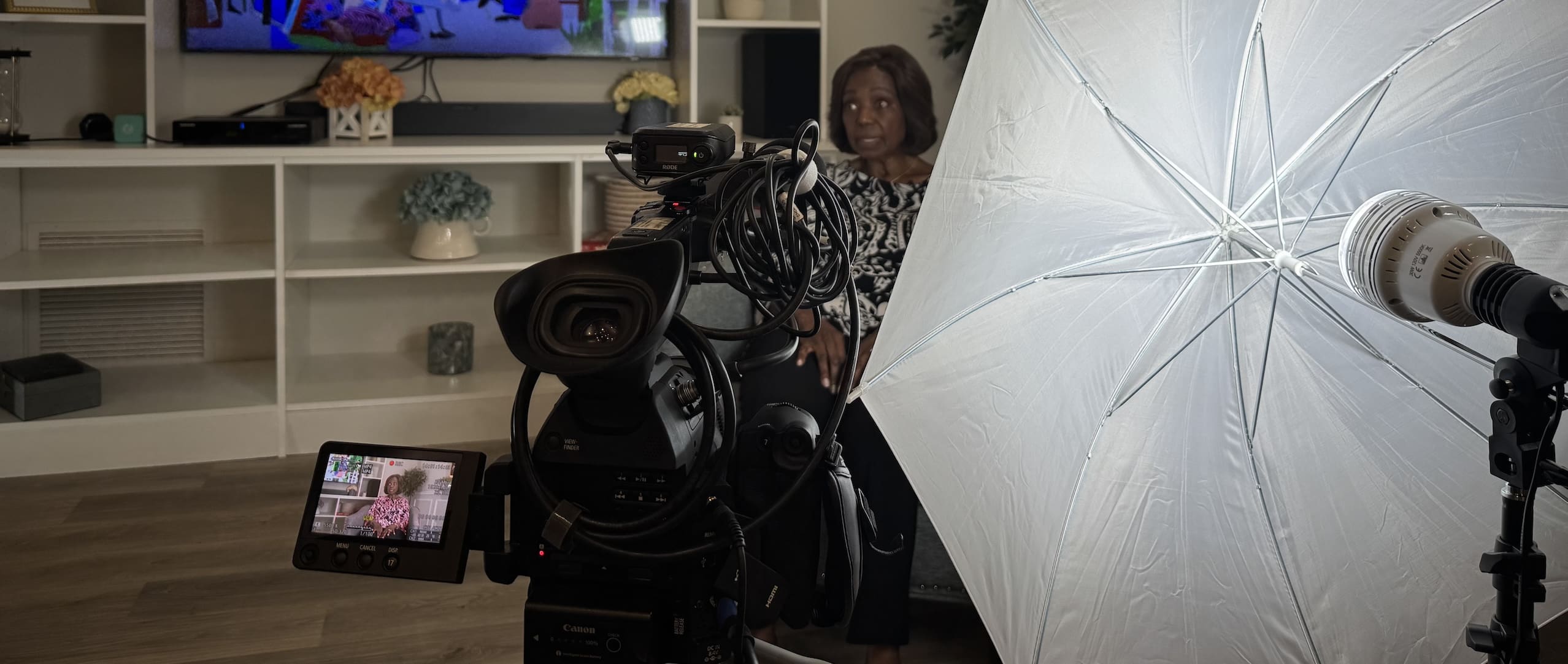
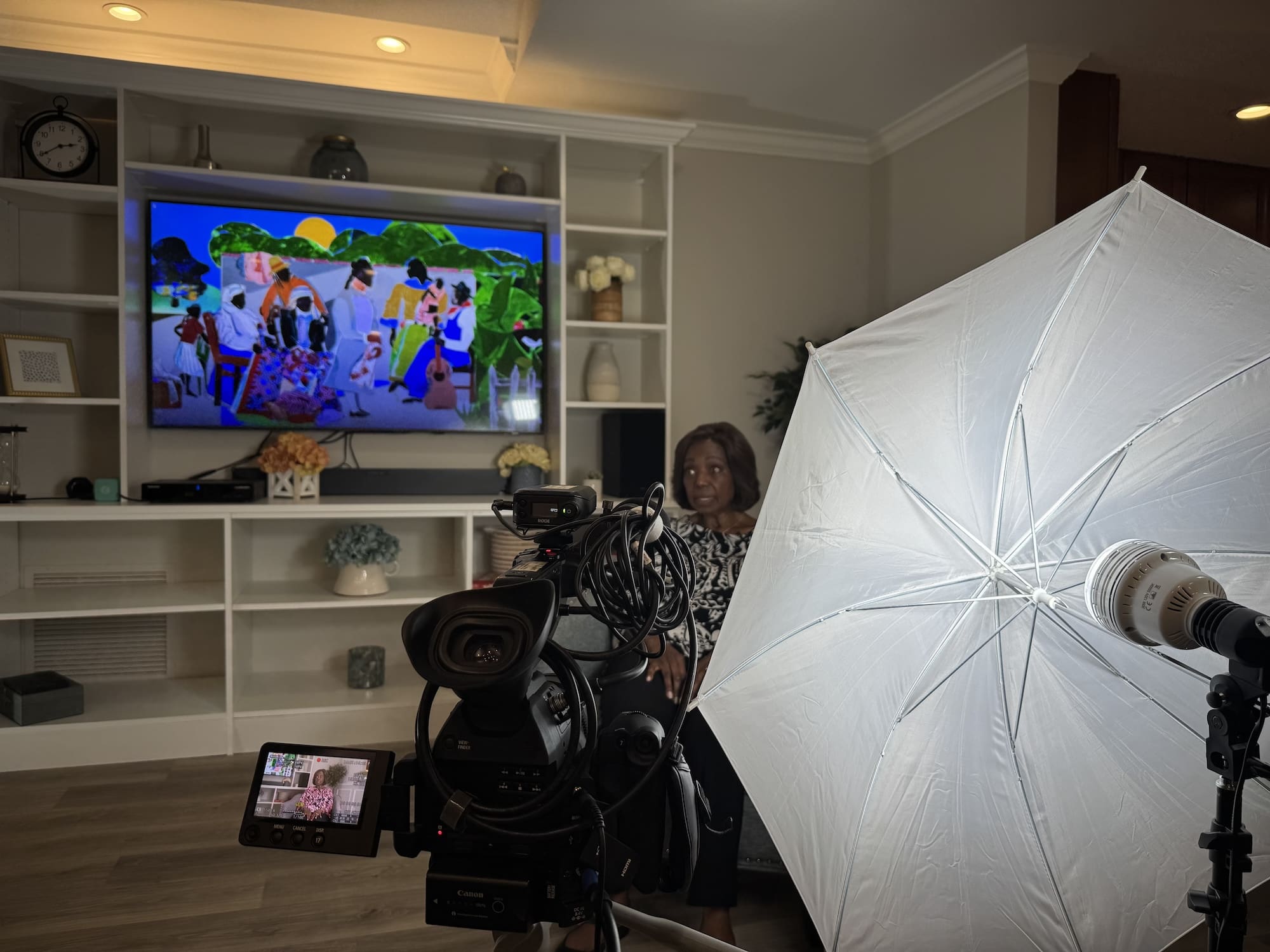
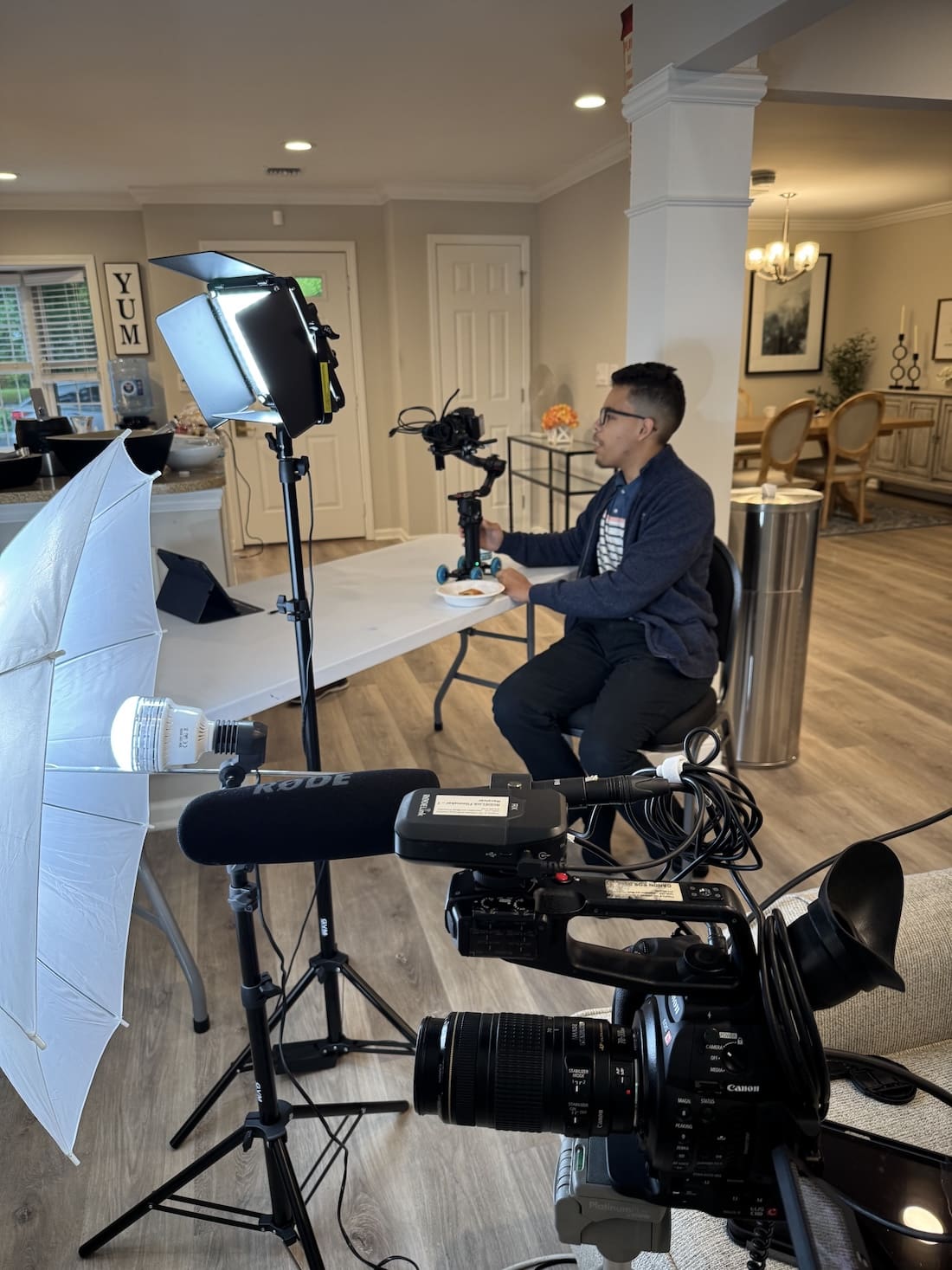
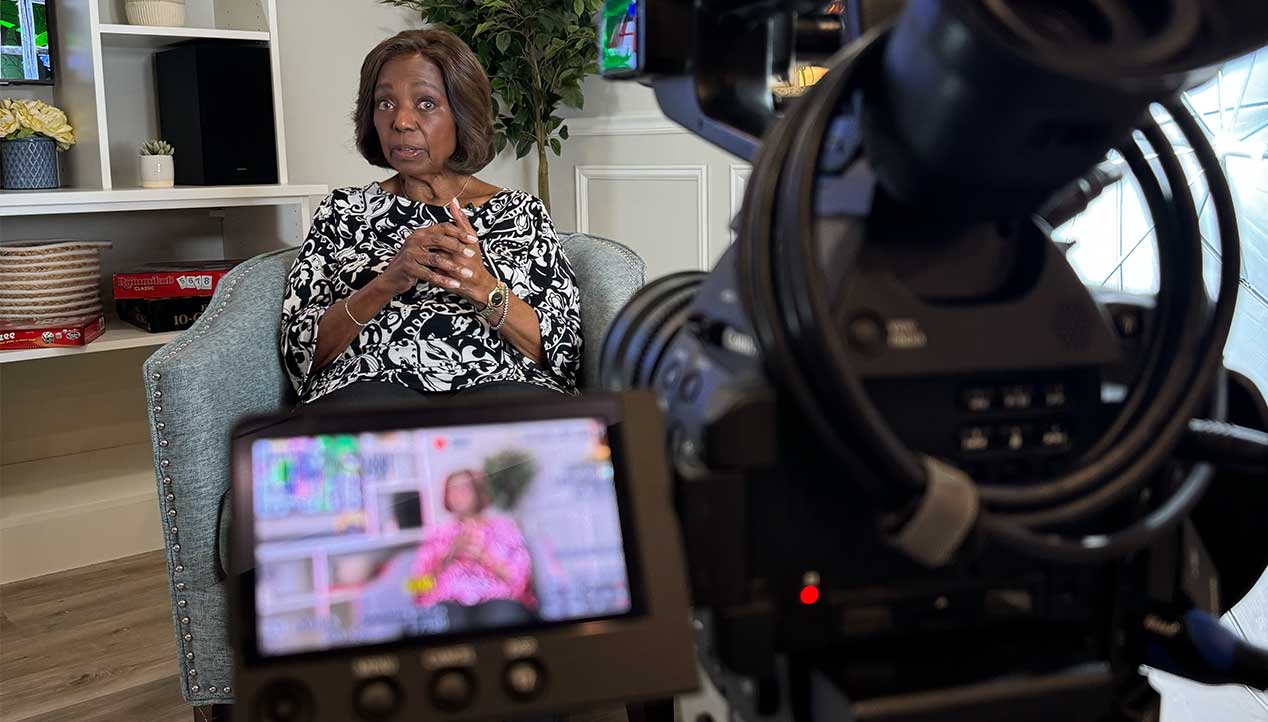
ISH intern Jabez Williams filming the interview of Blenda Wilson, 2025| Courtesy of Rick Morrone
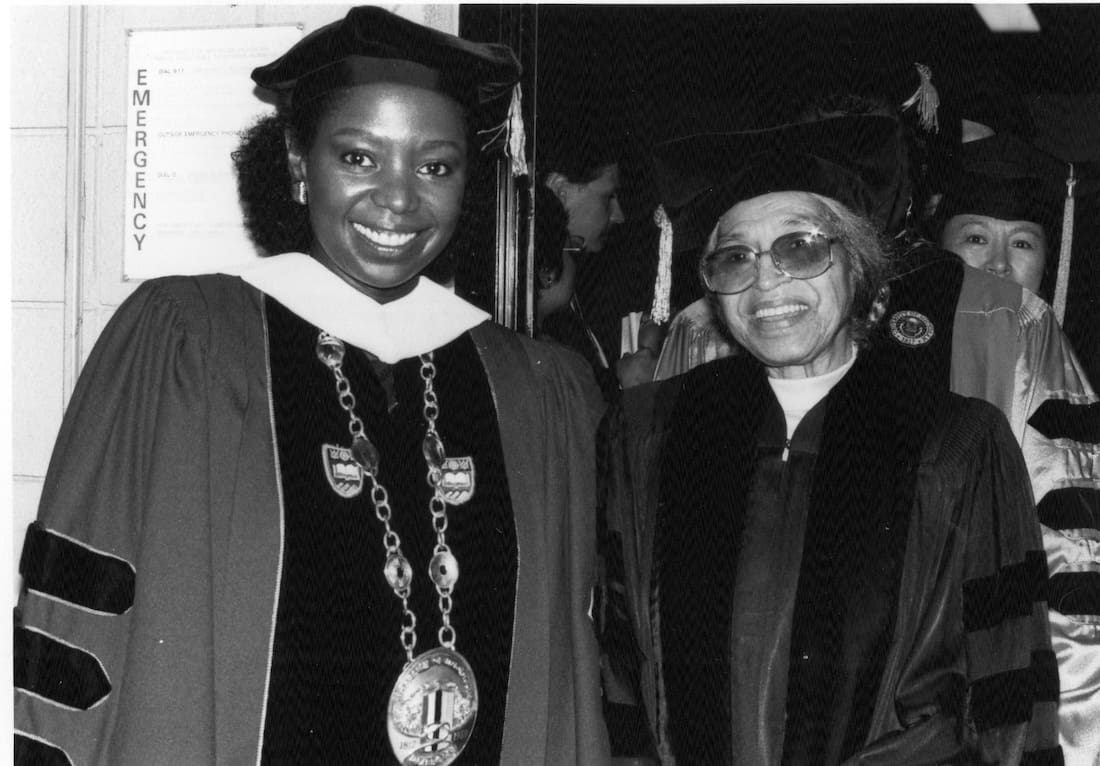
Chancellor Blenda Wilson with Rosa Parks at Commencement Ceremony, 1991 | University of Michigan-Dearborn Campus Archive
Inclusive Storytelling Hub Logo, 2025 | Logo designed by Shalin Berman (U-M, ’22)
The 1959 Project: University of Michigan-Dearborn’s Origins and Timelines
Inclusive Storytelling Hub
ISH intern Jabez Williams filming the interview of Blenda Wilson, 2025| Courtesy of Rick Morrone
The Inclusive Storytelling Hub (ISH) at the University of Michigan-Dearborn was created in 2024 in partnership with the Inclusive History Project and UM-Dearborn’s Office of Holistic Excellence. The ISH works with faculty on campus to develop approaches for public engagement and dissemination of inclusive research to local, national, and global audiences through video-based storytelling. The team is currently led by Professor Jennifer Proctor and Rick Morrone. Proctor and Morrone are working to develop infrastructure and resources to assist researchers in transforming their work into compelling narratives that align with the University of Michigan’s inclusivity goals.
The ISH’s initial work includes developing storytelling and dynamic video-based content related to:
Oral histories for various IHP-funded projects, including video interviews for the 1959 Project’s Dearborn Campus Memory Collective (coming in fall 2025), Michigan Middle East Travelers Oral History Project (MMETOHP), and more.
Storytelling for Dr. Martin Hershock and Dr. Jacob Napieralski, “Restoring Native Voice at the University of Michigan-Dearborn: Reimagining the Environmental Interpretive Center and Campus Natural Area,” which is supported by the IHP Research & Engagement Fund.
The Wolverine Stories Video Booth at the 2025 IHP Summit. The video booth was fashioned after the longstanding oral history program StoryCorps that travels the country recording the personal stories of a broad range of people living in the U.S. for inclusion in the Library of Congress. This booth was open to anyone with a connection to U-M to share their stories and accounts of inclusion and exclusion in order to help create more comprehensive and expansive histories of the University of Michigan. Stories documented at the Wolverine Stories Video Booth will be used to support future oral histories, documentaries, and other works that examine the history of our institution.
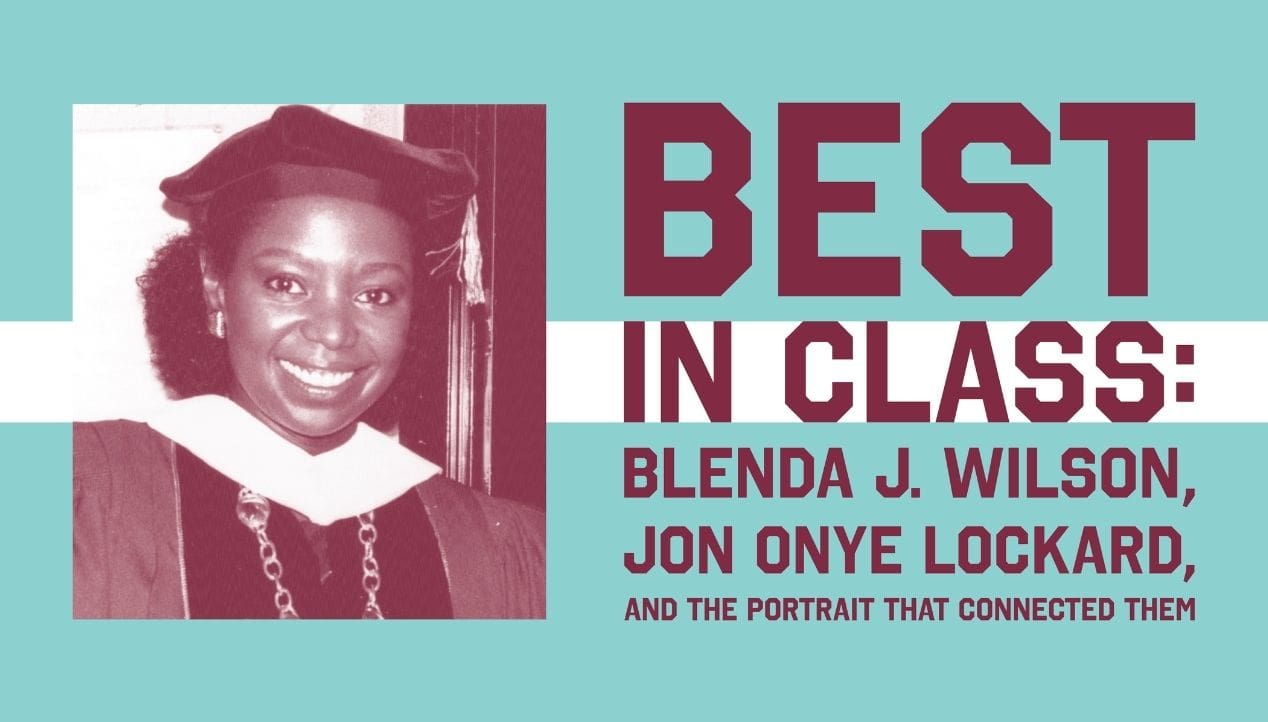
A documentary film, Best in Class: Blenda J. Wilson, Jon Onye Lockard, and the Portrait that Connected Them, tells the story of Wilson, UM-Dearborn’s first African American woman chancellor, and Jon Onye Lockard, the artist who painted her official portrait and a faculty member on the Ann Arbor campus. Best in Class premiered in February 2026. Learn more about the project on the Best in Class StoryMap which gives readers a look at the making of the documentary and the sources used to tell Wilson and Lockard’s stories.
Chancellor Blenda Wilson with Rosa Parks at Commencement Ceremony, 1991 | University of Michigan-Dearborn Campus Archive
Researchers & Partners
Camron Amin
Principal Investigator, IHP Director of Research, Professor of Middle East and Iranian Diaspora Studies, College of Arts, Sciences, and Letters
University of Michigan-Dearborn
Marlaine Magewick
IHP Project Manager for Digital Humanities
University of Michigan-Dearborn
Kandra Polatis
IHP Research Fellow
University of Michigan-Dearborn
Furqan Al-Tamimi
Research Assistant
University of Michigan-Dearborn
Reena Hamad
Undergraduate Research Assistant
University of Michigan-Dearborn
Tawhid Khan
Graduate Research Assistant
University of Michigan-Dearborn
Zanab Al-Bedany
Undergraduate Research Assistant
University of Michigan-Dearborn
Wallace Bowie III
Undergraduate Research Assistant
University of Michigan-Dearborn
Razieh Araghi
Research Associate
University of Michigan-Dearborn
Jennifer Proctor
Associate Professor of Journalism and Media Production, College of Arts, Sciences, and Letters
University of Michigan-Dearborn
Rick Morrone
Instructional Learning Assistant, Department of Journalism and Media Production, College of Arts, Sciences, and Letters
Film Premiere and Panel Discussion for Best in Class
Blenda J. Wilson, Jon Onye Lockard, and the Portrait that Connected Them
Attendees joined us for the premiere of Best in Class: Blenda J. Wilson, Jon Onye Lockard, and the Portrait that Connected Them, a short documentary exploring the story of UM-Dearborn Chancellor Blenda J. Wilson—the first and only Black woman to lead a campus of the University of Michigan—and her official portrait by acclaimed U-M artist Jon Onye Lockard, which was on view during the event. A panel discussion and reception followed the screening.
A decades-old portrait and a student film crew bring a Michigan history maker to campus
A picture is worth a thousand words — and, in the case of former Chancellor Blenda Wilson’s official university portrait, it’s worth a documentary film. The portrait of Wilson — who’s the first woman to head a four-year public university in Michigan — sat in the Mardigian Library archive for years until it caught the eye of Professor of Middle East and Iranian Diaspora Studies Cam Amin in 2023 while he was doing research.
Bringing Research to Life: Inside UM-Dearborn’s Inclusive Storytelling Hub
Some of the most important work that happens in the university setting is also the hardest to share beyond academic circles. At the University of Michigan-Dearborn, a new initiative is working to close that gap by turning scholarship into stories the broader campus community can see, hear, and feel. Founded in 2024, the Inclusive Storytelling Hub works with students, faculty, staff, and researchers across the UM-Dearborn campus to translate campus scholarship into dynamic digital stories.
Oral Histories in Context: A Discussion of the Chancellor Blenda J. Wilson Interview
Attendees discovered the legacy of Chancellor Blenda J. Wilson in a listening session featuring her restored archival interview, reflections from students and project staff, and a sneak peek at a forthcoming documentary on her life and time at UM-Dearborn.
Our new series, called IHP Dispatches, is designed to open up our research processes by narrating the behind-the-scenes work involved in digging into the university’s history. In our first installment, Camron Amin narrates the makings of a documentary on former chancellor Blenda J. Wilson, telling the story of a trip and a team working to capture her career and legacy.