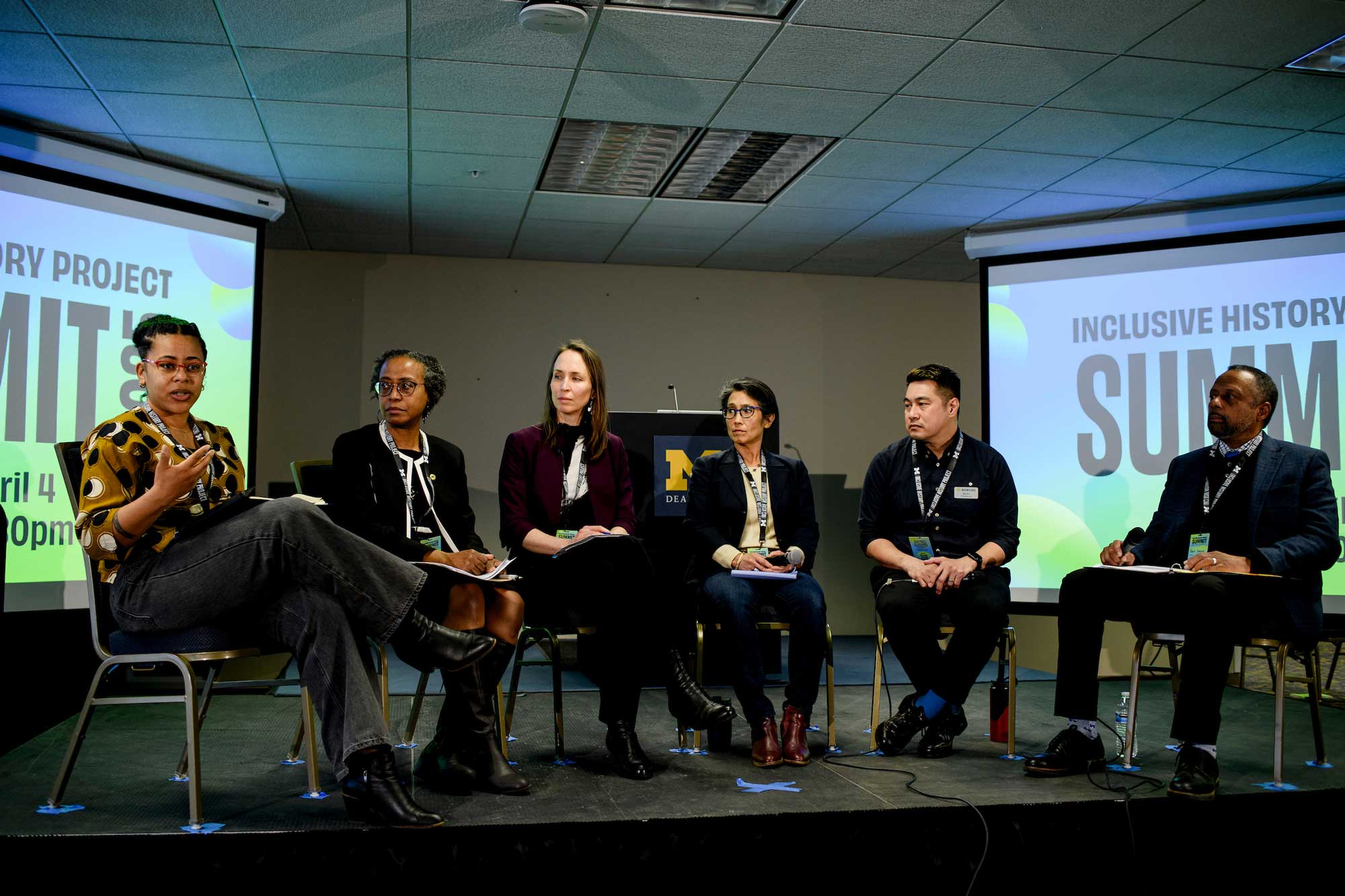
The Inclusive History Project (IHP) is working to document and share a comprehensive history of the University of Michigan that includes its record of inclusion and exclusion.
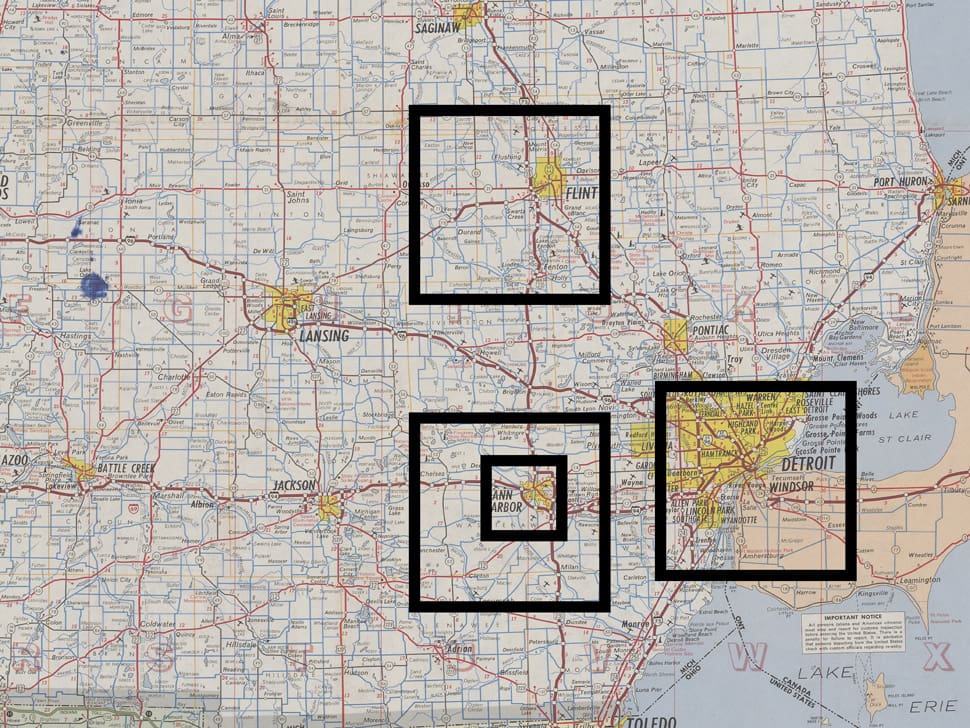
Our work to tell the history of the university necessarily stretches across U-M’s Dearborn, Flint, and Ann Arbor campuses, as well as Michigan Medicine.
The IHP engages members of the university community and our campuses’ neighbors to better understand the full history of the institution and to consider what reparative actions that history demands in the present and for the future.
Intellectual independence is critical to the IHP’s goals to tell a full history of the university and to reckon with how our history continues to inform our present. The IHP is pursuing the full scope of this work and will articulate its findings independent from central administration.
Collaboration
The IHP’s efforts build on existing and ongoing “inclusive history” work here at the university, and the IHP commits to crediting and supporting those efforts in numerous ways. We do so with the recognition that projects may wish to maintain autonomy from the centralized functions of the IHP.
Broad Engagement
The IHP is committed to building a project that covers the whole university and engages broadly across campuses, units, constituencies, and stakeholders. The IHP is a centralized project that provides leadership and visibility, but the contributions of people across our campuses are vital to this shared project.
Material change
The IHP is doing rigorous scholarly work to study and document the university’s history, but its outcomes only begin with the production of knowledge. The project aims to engage the university’s many communities in deep, meaningful reflection on that history, to bring them together to think about its implications for the university’s present and future, and to produce tangible change.
Community Relationships
Building better relationships with a range of community partners and neighbors at each of our campuses is an important overall goal. We recognize that the IHP enters a landscape where those relations have not always been equitable or beneficial to our neighbors, and are working to improve relationships and build trust.
Three Campuses and Michigan Medicine
A major challenge of the IHP is its ambition to include all of the university’s campuses, as each campus has its own priorities, challenges, and history. The IHP must honor the distinctiveness of each campus, provide the needed resources and the autonomy for each campus to pursue its work, and elevate the histories of UM-Dearborn and UM-Flint.
Read about the IHP’s activities in 2025-2026! Our Year 3 Annual Report highlights progress on our large-scale research project sites with teams of faculty, staff, students, and community members; the compelling and wide-ranging projects supported by our granting programs; a significant increase in the IHP’s visibility and engagement through events and outreach; and the involvement of students across the IHP as advisors, interns, researchers, and learners—especially through the tri-campus Student Advisory Committee.
In the Year 3 Report, you will also hear from a range of people involved with the IHP as they share, in their own words, their perspectives on our collective work.
Learn about our work in past years in our previous annual reports: Year 2 & Year 1
The range of possible outcomes from the IHP include:
The development of new scholarship, research, and courses
New expressions of a more inclusive and accurate institutional narrative such as exhibits, campus tours, websites, updated ceremonies, and other forms of institutional storytelling
New and revitalized community relationships and partnerships
Changes in our institutional landscape and physical environment such as new kinds of monuments and public art
New and revised building and space names
Reparative acts directed at alumni and others who have been in some measure harmed by earlier practices and policies
New institutional programs and policies that address the contemporary effects of historical and systemic racism and other forms of discrimination and exclusion on our community, including but not limited to actions as permitted by law in areas such as admissions, financial aid, and faculty and staff hiring, promotion, and compensation
Many other tangible ideas that emerge from a thoughtful and engaged process


 Close
Close